Get Full Government Meeting Transcripts, Videos, & Alerts Forever!
Oregon officials outline long-term services and supports funding, roll out OPI Medicaid and warn of rising nursing-facility costs
Summary
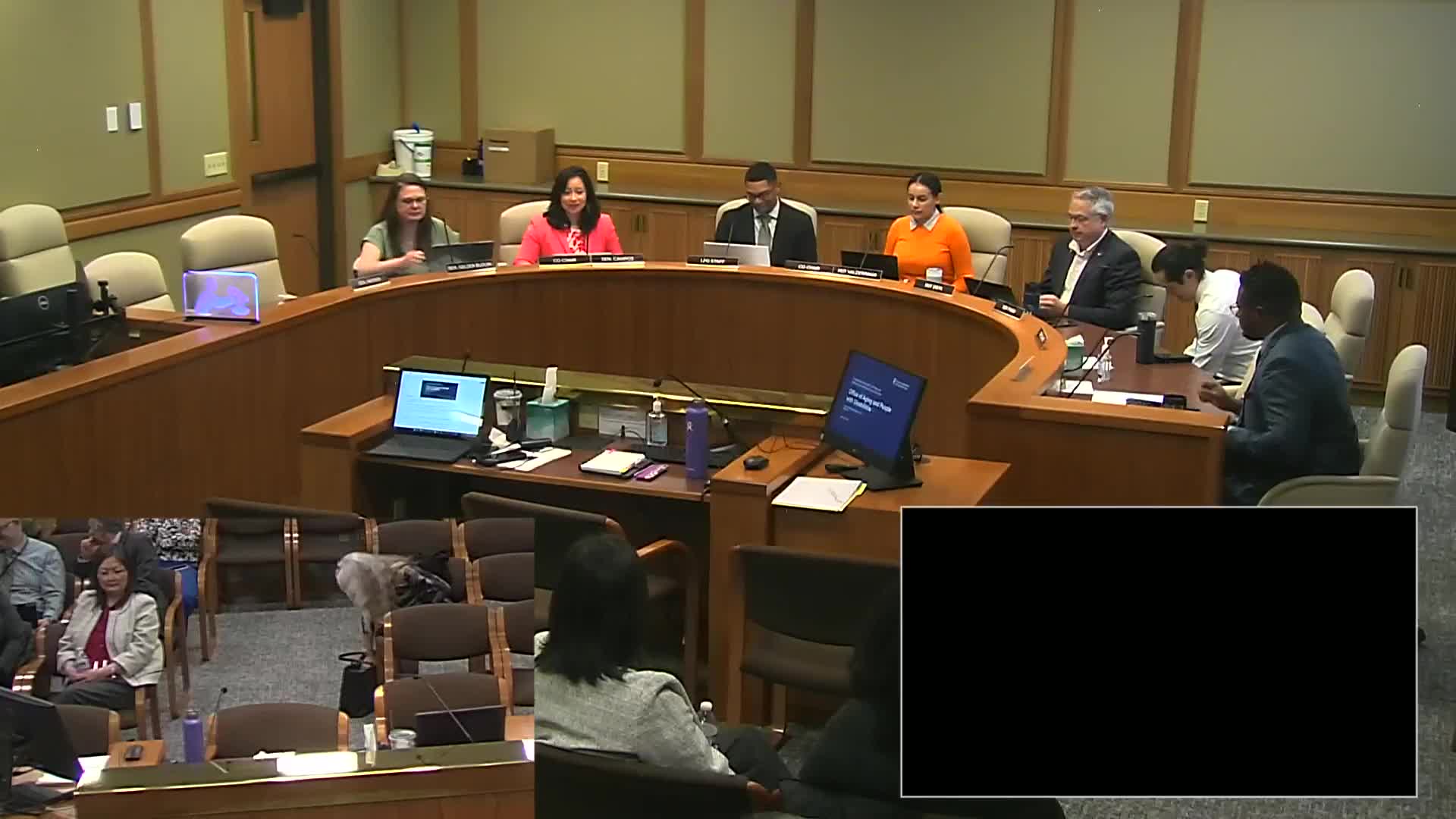
The Joint Ways and Means Human Services Subcommittee held an informational hearing on Senate Bill 5526 on long-term services and supports, where agency officials outlined current spending, eligibility limits and the phased rollout of Oregon Project Independence Medicaid.
The Joint Ways and Means Human Services Subcommittee held an informational hearing on Senate Bill 5526 on long-term services and supports, where agency officials outlined current spending, eligibility limits and the phased rollout of Oregon Project Independence Medicaid.
The Office of Aging and People with Disabilities (APD) director, Dr. Nikisha Knight Coyle, told the panel that APD serves most Oregonians in home and community-based settings and that “almost 90% of those that we serve are served in home and community based environments.” She said that approach both honors individual choice and saves the state money compared with nursing-facility care.
Why it matters: APD officials told lawmakers that state and federal funding streams, growing caseload forecasts and new federal Home and Community‑Based Services (HCBS) rules will change how the agency assesses needs and pays providers. Those factors, plus a statutory nursing-facility payment formula, are driving projected cost increases that will affect the state budget.
APD’s overview and scale APD told the subcommittee that between July 2021 and June 2023 roughly 57,000 individuals received Medicaid long-term services and supports in Oregon. The agency described a mix of funding and program options: Medicaid services, the Older Americans Act programs, Oregon Project Independence (OPI) Classic (state‑funded) and OPI Medicaid, plus noncare programs such as SHIBA (Senior Health Insurance Benefits Assistance) and disability determination services.
APD said funding is distributed roughly evenly across three setting types—home, community-based care and nursing facilities—while a majority of consumers (the agency’s stated figure: nearly 90%) receive services at home. APD noted that nursing-facility care remains the highest-cost setting on a per-case basis.
Nursing-facility caseloads and rates Janellen Weidance, APD deputy director of policy, said the…
Already have an account? Log in
Subscribe to keep reading
Unlock the rest of this article — and every article on Citizen Portal.
- Unlimited articles
- AI-powered breakdowns of topics, speakers, decisions, and budgets
- Instant alerts when your location has a new meeting
- Follow topics and more locations
- 1,000 AI Insights / month, plus AI Chat