Get Full Government Meeting Transcripts, Videos, & Alerts Forever!
Get email alerts on the Aquatic Invasive Species topic
No spam. Unsubscribe anytime.
Oregon House approves bill to expand boat inspection partnerships to guard against invasive mussels
Summary
The Oregon House passed House Bill 2,170 to let three state agencies sign memoranda of understanding with tribes, local governments and service districts to staff and operate watercraft inspection and decontamination stations aimed at preventing quagga, zebra and other invasive mussels from entering state waters.
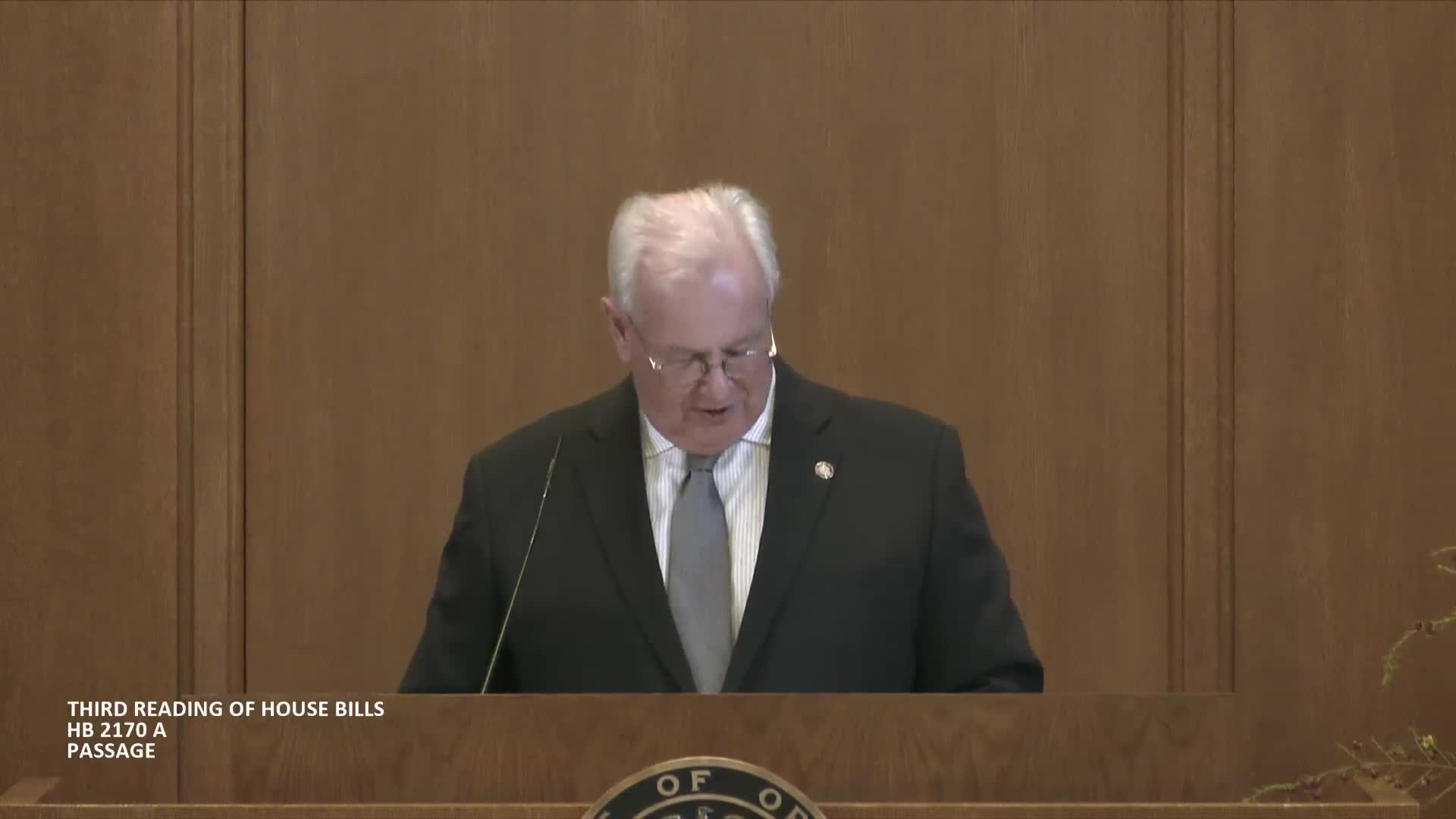
House leaders on the floor of the Oregon House of Representatives on third reading approved House Bill 2,170, authorizing new partnerships to expand watercraft inspection and decontamination stations aimed at keeping quagga, zebra and related invasive mussels out of Oregon waterways.
The bill authorizes the Oregon Department of Fish and Wildlife, the Oregon Marine Board and the Oregon Department of Agriculture to enter into memoranda of understanding with tribal governments, local governments and local service districts to staff and run boat inspection and decontamination stations, Representative Helm said during floor debate.
Those stations are intended to detect and remove mussel larvae—called veligers—carried on boats that travel between infested waters elsewhere in the country and Oregon reservoirs and rivers. “If they get into our water systems… they do massive damage and have the potential to cost the state hundreds of millions of dollars to remediate,” Representative Helm said on the floor.
Nut graf: The measure expands authority for staffing boat-check stations beyond the three named state agencies, enabling local partners and tribes to participate under written agreements; lawmakers said the change aims to increase coverage and local knowledge to prevent an economically and ecologically costly infestation.
Lawmakers stressed the urgency after detections in nearby states. Helm and other supporters cited detections of quagga mussels in the Lower Snake River in Idaho two years ago and additional detections this year, and noted Idaho has spent roughly $6 million over two years on remediation efforts. Supporters said expanded staffing and more check stations are among the most cost-effective defenses.
Representative Bobby Levy, a backer of the bill, said the partnerships will augment capacity in rural areas and leverage local relationships to protect irrigation, recreation and municipal water supplies. Representative Owens asked a series of questions on details of implementation; Representative Vanessa Hartman yielded to the questions during the exchange, at one point responding with a light moment on the floor before returning to the substance of the bill.
The bill does not itself appropriate a specific statewide funding package for additional stations; Representative Helm said the question of how to pay for expanded checks “we're going to talk later about.” Lawmakers said funding mechanisms and locations would be addressed subsequently.
Votes at a glance: The clerk recorded several affirmative votes and then declared the bill passed. The transcript captures some individual recorded votes (for example, Representative Bosa Davis and Representative Marsh are named as voting aye in the passage announcement) and then the clerk declared House Bill 2,170 to have received the constitutional majority and be passed.
Ending: Supporters said HB 2,170 is meant to broaden the team available to operate boat-check stations statewide; they said the measure will allow tribal partners and local governments to work with ODFW, the Marine Board and the Department of Agriculture under memoranda of understanding to place and staff inspection and decontamination stations where they are needed most.