Get Full Government Meeting Transcripts, Videos, & Alerts Forever!
Get email alerts on the Community Services topic
No spam. Unsubscribe anytime.
OYA community services leaders report higher-acuity caseloads, limited foster-home capacity and $800,000 in startup grants
Summary
OYA’s Assistant Director of Community Services told lawmakers that the agency supervises more youth in the community than in facilities, that average caseloads are about 16–17 youths per staff and that the agency has granted over $800,000 to help start or sustain residential programs this biennium.
Sandra Santos, assistant director for Community Services at the Oregon Youth Authority, told the Ways and Means Public Safety Subcommittee on March 25 that OYA supervises more youth in the community than in its facilities and that, as of January 2025, the agency was supervising 515 youth in the community (305 on probation and 210 on parole).
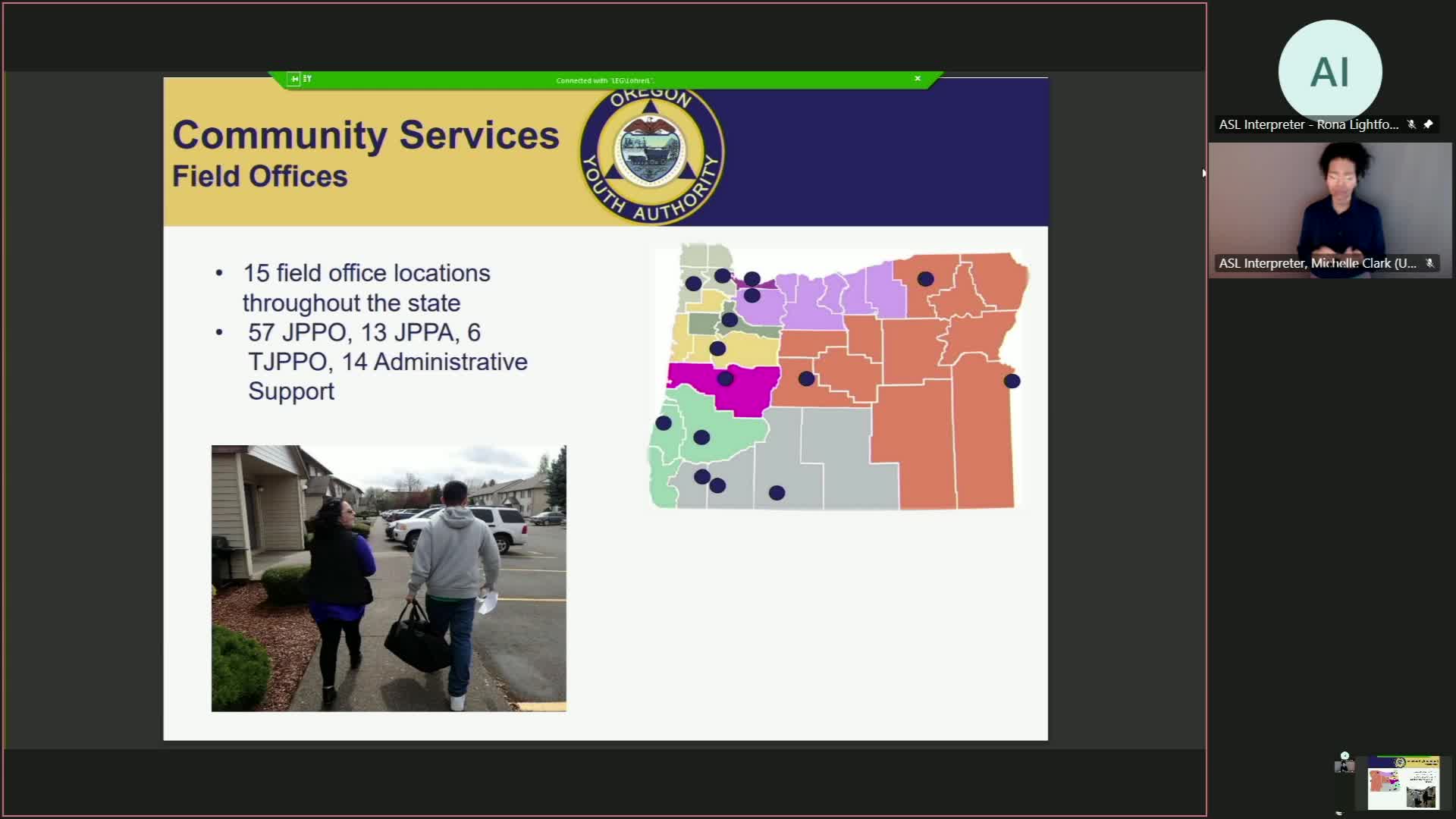
Santos said community supervision is delivered from 15 field offices and that staff roles include juvenile parole and probation officers, transition officers and parole and probation assistants. She said current average caseloads are about 16 to 17 youth per staff; she and other witnesses told the committee that rising behavioral-health acuity means staff must spend more time per youth even as overall counts decline.
Foster care and residential programs: Santos said OYA operates its own foster-care certification and support unit, with 29 certified homes currently providing placements for about 30 youth and a total of 66 combined foster and proctor homes. She said recruiting families has been challenging and that OYA aims to add 10 diverse foster beds over the next year.
Contracted services and grants: Santos told lawmakers that the agency staffed a Community Resource Unit of eight employees to oversee contracted residential providers, and that per policy CREW visits programs monthly. Since receiving authority to provide grants to service providers, the agency has granted more than $800,000 to help open new programs and respond to emergent needs such as bed bugs or major repairs.
Victim engagement and YAP: Santos described two newer initiatives: a small victim engagement program (two positions funded last biennium) to provide victims a voice, and the Youth Advocate Program (YAP), a national mentoring/advocacy program OYA is bringing into its service array.
Ending: Santos said the agency is focusing on placing the right youth in the right programs, expanding culturally responsive residential options and continuing oversight of providers through audits and a monthly provider forum.