Get Full Government Meeting Transcripts, Videos, & Alerts Forever!
Get email alerts on the Residential Behavioral Health topic
No spam. Unsubscribe anytime.
Committee hears testimony on bill to streamline residential behavioral health licensing and payments
Summary
A public hearing on Senate Bill 1195 drew providers and advocacy groups urging the Oregon Health Authority to reform licensing, payment and placement rules for residential behavioral health services to ease capacity bottlenecks; the measure includes a January 2027 sunset and an emergency clause.
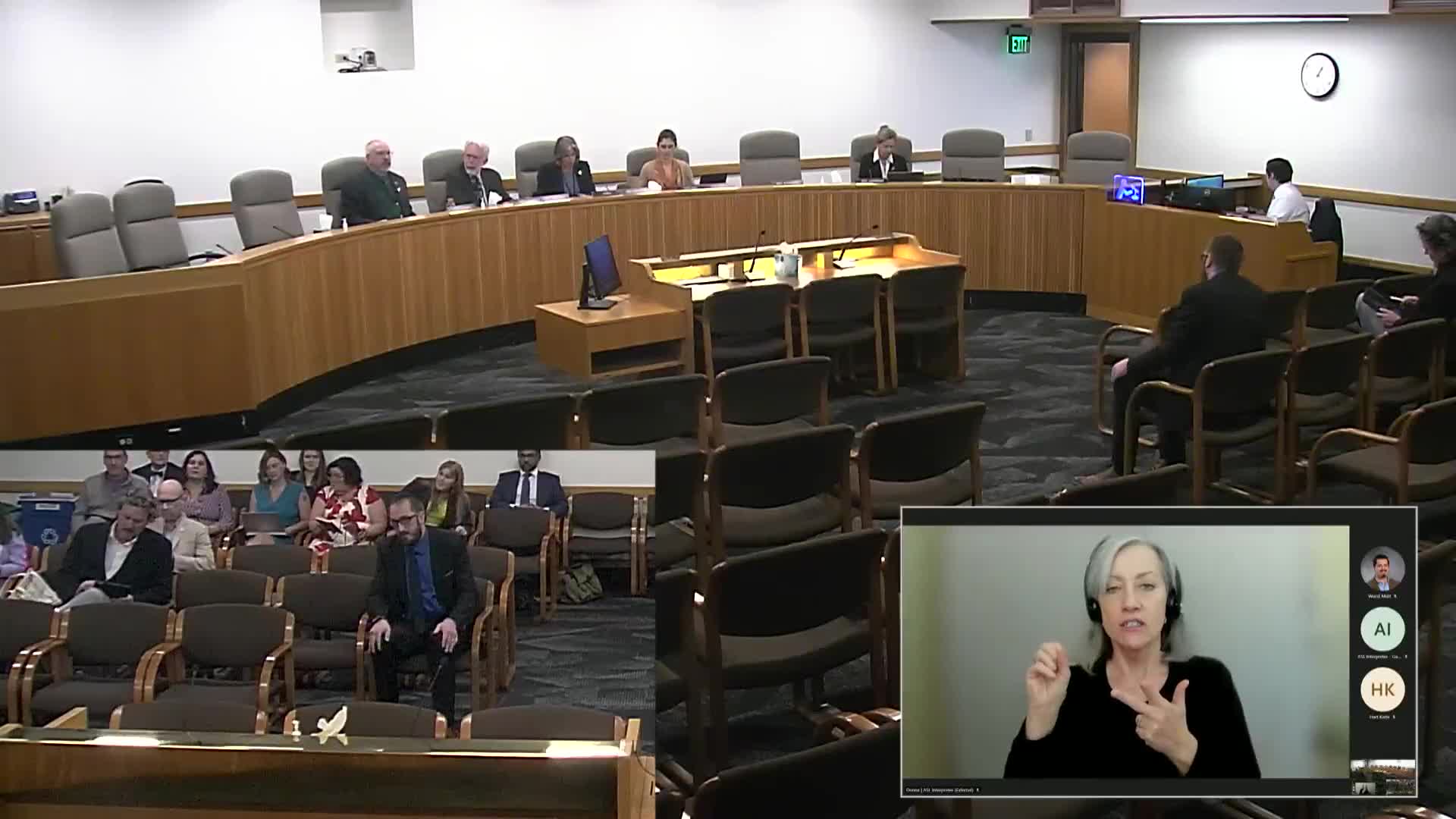
The Senate Committee on Early Childhood and Behavioral Health opened a public hearing March 25 on Senate Bill 1195, which would direct the Oregon Health Authority to study and propose reforms to residential behavioral health services, including alternatives to current nurse-staffing requirements, new reimbursement methodologies and separate licensing for transition-age youth. The bill includes a sunset of Jan. 2, 2027, and declares an emergency effective on passage.
The measure, as described to the committee by Katie Hart, legislative policy research officer, would also require OHA to evaluate options such as conditional referrals before licensure, support early transition plans, and examine alternative administrative models for residential services. Hart told the committee a dash-1 amendment was pending that ‘‘would remove the provision to allow facilities to accept conditional referrals before they are licensed and add a directive to OHA to fill the capacity of newly licensed facilities.’’
Advocates and providers testified that regulatory requirements and payment rules are slowing the opening and use of community residential capacity the state has funded. Chris Bonheff, executive director of NAMI Oregon, said the bill is ‘‘not a study bill. This is a get stuff done bill,’’ and described problems the group heard from hospitals and residential providers, including dual licensing for facilities that serve transitional-age youth, rate methodologies that mix very high-acuity and low-acuity residents, and third‑party referral requirements that delay moves to lower levels of care.
Dr. Robin Henderson, chief executive of behavioral health for Providence in Oregon, told the committee that Providence and Unity together provide ‘‘more than 60 to 70% of the capacity of adult inpatient psych here in Oregon.’’ She cited long delays in moving patients from acute hospitals into step‑down or residential settings, saying one person at Providence’s St. Vincent’s had been there 100 days and another 126 days while being declined for placement. Henderson described administrative burdens, including repeated interviews by multiple providers and paper-based referral systems, and urged the committee to support SB 1195 so that state rules and payment models can be changed to make openings feasible for providers.
A direct support professional who identified himself as Chris Leakdrink described working in a five-bed residential treatment home and said turnover through the home has been limited, in part because current rules impede moving residents on to less intensive settings. He asked the committee to consider amendments that give OHA clearer, more actionable direction.
Witnesses also flagged how federal Medicaid rules and the state’s use of a home-and-community-based services model affect residential licensing and tenancy issues; Bonheff described situations in which a facility must issue an eviction notice to legally reopen a bed after a resident is hospitalized because the current regulatory framework treats some residential settings as tenancy rather than clinical treatment. Bonheff said the governor’s office supports the effort and that related work is underway in other legislative committees, including companion proposals in the House addressing civil commitment criteria.
Committee members asked about the bill’s effects on youth services. Testimony noted children’s residential capacity is also limited, that some beds are licensed under child-care statutes while others are licensed under health-care rules, and that the committee may need to consider whether beds intended primarily as medical treatment should be brought under health licensing.
No final committee action was taken during the hearing; testimony closed and a dash-1 amendment remained pending. The bill’s sponsors and witnesses indicated they expect to work with OHA and suggested OHA may need consultant support to address the Medicaid/state plan complexities raised by the measure.
Looking ahead, supporters urged pairing regulatory changes, payment reform and continued investment in residential and housing capacity to reduce pressure on acute and forensic hospitals and to serve people earlier in their illness trajectories.