Get Full Government Meeting Transcripts, Videos, & Alerts Forever!
Get email alerts on the Vape Waste Producer Responsibility topic
No spam. Unsubscribe anytime.
Public hearing held on bill to require producer responsibility and refund value for disposable vapes
Summary
Senate Bill 1020 would require producers of inhalant delivery systems to indicate a specified refund value and participate in a producer responsibility organization; supporters cited environmental and school safety harms from disposable vape waste while some public health groups urged sequencing with flavored tobacco restrictions.
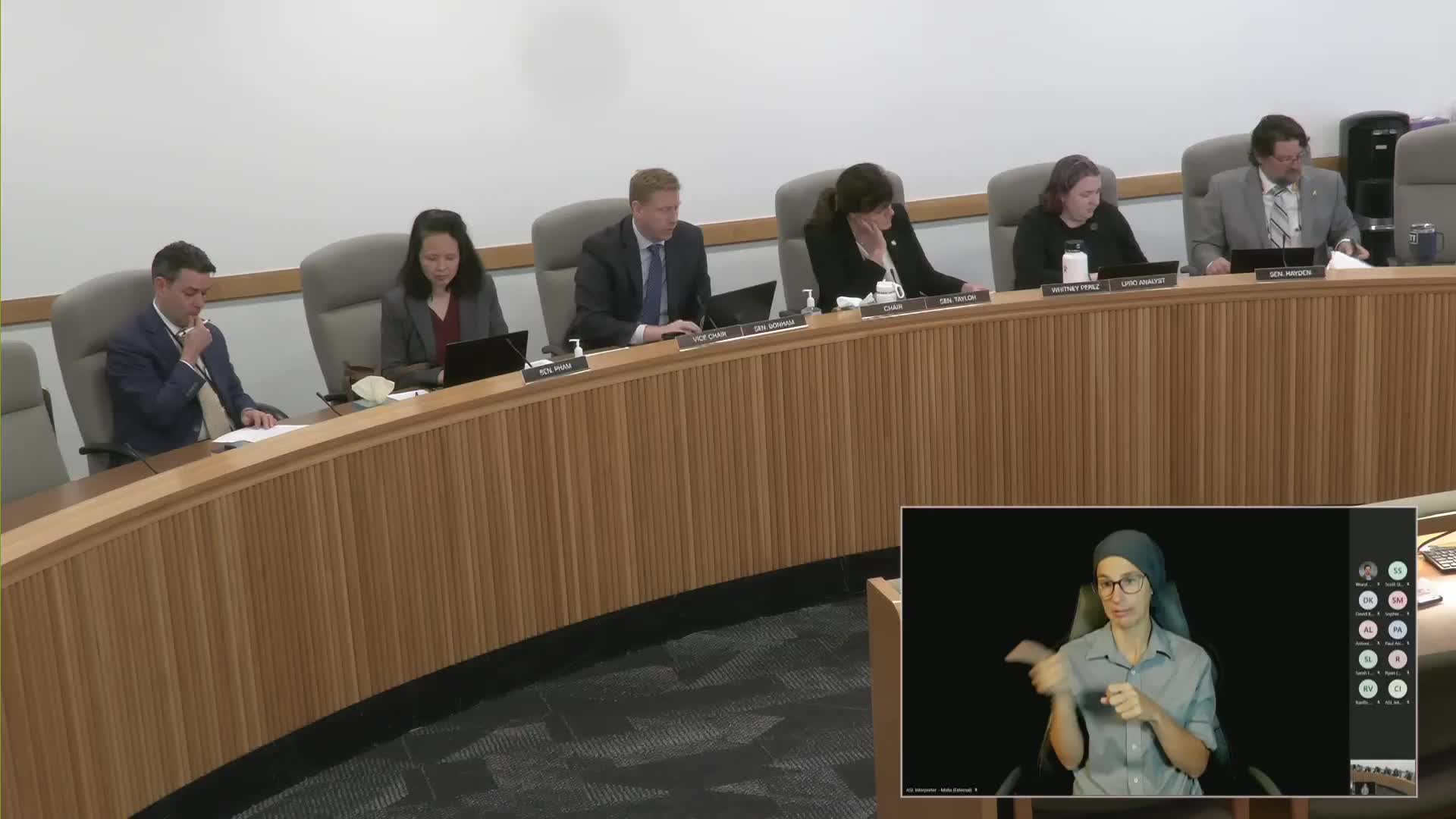
The Senate Committee on Labor and Business held a public hearing on Senate Bill 1020 on March 25. The bill would require a producer to indicate a specified refund value on an inhalant delivery system, its label, or packaging and to participate in an inhalant delivery system producer responsibility organization. Retailers would be required to collect the specified refund value at point of sale and submit it to the producer responsibility organization. The measure's effective date was described as the 91st day following adjournment sine die; a -1 amendment was noted in OLIS that revised the underlying concept.
Sponsor Senator Lou Frederick framed the bill as a producer responsibility concept aimed at addressing waste and hazards from disposable e‑cigarettes and pods in schools and landfills. Frederick said his legislative aide, Cam, had researched electronic cigarette waste and OHA guidance for schools and that the bill "adds a mandate of producer responsibility on manufacturers of electronic cigarettes and encourages their proper management through a refundable deposit." Cameron Quackenbush, Frederick's legislative assistant who authored a law review article on e‑cigarette waste, testified in support and supplied his published article to the committee record.
Antonia Linkowski, a Lewis & Clark law student and volunteer with the Northwest Environmental Defense Center, also testified in strong support and described disproportionate impacts on low‑income communities and contamination risks from batteries and heavy metals. The Coalition of Local Health Officials (CLO) executive director Sarah Lochner offered "soft opposition," saying CLO supports environmental stewardship but prefers passage of Senate Bill 702 — a separate bill to ban flavored tobacco products — first and suggested SB 1020 might be unnecessary if flavors are restricted and vaping declines.
Committee members thanked witnesses and closed the public hearing; Chair Taylor indicated the concept was worthwhile but likely requires additional work and dialogue. No committee action or vote occurred during the March 25 hearing; proponents invited further work group discussion if the committee does not advance the measure this session.