Get Full Government Meeting Transcripts, Videos, & Alerts Forever!
Get email alerts on the Temporary Dwelling Amendment topic
No spam. Unsubscribe anytime.
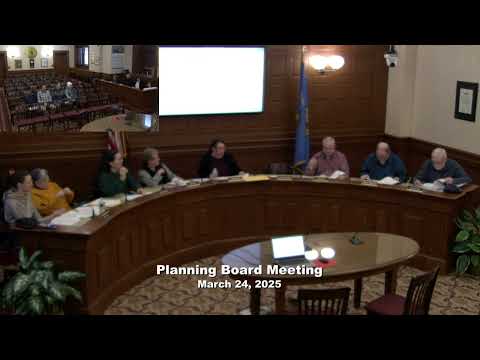
Lewiston planning board initiates code amendments to allow temporary dwellings during new-home construction
Summary
The board voted unanimously to initiate zoning code amendments to allow one temporary dwelling unit per parcel for owner-occupied new construction, align permit timeframes with building permits, and require hookups or a plan for utilities.
The Lewiston Planning Board voted unanimously to initiate changes to the city zoning and land-use code to permit temporary dwelling units on vacant lots during owner-occupied new construction, with conditions and timeframes to be drafted by staff.
Land use staff presented proposed edits to Appendix A, Article 5, Section 3 of the zoning and land use code to allow temporary housing for owner-occupied new single-family or two-family homes, not only for reconstruction after damage. "Staff recommends the board consider allowing temporary living on-site during the construction of an owner occupied new single family detached or two family home," Land Use Planner Craig Thibault said, noting the proposal would also align temporary-structure timelines with building-permit durations.
Board discussion focused on three topics staff flagged: (1) permit eligibility for new construction versus rebuilds; (2) timeframes and extensions for temporary-structure permits; and (3) whether to limit where temporary units are allowed. Board members voiced concerns about possible abuse if temporary units remained on-site for long periods or if subdivisions were developed with many simultaneous temporary units.
Several members supported limiting one temporary dwelling per parcel. The board also discussed how to tie extensions to measurable progress on construction (for example, start of work under the building permit) so the temporary occupancy cannot be used to delay building. Staff said the city’s current language for temporary homes (used when a home is reconstructed) already requires electrical hookups (not a generator) and sanitary connections; staff proposed keeping utility-connection requirements or, for new construction, requiring a concrete plan where full hookups are not yet available.
During the discussion planning staff noted building permits typically require work to start within six months, and that a building permit that goes void because work did not commence would, by tie-in, render the temporary-dwelling permit void as well. Board members asked staff to confirm practical construction sequencing (septic and electrical installation timing) and to consult contractors about field realities before drafting final ordinance language.
The formal motion — "to initiate code amendments summarized in this memo, pursuant to Article 7, Section 4 and Article 17" — was moved and seconded and passed by roll call from all members present. Staff will return draft ordinance language reflecting board feedback: allow temporary units for new construction tied to building permits and measurable progress, limit one temporary dwelling per parcel, require utility hookups or an approved utility plan, and propose initial permit durations and extension rules aligned to construction timelines.