Get Full Government Meeting Transcripts, Videos, & Alerts Forever!
Get email alerts on the Paleontology Fossil Quarry topic
No spam. Unsubscribe anytime.
Volunteers race to recover rare Jurassic fossils at Saint George site before power substation work
Summary
A rare late Triassic–early Jurassic fossil quarry at the former Johnson Farm near Saint George is being excavated urgently after the city approved a power substation at the site. Volunteers, students and paleontologists are recovering bones, footprints and possible new species while the museum seeks storage, supplies and donations.
Saint George volunteers, paleontologists and museum staff are rushing to excavate and preserve fossils at the former Johnson Farm site on the city’s North Side after city plans for a new power substation put parts of the fossil quarry at risk.
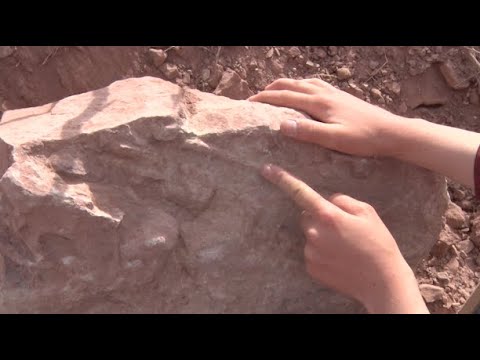
The site, owned by Saint George City and adjacent to the Saint George Dinosaur Discovery Site museum, contains at least two bone beds and fossil material dated to the earliest Jurassic — roughly 200 million years old, according to speakers on site. Organizers say the upper bone bed has produced dinosaur remains and that volunteers have already recovered footprints, teeth, fish remains and vertebrae in just weeks of digging.
The excavation team says the substation project creates time pressure: city and utility planners selected the location because it meets both high-voltage transmission and local distribution needs, and contractors are expected to break ground in May. That timeline prompted the museum and volunteer crews to speed recovery efforts so fossils can be removed or secured before construction covers parts of the quarry.
Staff and volunteers are using standard field conservation techniques to protect finds. Crews trench around fossils, consolidate fragile material with Paraloid B-72 (a reversible polymer consolidant), then encase specimens in plaster “jackets” for transport to the museum lab for preparation. Organizers said a shipping container is needed to store those plaster jackets and other field materials until they can be processed in the lab.
The site has drawn paleontologists and students from outside Utah, and organizers said some specimens recovered so far include fish, crustacean fragments, a possible new fish species and the backbone of a meat-eating dinosaur. The quarry also preserves swim tracks — claw marks formed where dinosaurs moved through shallow water — and large dinosaur footprints. The site’s sedimentary deposits represent the bottom of an ancient freshwater body called Lake Whitmore, once estimated as large as Lake Erie.
Volunteers and the museum are seeking donations of basic supplies and logistical help; requested items mentioned on site include toilet paper, burlap and plaster of Paris, and organizers noted interest in occasional meals for volunteers. A volunteer application form has been posted on the museum’s website to collect emergency-contact information and experience levels. Organizers also reported community interest online: one live stream from the site had roughly 350 viewers.
Speakers at the site said a recent change in state law will allow many of the fossils recovered there to remain with the Saint George Dinosaur Discovery Site museum rather than being removed elsewhere; the museum’s organizers said keeping the material locally supports future exhibits and research. Saint George police have been monitoring the site, organizers said, as public attention and volunteer traffic has increased since the quarry’s discovery.
Museum staff and volunteers described hopes to develop the North Side property into a larger natural history facility to house the finds and expand public programming, but said details and timelines for any new museum remain aspirational. In the immediate term, the team is focused on recovering and securing specimens before substation construction begins.