Get Full Government Meeting Transcripts, Videos, & Alerts Forever!
Get email alerts on the Property Taxes topic
No spam. Unsubscribe anytime.
Residents challenge Benton County FY26 levy notice and seek clearer accounting of tax increases
Summary
At a public hearing on the proposed fiscal year 2026 budget, Benton County officials explained state-mandated rollbacks and levy limits while residents and business owners criticized a $12,000 taxpayer mailing and reported large, unexplained jumps in assessed values and tax bills.
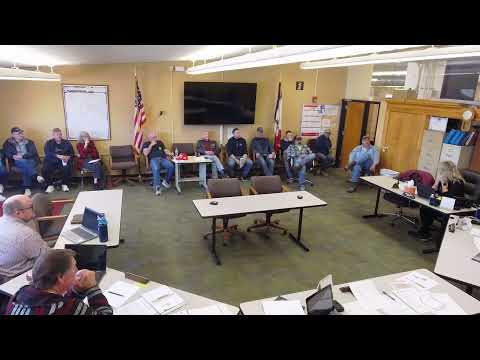
BENTON COUNTY — At a public hearing on the proposed fiscal year 2026 budget, county staff summarized how state rules on assessed values, rollbacks and levy limits interact to produce the tax numbers in the county’s mailed notice, while residents pressed supervisors for clearer accounting of recent large increases in assessments and tax bills.
County staffer Carrie told the Board of Supervisors that Benton County is “working in three different value years” when preparing the FY26 budget and explained that the state applies rollback factors to assessed values to produce taxable values. She said the county was required to reduce levy rates this year because growth exceeded the state’s threshold, noting the board reduced both the general basic and general supplemental levies to comply with the limit.
The dispute over the mailed levy notice, which residents said cost about $12,000, dominated the roughly 90‑minute hearing. Several attendees said that the example numbers in the mailer were confusing or misleading. One business owner described a steep jump in his tax bill, saying, “My taxes went from $12,262 in 2023 to $21,770 on my property... It’s 77.5% increase on my property taxes.” Multiple residents said they were on fixed incomes and worried higher assessed values would force them from their homes.
Why it matters: the FY26 budget and the levy rate the board certifies determine how much property tax revenue the county may raise. Residents and businesses who receive the county’s mailer said the presentation makes it hard to understand whether higher bills stem from state assessment changes, local levy choices, Tax Increment Financing (TIF) agreements, or other items such as bond or debt-service obligations carried by schools and cities.
County officials and commenters walked through several specific points raised by the public. Carrie and other staff explained that: (1) assessed values are set by the assessor’s office using market activity; (2) the state applies rollback factors that change taxable values; and (3) state legislation is moving to hold many counties to a 2% growth cap in the coming years (the county reported a 2.11% growth that was reduced to 2% for levy purposes). The board said department requests are collected and presented as a worst-case “maximum levy” in the published notice; supervisors then review line items and can reduce spending before certifying a final budget.
Residents asked for clearer breakdowns of where the county’s additional revenue is going. Questions included how much new construction and TIFs divert tax dollars to city projects, how local option sales tax revenue is used (county staff estimated roughly $2 million annually and said portions go to secondary roads, rural basic, libraries and a 25% tax reduction allocation), and whether school bond levies remain on tax rolls after bonds are retired.
Speakers also raised internal-county expense topics: courthouse security staffing, fleet and equipment purchases (one commenter called a proposed $350,000 sheriff vehicle unnecessary), and recent employee pay increases. County staff said most nonunion employees received a 3% increase, union settlements were generally 4% for some units, and a few reorganizations produced larger targeted increases tied to expanded duties.
County staff committed to publish more detailed budget worksheets online and to consider scheduling future hearings at times that allow more public attendance. The board also recommended inviting the assessor, county engineer and other department heads to explain assessments, road projects and fund-by-fund spending to better inform residents.
Votes at a glance: the board approved a motion to adopt the meeting agenda at the start of the session and later approved a motion to close the public hearing after comments. Both motions were seconded and carried with aye votes.
The board will hold a formal budget hearing and must adopt a final FY26 budget by April 30; tax statements based on the certified consolidated rates are scheduled to be mailed in July and first payments are due September 30.
Ending: Supervisors thanked attendees for their comments, and staff said they would make budget detail documents available on the county website and work with their auditors’ association and the Department of Management to produce clearer explanations of the mailed levy notice.