Citizen Portal

Subcommittee clashes with VA over appeals transparency and attorney retention at Board of Veterans' Appeals

2778455 · March 17, 2025

Get AI-powered insights, summaries, and transcripts

Subscribe
AI-Generated Content: All content on this page was generated by AI to highlight key points from the meeting. For complete details and context, we recommend watching the full video. so we can fix them.

Summary

Lawmakers pressed the VA on appeals backlog, attorney retention and a bill requiring weekly public updates from the Board of Veterans' Appeals; VA officials warned the transparency proposal could cause administrative burdens and confusion, while members pushed for more transparency and protections to retain experienced attorneys.

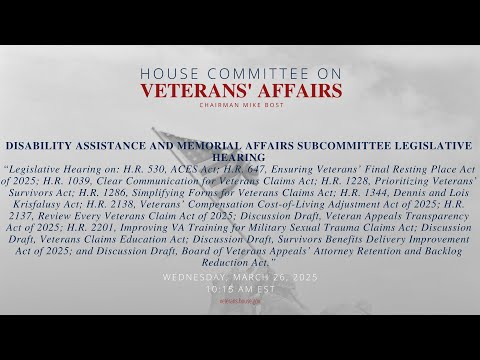
A House Veterans Affairs subcommittee hearing featured sustained questioning about the Board of Veterans' Appeals’ backlog, attorney recruitment and retention, and a proposed transparency measure that would require the board to publish weekly updates on appeals assignments.

Representative Neal Self, sponsor of the Veterans Appeals Transparency Act, said current board averages give veterans “no accurate sense of where they are in line” and argued the bill would require the board to publish weekly updates on which appeals it is working on in each docket. Self told the committee the bill would also direct the board to include a statement clarifying weekly updates do not mean a decision will be made that week.

Department of Veterans Affairs officials opposed the bill as written. Evan Dykert, acting deputy vice chairman at the Board of Veterans' Appeals, said the board is already constrained by statutes and case processing practices and warned that the proposed weekly disclosures risk creating misperceptions and additional litigation. When pressed on processing times, Dykert said, “Currently, as of March 23, direct review was 1 and a half years.”

Members, led by Ranking Member McGarvey, pressed the VA on morale and retention issues. McGarvey criticized proposals or policies he said could damage morale — including talk of terminating modest benefits such as bar‑dues reimbursement for board attorneys — telling the VA, “This is one of those things that could be a morale killer.” He and other members argued that allowing experienced, non‑supervisory attorneys promotion potential is critical to retaining staff who produce high‑quality decisions.

Advocates testified in favor of retention changes. The National Organization of Veterans' Advocates (NOVA) told the committee it supports the Board of Veterans' Appeals Attorney Retention and Backlog Reduction Act, which would enable non‑supervisory attorneys at the board to be promoted to GS‑15 to provide a career path for experienced decision writers.

VA’s Kanisha Britton said the department does not support the Veterans Appeals Transparency Act as drafted and raised three concerns: potential litigation risk, administrative burden and confusion for veterans who might misinterpret docket‑assignment listings. Britton also said the Attorney Retention bill “conflicts with the specific classification regulations, lacks clarity on improving decision quality and processing speed, and could seriously impact the board's operations and budget.”

What’s next: Members said they will continue negotiations with VA and press for legislative fixes. Several members urged VA counsel to work the legal issues so the committee can find a mutually acceptable approach that increases transparency without creating unintended legal or operational consequences.