Get Full Government Meeting Transcripts, Videos, & Alerts Forever!
Get email alerts on the Ethics And Rules topic
No spam. Unsubscribe anytime.
Matthews board debates clearer rules on conflicts, recusals and public-hearing time limits
Summary
Town attorney Daniel Peterson reviewed statute-based recusal rules and proposed changes to the board's rules of procedure, including consent-agenda handling, public-hearing speaker limits and a duty-to-vote clarification; no final vote was taken, but staff will draft a formal procedure for board consideration.
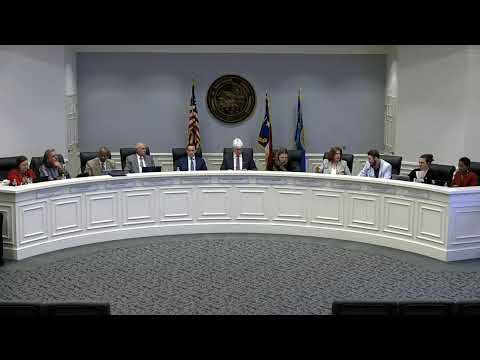
The Matthews Board of Commissioners discussed tightening its rules of procedure and clarifying conflicts-of-interest and recusal practices during a March 24 meeting.
Town Attorney Daniel Peterson told the board he would draft a formal framework after discussing practical, day-to-day applications of Chapter 160D and other guidance, and then bring that back for the board to adopt. "When you feel like you have a conflict of interest that you want to talk about...what you can expect from me," Peterson said, adding he wants members to be able to consult confidentially before any public explanation is needed.
The conversation focused on three commonly recurring issues: direct financial interests (for example, personal contracts or reimbursements tied to an agenda item); close familial or business relationships (statutorily defined family relationships vs. more fact-specific business ties); and vague "associational" relationships such as strong church or community ties. Peterson said state law provides a clear definition of close familial relationships but leaves business and associational conflicts more fact-dependent. He said his approach is to offer confidential guidance and a written framework so the board and the public understand how those calls are made.
Commissioners raised specific concerns. Commissioner Tufano said state-required ethics training emphasizes a presumption that officials should vote unless they directly benefit; the board should preserve that presumption while treating recusals as exceptions. Peterson agreed, saying the School of Government guidance tends toward participation but that Chapter 160D creates room for recusal in certain development cases. Commissioners also discussed campaign-contribution patterns and PAC funding; Peterson said PAC funding raises political issues but generally does not itself create a legal conflict absent concealed or "untoward" arrangements.
The attorney also proposed specific changes to the town's rules of procedure. Highlights he presented include: - Moving items from the consent agenda to unfinished business when a board member must be excused from a consent item; he suggested the request "should" be made during agenda approval. - Clarifying emergency- and special-meeting notice requirements to reflect statutory limits (special meetings require 48 hours' notice; emergency meetings are distinct and allow faster action when true emergencies exist). - Memorializing the board's customary sequence for public hearings and staff presentations, including recognition order and the maker-of-the-motion privilege to speak first. - Reformatting the duty-to-vote rule (direct financial interest, zoning decisions and contractual interests) for clarity.
Peterson recommended the board adopt a short, flexible procedure with working definitions rather than a one-size-fits-all code because some conflict questions are highly fact-dependent. He said he will prepare a track-changed draft and circulate it for review and suggested the board solicit input from the development and business community (including, he said, examples borrowed from the Dodd-Frank regime) to help define business and controlling-interest tests where state law is silent.
Commissioners debated public-hearing speaker limits. The board discussed two options for continued hearings: (1) allow only those who did not previously speak to be heard at a continuation, or (2) allow speakers to present at each continued meeting. Mayor John Higdon and several commissioners noted the town historically did not limit speaking time; others said nearly all nearby municipalities cap speakers at three to five minutes. Commissioner McCool suggested time limits for applicants or developers, but Commissioner Urban and others said very large, complex projects may need longer presentation windows and that the board could allow larger allotments at its discretion.
No formal changes were adopted at the meeting. Peterson said he will draft a formal framework and definition set, circulate a track-changed rules document and return the matter for a future vote. The board agreed it would consider adding specific language about due process and the town's approach to recusals, consent-agenda handling, emergency notices and public-hearing continuation rules.