Get Full Government Meeting Transcripts, Videos, & Alerts Forever!
Get email alerts on the Evacuation Response topic
No spam. Unsubscribe anytime.
Pasadena transit and Rose Bowl command center played central roles evacuating seniors and supporting fire crews after Eaton Fire
Summary
Pasadena officials described how local agencies used the Rose Bowl, the convention center and Pasadena Transit buses to shelter residents, evacuate nursing facilities and support firefighting operations following the Eaton Fire; volunteers and state partners provided mass sheltering, water and debris coordination with federal agencies.
City of Pasadena transportation and fire officials described a cross‑agency response that used the Rose Bowl and the Pasadena Convention Center to shelter residents, host firefighters and stage recovery operations after the Eaton Fire.
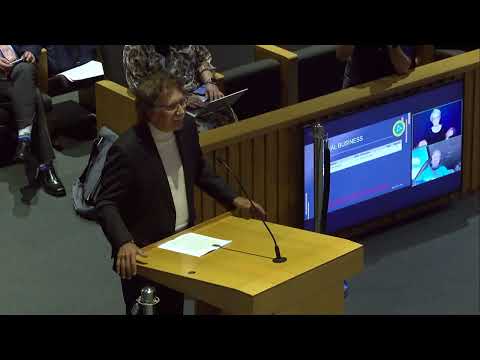
Joaquin Cikes, Pasadena’s director of transportation, said the city converted the convention center into a temporary shelter for more than 1,000 residents and used the Rose Bowl as a multiagency incident command base that accommodated thousands of firefighters, staging tents, food and support services. The city coordinated with the American Red Cross to transition continuous shelter operations to the nonprofit within a week.
Pasadena Transit staff and contractors helped evacuate seniors and residents from at‑risk facilities. Video shown to the commission included named transit operations staff and drivers who entered smoky conditions to move residents; the commission heard accounts that more than 420 residents from skilled‑nursing and assisted‑living facilities were evacuated. Joaquin Cikes described large‑scale distributions of bottled water (more than 500,000 bottles), thousands of sandbags and k‑rail installed to protect high‑risk zones ahead of seasonal rains. Pasadena officials said 62 city employees lost homes and many more were evacuated.
The city is coordinating with the U.S. Army Corps of Engineers, FEMA, EPA and Los Angeles County to remove hazardous burned debris and to fast‑track rebuilding. Officials emphasized the importance of transit for evacuations and continuity of services: Pasadena suspended fares and parking permit enforcement for impacted residents and modified transit service to support evacuations and relocations.
Why it matters: The Eaton Fire response illustrates how municipal transit, convention facilities and local emergency management can provide sheltering, evacuation and staging in a major wildland/urban evacuation and how recovery requires federal debris removal, public health messaging and coordinated permitting for reconstruction.
Officials said community volunteers and local, state and federal agencies all contributed to the response; Pasadena will continue debris removal, environmental screening of burned material and support for displaced residents as rebuilding moves forward.