Get Full Government Meeting Transcripts, Videos, & Alerts Forever!
Get email alerts on the Ports topic
No spam. Unsubscribe anytime.
Port of Long Beach touts deep emissions cuts, seeks continued funding for rail and channel projects
Summary
Mario Cordero, CEO of the Port of Long Beach, told the California Transportation Commission the port has cut diesel particulate and other emissions sharply over two decades and is seeking state and federal support for rail, roadway and channel projects to sustain trade and meet 0‑emission goals.
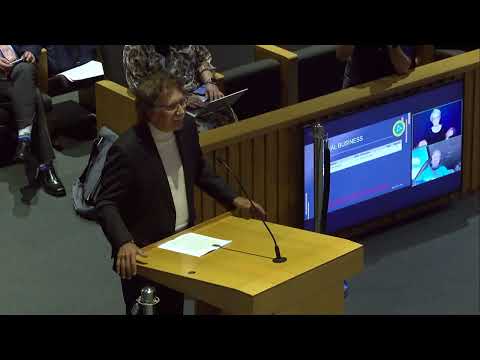
Mario Cordero, chief executive officer of the Port of Long Beach, briefed the California Transportation Commission in Long Beach on the port's recent trade volumes, environmental gains and a multi‑billion‑dollar capital program.
Cordero told commissioners the port recorded a record 9.6 million twenty‑foot equivalent units in 2024 and, together with the Port of Los Angeles, moved roughly 20 million TEUs — the largest U.S. container gateway. He said the port has achieved very large percentage reductions in pollutants since implementing its Green Port policy two decades ago: “91” in diesel particulate matter reductions, “92” in nitrogen oxides and “98” in sulfur oxides, and reaffirmed the port’s goal of zero emissions for cargo‑handling equipment by 2030 and trucks by 2035. “We have a quest for 0 emissions,” Cordero said.
Why it matters: The Port of Long Beach is a central node in California’s freight system and the statewide economy; Cordero framed the port’s environmental progress and continuing capital needs as linked demands — reducing pollution while maintaining capacity for trade and jobs.
Cordero described a $2.3 billion program of capital improvements focused on cleaner cargo and freight movement and said the port planned more than $2 billion in rail projects alone. He outlined three near‑term projects: the Reeves Crossing grade‑separation project (a new overpass to reduce rail/road conflicts on Terminal Island), the Harbor Scenic Drive improvement project (the port has applied for a $30 million TCIP grant to rebuild failing pavement and upgrade lighting and utilities) and a harbor deepening project, which Cordero said is an approximately $200 million effort in partnership with the U.S. Army Corps of Engineers to deepen channels for larger vessels.
Commissioners praised the port. Commissioner Cruz said the port’s work was essential to statewide competitiveness and regional opportunity. Commissioner Tiffany thanked port staff for hosting a recent tour. Chair Darnell Grisby and others asked only clarifying questions; no formal action was taken on the presentation.
Context and caveats: Cordero emphasized that some trade policy decisions and tariff actions beyond the port’s control may affect future volumes. He also cautioned that multi‑agency coordination and funding are necessary to meet 0‑emission targets and deliver large capital projects.
Looking ahead: Cordero said the port will continue to pursue grant funding and federal partnerships to deliver rail and channel improvements and noted long‑term labor and commercial partnerships that support the port’s environmental programs.