Get Full Government Meeting Transcripts, Videos, & Alerts Forever!
Get email alerts on the Use Of Force Law topic
No spam. Unsubscribe anytime.
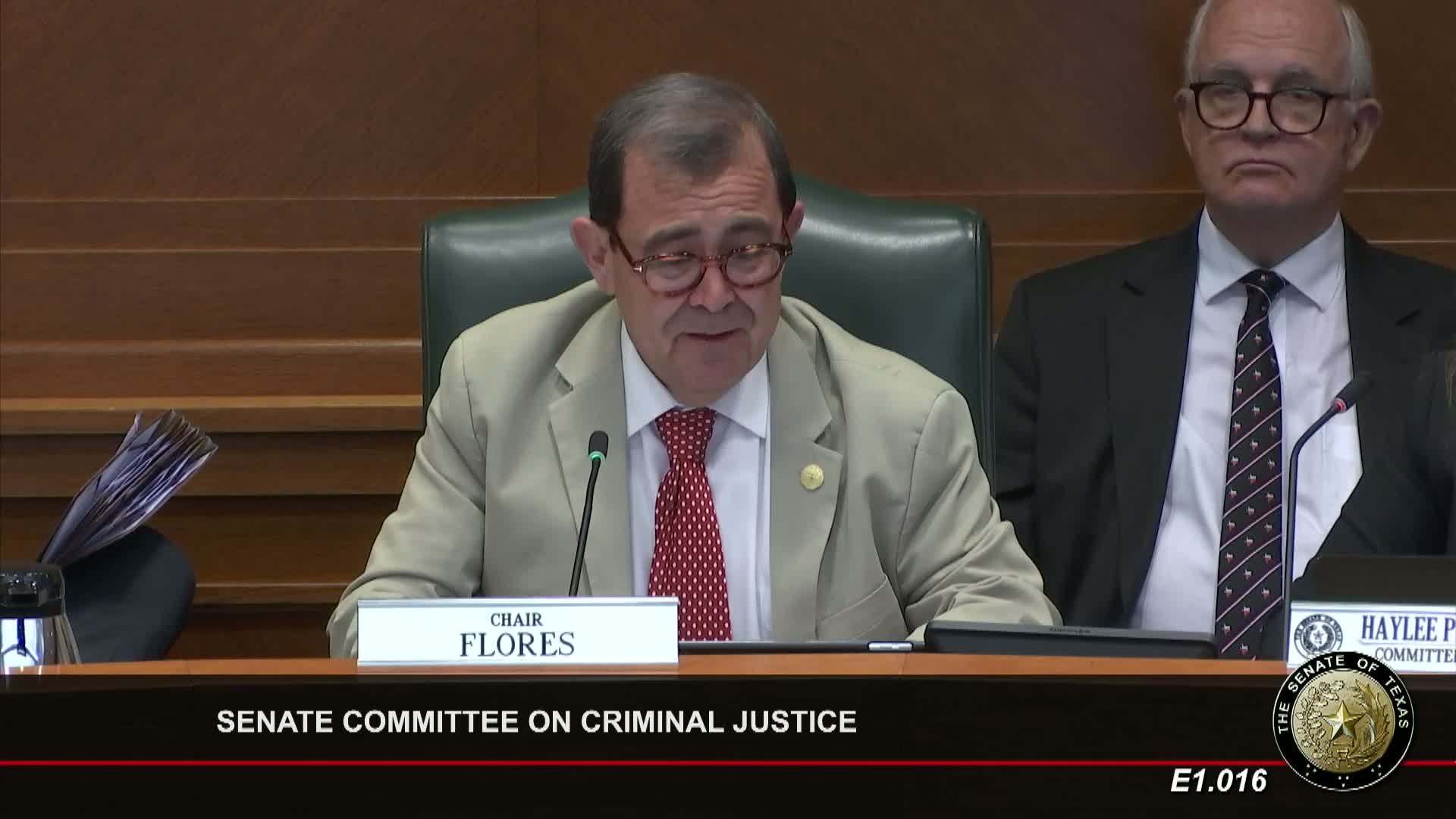
Senate hears proposal to exempt peace officers from deadly‑conduct prosecutions when acting in duty
Summary
Senate Bill 1637 would create an exception so peace officers who point or discharge firearms while performing official duties and reasonably believing the conduct necessary would not be prosecuted under the state deadly‑conduct statute. Proponents said current statute's presumption that pointing a firearm is reckless can lead to wrongful prosec
Sen. King presented a committee substitute for Senate Bill 1637 to create an exception to the deadly‑conduct statute for peace officers who, while performing official duties and acting reasonably under their training and the circumstances, point or discharge a firearm. The sponsor and law‑enforcement witnesses said Penal Code Section 22.05 currently contains a presumption that pointing a firearm at another person is reckless conduct; supporters argued that presumption can expose officers to prosecution for conduct performed in split‑second, safety‑critical situations.
CLEAT, the Texas Police Chiefs Association and several retired use‑of‑force trainers testified in favor, describing routine policing situations where drawing or pointing a weapon is part of standard training. Opponents, including some senators and civil‑liberties witnesses, warned the change could create broad immunity, urging care to preserve prosecutorial discretion and judicial review. Several invited witnesses and senators asked about how the proposal would interact with affirmative defenses and discovery obligations.
After extensive invited and public testimony the committee left the bill pending to allow for further drafting and to consider language ensuring prosecutorial access where constitutionally required.