Get Full Government Meeting Transcripts, Videos, & Alerts Forever!
Get email alerts on the Utility Rate Riders topic
No spam. Unsubscribe anytime.
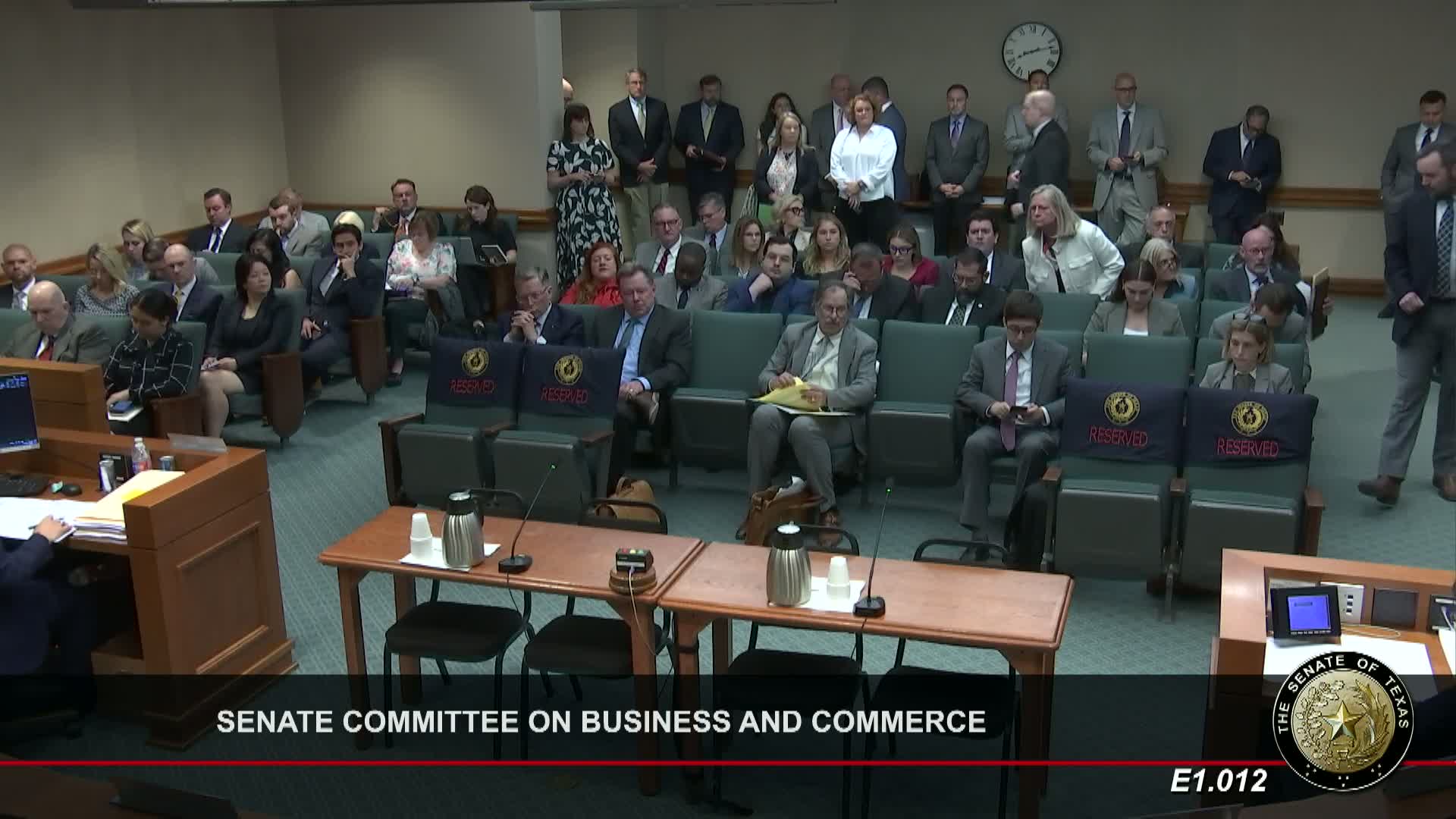
Committee hears Entergy-backed bill to allow annual capacity-cost rider for Entergy Texas; consumer groups urge safeguards
Summary
Senate Bill 1856 would let Entergy Texas seek annual adjustments to recover capacity-related costs through a rider to the PUC rather than setting those costs only in four-year base rate cases. Entergy said the change would match market volatility; consumer groups and the PUC warned about short review windows and the proliferation of riders.
Senator Robert Crane introduced Senate Bill 18 56, a proposal limited to Entergy Texas that would authorize a capacity-related cost recovery rider, allowing Entergy to seek annual adjustments at the Public Utility Commission of Texas (PUC) instead of waiting for four-year base rate cases.
The bill’s author said the change is intended for Entergy customers outside ERCOT where Entergy operates: "Currently, Entergy's capacity related costs are determined through a base rate case every 4 years ... Senate Bill 18 56 introduces a capacity related cost recovery rider allowing Entergy to go into the PUC to adjust their rate annually instead of every 4 years," the senator explained.
Karis Parnum, assistant general counsel for Entergy, testified in support. She told the committee Entergy Texas serves "over 524,000 customers" and is planning about "2,700 megawatts of new generation capacity" to meet growth. Parnum said the rider would make customers pay "only what Entergy pays, no more, no less," and described the mechanism as similar to an existing fuel‑recovery approach: "This update is critical as increased energy demand has driven pricing volatility, underscoring the need to modernize the current regulatory framework."
Katie Coleman of the Texas Association of Manufacturers (TAM) testified she and her members met with Entergy and the bill sponsor but urged caution. "In general, from the consumer's perspective, we do not favor rate riders or trackers where a single cost is viewed in isolation," Coleman said, adding that riders can hide offsetting reductions and can produce variability in customer bills. She listed concerns about the bill's 10‑day PUC review window, the bill’s presumption that costs are reasonable, and the lack of a clear requirement that Entergy file the rider regularly so it cannot selectively file only when costs rise.
Anna Givens, a resource witness for the PUC, told the committee the agency typically does not process rate-review applications within a 10‑day window and said most efficient reviews take 30 to 60 days. She warned that the bill's timeline may not align with the PUC's meeting schedule and administrative capacity.
Witnesses and senators debated mechanics and consumer protections. TAM and other intervenors requested a more structured adjustment process, true‑up language, and explicit requirements to ensure refunds if the rider overrecovers. Entergy representatives said the proposal was limited to MISO capacity and power‑purchase costs outside Entergy’s control and that those amounts are known once published by the auction operator.
The committee took testimony and left Senate Bill 18 56 pending for further work and redlines. Members indicated follow-up negotiations and filing of a redline by stakeholders would be expected.