Get Full Government Meeting Transcripts, Videos, & Alerts Forever!
Get email alerts on the Police Use Of Force topic
No spam. Unsubscribe anytime.
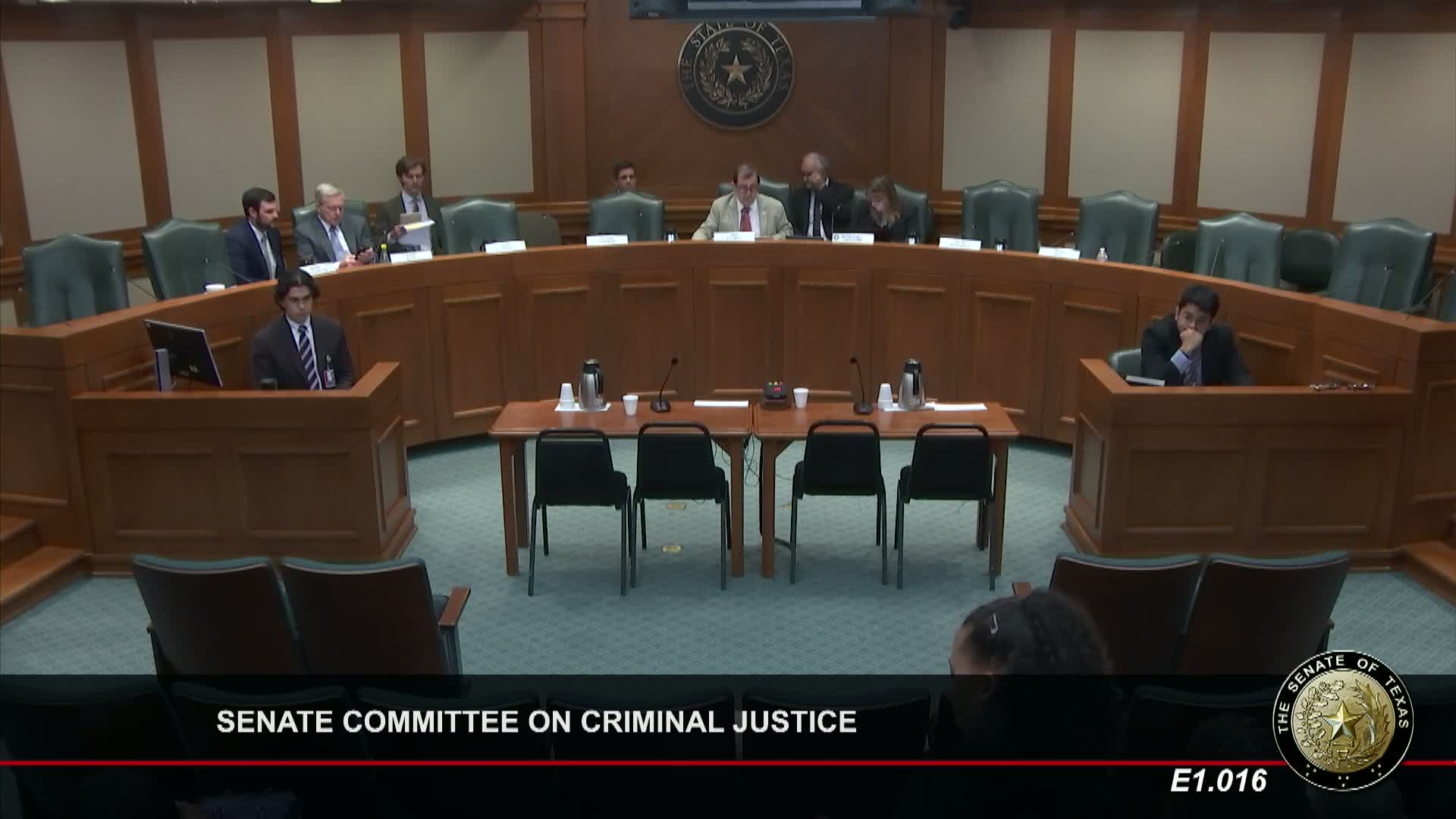
Texas Senate committee pauses bill that would change 'deadly conduct' presumption for peace officers
Summary
Lawmakers and witnesses debated whether to treat an officer's pointing or display of a firearm as a presumptive reckless act under the deadly conduct statute; families of shooting victims and civil-rights advocates urged rejection while prosecutors and police groups sought narrower fixes. The committee left the bill pending for redrafting.
The Senate Committee on Criminal Justice paused consideration of a committee substitute to Senate Bill 16 37 after hours of testimony split between public-safety concerns and calls to preserve criminal accountability.
Supporters of changing the statute argued the current presumption can subject officers who act in the scope of duty to criminal charges and long, career-destroying prosecutions; opponents — including family members of people killed by on-duty officers and civil-rights advocates — warned the change would grant broad immunity and make it harder to hold officers accountable.
The bill would alter how the Texas Penal Code treats the act of pointing a firearm or otherwise creating a risk of death or serious bodily injury. Witnesses and lawmakers debated whether the proposed language should create an exception to the presumption for peace officers, convert the carve-out into an affirmative defense, or remove the presumption for officers entirely.
"We have many more defenses than exceptions," Shannon Edmonds, a representative of the Texas District and County Attorneys Association, told the committee, explaining the legal differences between defenses and exceptions in criminal prosecutions. He warned that exceptions tied to a defendant's mental state can be legally difficult for prosecutors to disprove because a defendant may choose not to testify.
Family members of people killed in on-duty shootings urged the committee not to expand protections. Ruth Munasinghe said her son, Rajan Munisingi, a homeowner and legal gun owner, was shot after an officer failed to identify himself. "If he had known the officer was there, my son would have put the gun down immediately and welcomed his assistance," Munasinghe said. Multiple other witnesses recounted similar concerns and sought clarity about what conduct the bill would cover.
Law-enforcement groups argued officers face unique risks and that the statute as written can result in prosecutions even when departments and independent reviews find use of force consistent with training and policy. Michael Bullock, president of the Austin Police Association, said some officers feel they are "stuck between a rock and a hard place" and that the bill is intended to address that problem.
Several senators asked for narrower language. Senator King said he planned to draft amendments excluding the presumption for officers "engaged in the actual discharge of official duty" and to consult law enforcement and other stakeholders. Senator Hinojosa and others pressed for safeguards so the change would not amount to blanket immunity.
After public testimony concluded, the chair announced the committee would leave the bill pending so authors and stakeholders could work on revised language.
Votes were not recorded on the committee substitute; the committee left the bill pending for further drafting and consideration.
The exchange underscored the political and legal tension between protecting officers who act in the line of duty and preserving criminal remedies when officers act recklessly or unlawfully. Committee members said they hoped to produce a narrower approach that addresses both concerns.