Get Full Government Meeting Transcripts, Videos, & Alerts Forever!
Get email alerts on the Antisemitism In Schools topic
No spam. Unsubscribe anytime.
Bill would require Texas schools to consider IHRA working definition when adjudicating antisemitic misconduct
Summary
A proposed law would direct Texas public schools and colleges to consult the IHRA working definition of antisemitism when a code‑of‑conduct violation might be motivated by bias, proponents said, and opponents warned the definition could be applied too broadly to political speech.
A bill before the Senate Education Committee would require Texas public schools and higher education institutions to consider the International Holocaust Remembrance Alliance (IHRA) working definition of antisemitism when a school has already determined that a student violated its code of conduct and there is reason to believe the conduct may have been motivated by antisemitism.
Sandra Hagee Parker, vice chair of the Texas Holocaust Genocide and Antisemitism Advisory Commission, testified in favor of Senate Bill 3 26. Parker said the IHRA definition offers examples that help schools identify conduct that crosses from protected expression to unlawful harassment. “You cannot defeat what you are unwilling to define,” she said, arguing the definition would give educators clearer guidance when incidents escalate from debate to harassment.
Several Jewish communal organizations and victims of antisemitic harassment testified in support. Sharon Vane described repeated, targeted harassment of her son in middle school, including Nazi imagery in a yearbook and physical intimidation; she said existing school responses were inadequate and that clearer standards could help.
Opponents, including campus students and civil liberties advocates, urged caution. Testimony from several college and high‑school students and community members argued that the IHRA working definition can be overly broad and may conflate criticism of Israeli government policies with antisemitism — a dynamic they said risks chilling legitimate political speech. One university student said the definition “encourages a dangerous conflation of the government of Israel and the Jewish people.” Witnesses also raised concerns about how the definition’s illustrative examples would be applied in K‑12 classrooms.
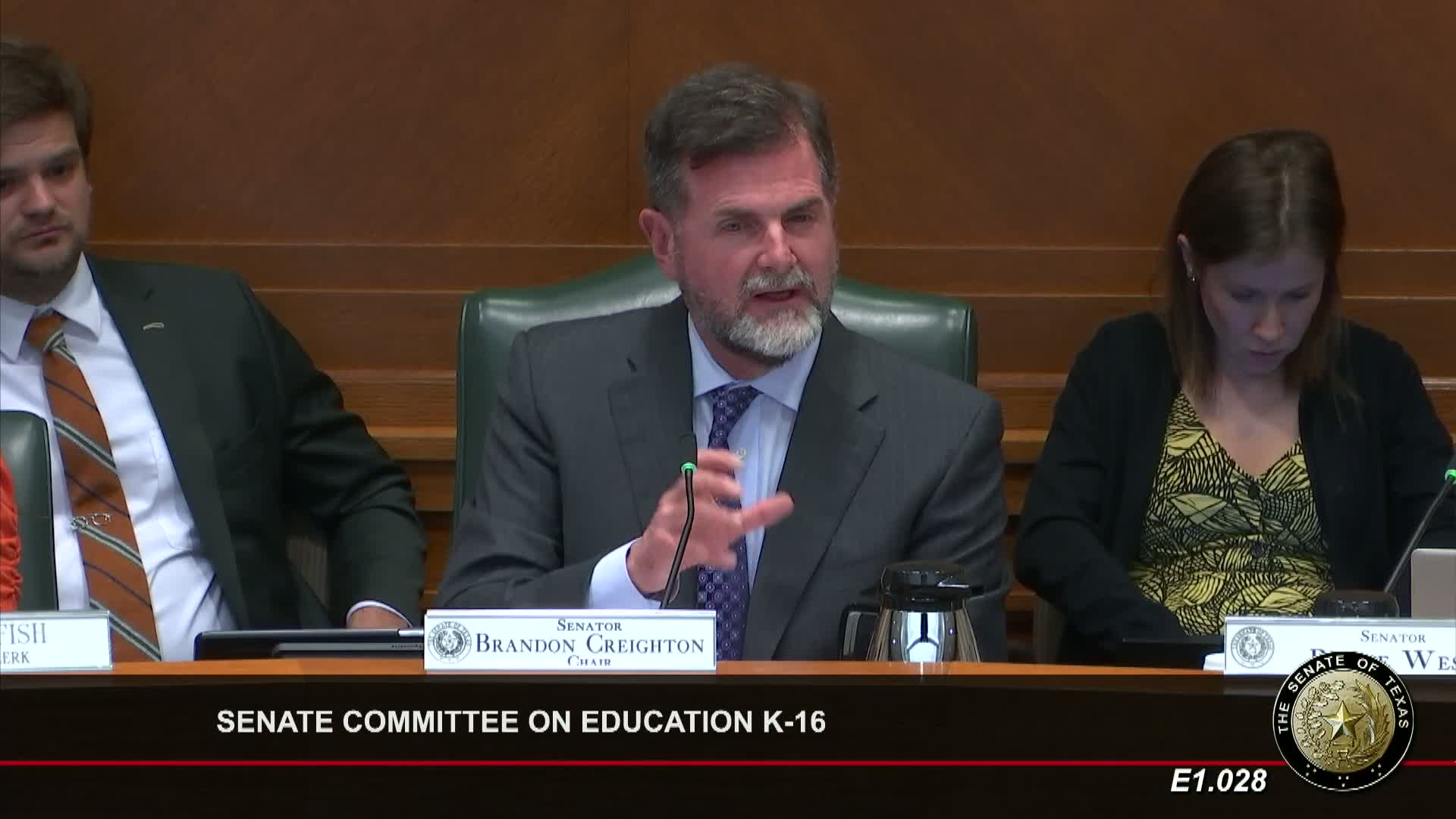
Committee members asked witnesses about the law’s scope and about ensuring the bill protects free expression while giving schools practical tools to identify harassment. The committee did not vote on the bill during the hearing; senators acknowledged conflicting testimony and signaled further work with stakeholders on definitions and exemptions would be necessary before any final action.
Sources and context: Public testimony before the Senate Committee on Education, May 20, 2025; witnesses included Sandra Hagee Parker (Texas Holocaust Genocide and Antisemitism Advisory Commission), ADL and community representatives, and several students and parents who described incidents on K‑12 and college campuses.