Get Full Government Meeting Transcripts, Videos, & Alerts Forever!
Get email alerts on the Historic Preservation topic
No spam. Unsubscribe anytime.
Liberty Hill residents urge North Charleston to designate 153‑year neighborhood as local historic district
Summary
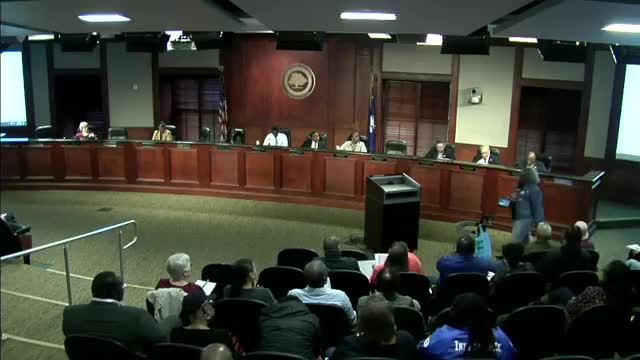
Residents and community leaders urged the North Charleston City Council during the March 20 public‑comment period to create a local historic district and zoning overlays for Liberty Hill, citing 153 years of history, recent rehabilitation work, and concerns about displacement and incompatible new construction.
Residents and community leaders urged the City Council of the City of North Charleston during public comment on March 20 to designate Liberty Hill as a local historic district with historic‑conservation, business and workforce zoning overlays.
The request, voiced by multiple speakers who identified themselves as Liberty Hill homeowners and descendants of the neighborhood’s founders, said overlays would protect the community’s “historic character,” limit incompatible new construction, and help preserve affordable housing and long‑term local ownership. “I stand before you as an advocate for our community, Liberty Hill, which was built 153 years ago,” said Audrey Lisbon, who identified herself as a descendant of early Liberty Hill residents.
The speakers said the community has organized rehabilitation and planning work and seeks city backing to codify protections. Craig F. Mitchell said Liberty Hill has completed rehabilitation work on 37 houses with roughly $500,000 in funding and described a three‑phase plan that includes continued rehab, development of a commercial corridor and new housing on about 200 empty lots. Jerome Smalls said a neighborhood survey so far has 65 returned responses; he added the group mailed roughly 450 additional surveys this month to gather broader input.
Advocates asked for a package that would combine historic‑preservation safeguards with tools to retain affordability. Valerie Young, speaking for the Liberty Hill Improvement Council, asked the council to approve a proposal covering roughly 12 acres and said those protections are needed to prevent displacement: “Liberty Hill is not just a place. It’s a testament to resilience built by generations who poured their nickels and dimes, blood, sweat and tears into nurturing the oldest organized community in the City of North Charleston.”
Speakers outlined the kinds of rules overlays would impose, including design review for alterations, restrictions on demolition, and eligibility for preservation incentives or grants. Donna McQueen, who described historic zoning overlays generally, said the tools can help preserve streetscapes and ensure new construction matches neighborhood scale and character.
Several speakers stressed that any overlay should include measures to sustain affordability. A representative who identified herself as a Park Circle resident asked the council to include a written “punch list” of city responsibilities and clear next steps, and urged the city to provide technical and financial assistance so the community can complete the process.
City staff did not take public action on the request during the meeting; the comments were made during the public‑comment period. Multiple speakers asked the mayor and council to hold a town meeting in the district and to provide clear timelines and written requirements so residents can prepare for formal overlay review.
The public‑comment block for the March 20 meeting also included other topics not related to Liberty Hill, including a separate resident’s complaint about noise and an appeal about a denied fence variance. Those items were recorded in the public‑comment period but are not part of the Liberty Hill overlay request described here.
Community context: speakers said Liberty Hill is 153 years old, that the neighborhood association has completed rehabilitation on dozens of homes using a mix of local donations and some city funds, and that the group seeks overlay protections modeled on other local conservation overlays. Several speakers noted language‑access and outreach needs for non‑English‑speaking residents and asked the city for an inclusive engagement plan.
Next steps mentioned by residents included: a request that the council authorize city staff to produce a written overlay proposal and punch list, hold an advertised town meeting in the district, and commit staff time and resources to shepherd the overlay application. The council did not vote on any overlay measure during the March 20 meeting.