Get Full Government Meeting Transcripts, Videos, & Alerts Forever!
Get email alerts on the Artificial Intelligence Grants topic
No spam. Unsubscribe anytime.
Committee hears SPARK Act to fund state AI innovation; sponsors and business groups back guardrails
Summary
House Bill 18-33 would create the Spark Grant Program to fund private-public AI projects that provide a state benefit; funding is subject to appropriation and applications must prioritize ethical AI use and risk analysis.
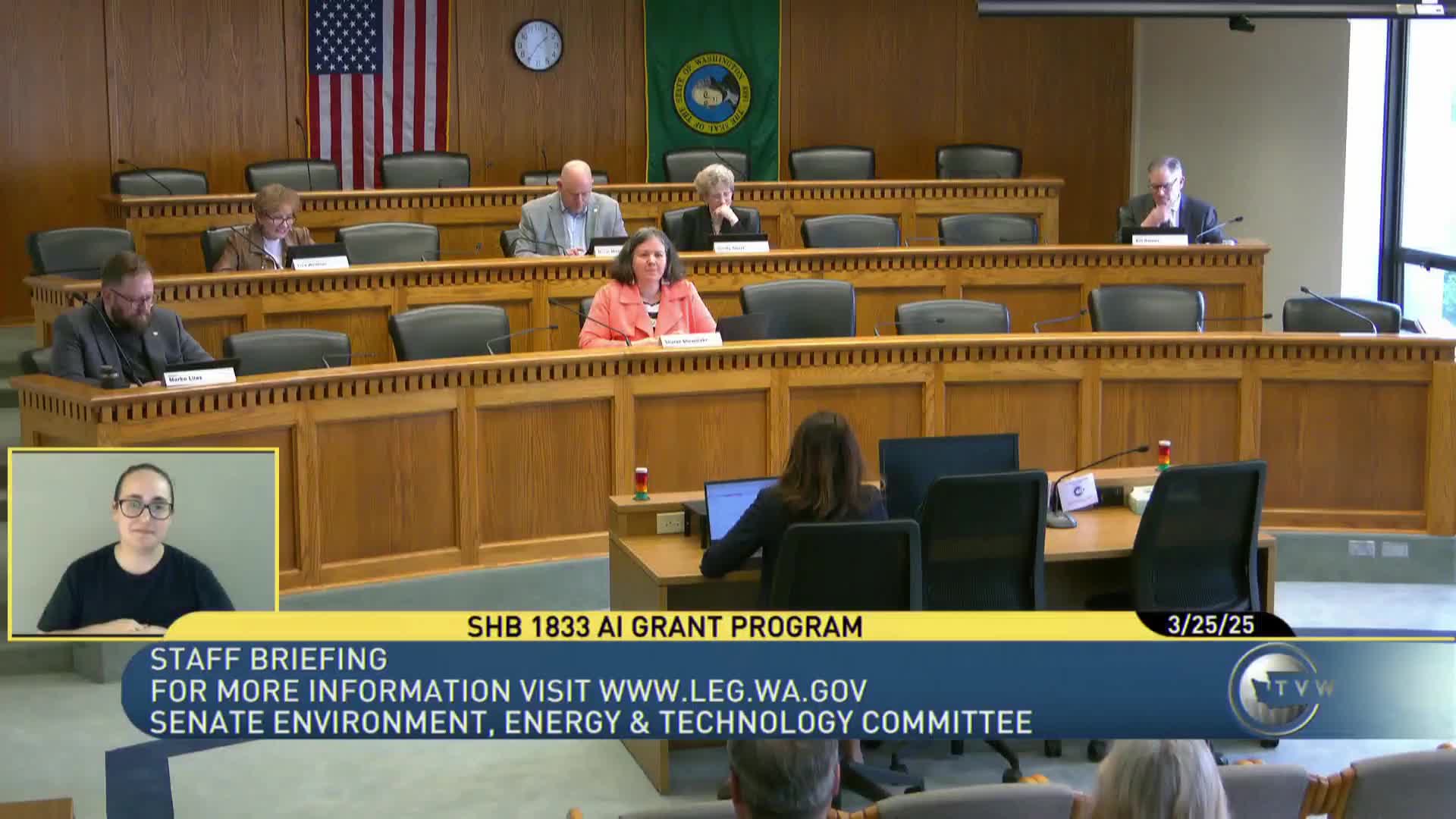
The Senate Environment, Energy & Technology Committee heard testimony on House Bill 18-33, the SPARK Act, which would create a state grant program to promote economic development of innovative uses of artificial intelligence that produce a public benefit.
Committee staff summarized the bill: the Department of Commerce would establish the Spark Grant Program (subject to appropriation) to solicit proposals aligned with priorities identified with the AI Task Force, award grants at least annually, and pursue additional federal or private funding. Commerce must solicit input from the AI Task Force and the bill requires prioritization criteria, including applicants’ commitments to ethical AI use and documented risk analyses. Commerce must report on the program to the governor and legislature beginning Oct. 31, 2027. A fiscal note was not yet available.
Representative Michael Keaton, the bill sponsor, argued the state must attract AI investment to secure high-paying jobs and support infrastructure such as data centers. “Washington should be securing at least 10% … of economic development,” Keaton said, framing the bill as a public‑private partnership designed to attract investment and to align with the Attorney General’s AI Task Force.
Senator Wellman asked whether the bill contains guardrails around potentially risky AI uses. Committee staff replied that Section 2 instructs Commerce to prioritize applications where the applicant has committed to ethical AI use and has analyzed product risks. Alicia Kinney Clausen, committee staff, also confirmed the bill aligns with the AG’s AI Task Force work.
Business and industry groups told the committee they support the bill. Crystal Leatherman of the Washington Retail Association said Spark grants would help retailers deploy AI for supply chain, cybersecurity and fraud prevention. Kelly Fukai, CEO of the Washington Technology Industry Association, said Washington ranks high among states for AI activity and urged the legislature to use the bill to help keep the state competitive.
Key details - Program name: Spark Grant Program (Spark Act). - Lead agency: Department of Commerce (program subject to appropriation). - Oversight: Commerce must solicit input from the AI Task Force and prioritize ethical uses and risk analysis in awards. - Reporting: Commerce must report to the governor and legislature beginning Oct. 31, 2027. - Fiscal note: Not yet available at the time of the hearing.
No formal committee vote occurred on the bill during this meeting. Proponents and stakeholders emphasized ethical safeguards and alignment with the AG’s AI Task Force as central to implementation.
Ending: The committee kept the bill in public hearing; Commerce and the AI Task Force will be central to developing priorities and guardrails if the program is funded.