Get Full Government Meeting Transcripts, Videos, & Alerts Forever!
Get email alerts on the Career Technical Education topic
No spam. Unsubscribe anytime.
Bill would let qualified 16‑year‑olds start EMS and certain vocational training and take professional tests before turning 18
Summary
Representative April Connors’ House Bill 1722 would let certain 16‑ and 17‑year‑old students in state‑approved career and technical education programs begin emergency medical services training and take specified tests while still minors; skill center directors, instructors and students testified in support.
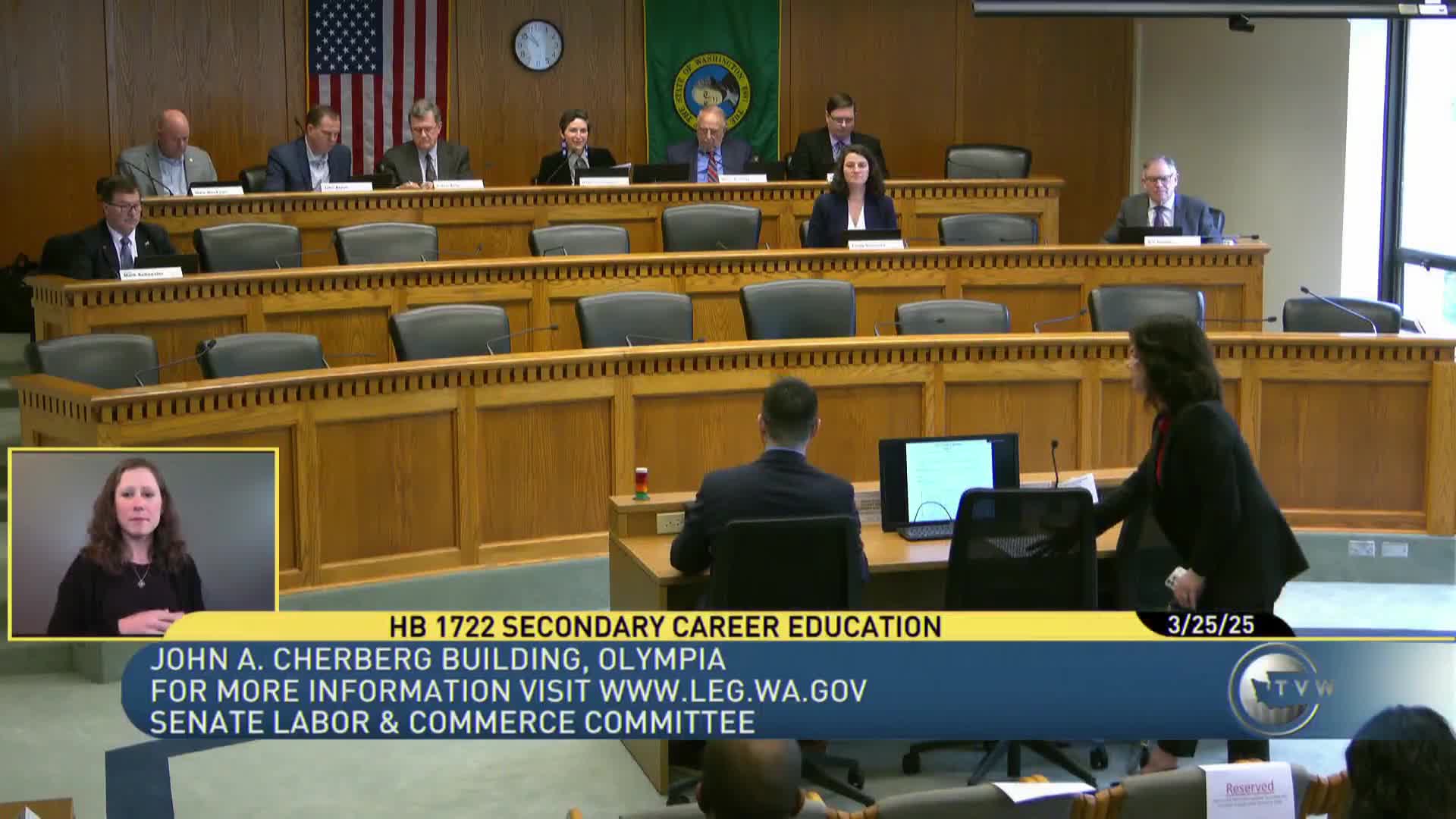
The committee heard House Bill 1722, which seeks to reduce age‑related barriers to career and technical education (CTE) pathways for students enrolled in state‑approved skill centers. Committee staff summarized three components: allow 16‑year‑old students approved by the Department of Health and a state skill center to begin EMT coursework (with continuous training until graduation or turning 18); require the state fire marshal to review policies restricting minors from fire service training and report recommendations by Oct. 1, 2025; and clarify that minors who hold specified professional licenses or certifications issued by DOH may participate in occupations otherwise restricted on the basis of potential exposure to bodily fluids.
Representative April Connors, prime sponsor, said the measure grew from work with skill centers and industry partners and aims to remove administrative barriers that prevent eligible students from obtaining certifications and workplace experience. Tri Tech Skills Center director Paul Bridal and nursing program director Angela Nemeth testified in support, citing workforce shortages, rural needs, and students’ demonstrated competency. A 17‑year‑old student and other trainees told the committee that being able to earn certifications earlier would help them enter the workforce and fill critical roles.
Committee staff provided a fiscal estimate showing modest costs to Labor & Industries ($13,000), the Department of Health ($29,000) and the superintendent of public instruction (~$3,000) for FY 2025–27, totaling about $49,000. Witnesses said safety and supervision remain priorities; the bill allows testing at 17 with a requirement that students remain enrolled until they turn 18 to work in the field. No committee vote was recorded at the hearing.