Get Full Government Meeting Transcripts, Videos, & Alerts Forever!
Get email alerts on the Adult Literacy topic
No spam. Unsubscribe anytime.
Detroit task force unveils adult literacy ‘blueprint,’ council accepts report
Summary
A city-appointed Adult Literacy Task Force presented findings and a multi-year blueprint for adult reading, digital, financial and family literacy to Detroit City Council. Council members accepted the task force report by unanimous voice vote; no formal funding was approved at the meeting.
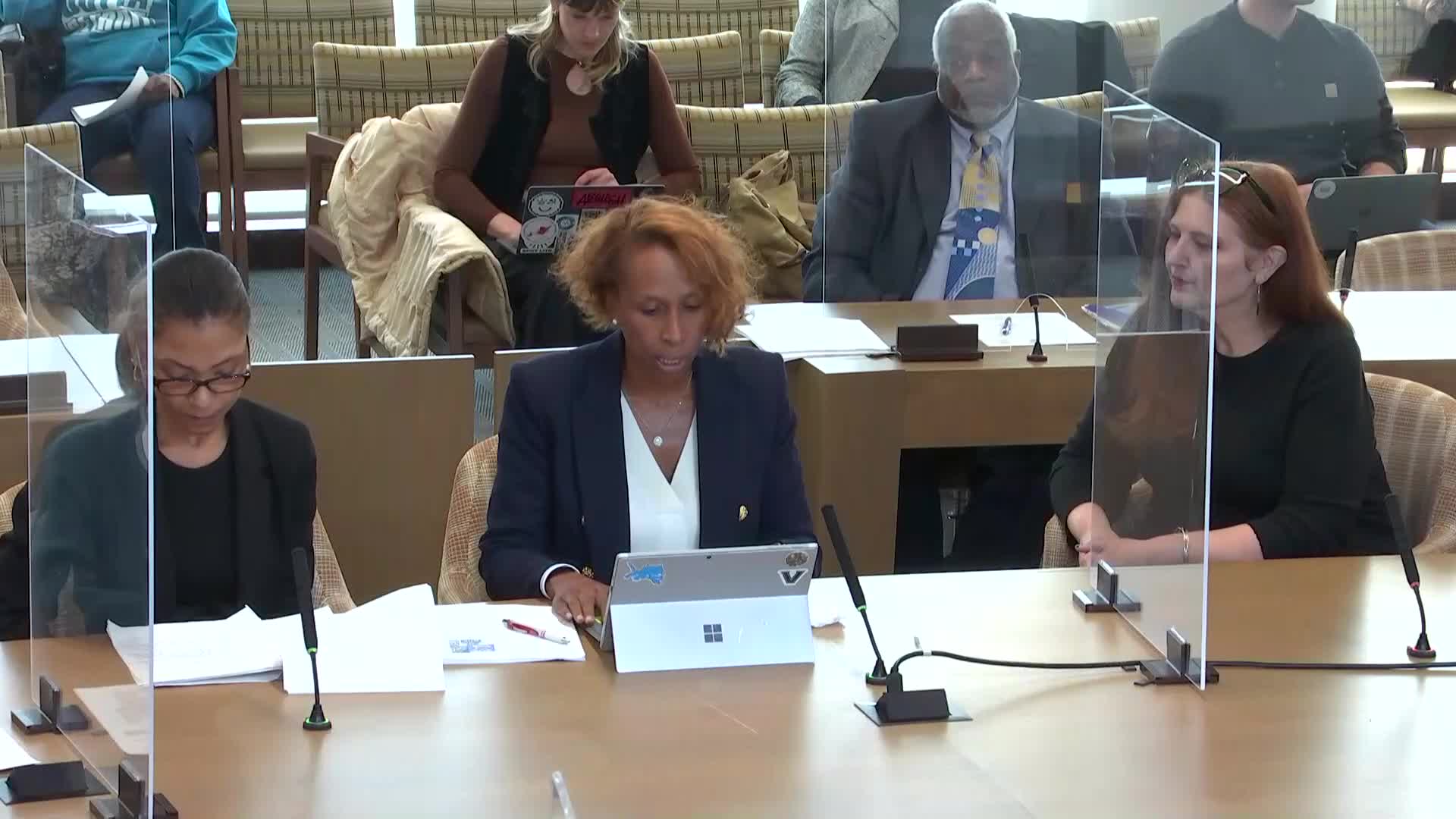
Councilwoman Waters brought the Adult Literacy Task Force before the Detroit City Council on March 21, 2025, as members of the task force presented a yearlong review and a recommended “blueprint” of next steps to measure and expand adult literacy services across the city.
The task force, led by Dr. Erica Robertson (Adventures Publishing House; Education at Scale Foundation), Dr. Katrina Kelly Wicker (Michigan State University College of Education) and Dr. Leah Van Bell (Detroit Parent Network), told the council it launched in January 2024 after a city resolution directed formation of the group. Dr. Robertson said the group’s goals were to “inspire Detroiters to become better readers and contribute to the digital and financial footprint of the city.”
The task force described four priority areas for adult literacy work: reading and writing literacy, financial literacy, digital literacy and family literacy. Presenters emphasized they were not proposing a brand-new program but rather seeking to coordinate and strengthen existing local providers, create shared data and measurement, and establish an intuitive “literacy hub” so residents can find services. “We weren't here to create a new program,” Dr. Robertson said. “What we acknowledge is there's a lot of amazing organizations that already exist in the city of Detroit.”
Why it matters: Task force members told council members that reliable, current data on adult literacy in Detroit are missing — the most recent citywide figures referenced in their presentation dated from the early 1990s — and the lack of an agreed baseline makes it difficult to set targets or track progress. They said that national and state examples (including Minnesota and Houston) show the scale and longevity needed to move population-level literacy rates and recommended a phased, multiyear effort combining pilots, funding braiding and measurement.
Key findings and recommendations
- Data gaps: The presenters said there is no recent, evidence-based citywide measure of adult literacy; the last detailed data the task force could identify were decades old. The task force recommended commissioning empirical research, ideally through higher-education partners, to establish a baseline adult literacy rate for Detroit.
- Coordination and capacity: Presenters described a fragmented provider landscape with many organizations working “in pockets.” The task force recommended forming a coordinated network that helps small providers adopt evidence-based practices and scale programs in high-need neighborhoods.
- Literacy hub and access design: The task force recommended an accessible, intuitive website or hub plus neighborhood “navigator” partners so adults with low literacy can access services without being required to navigate complex web pages alone.
- Funding strategy and pilots: The group recommended starting with small pilots (they cited New York’s early small grants that later expanded) and seeking a mixed funding model that includes philanthropic, corporate and public dollars to build capacity and sustain the initiative.
Council reaction and next steps
Council members thanked the presenters and emphasized the issue's links to workforce development, public safety and family outcomes. Member Durhall and others noted the city's budget season and said the council would consider next steps during upcoming hearings. Member Dorha (who spoke from the floor) and others stressed the intergenerational connection between adult and child literacy.
The council took a procedural action to accept the task force report. A motion to accept the report was called and, hearing no objections, the council approved acceptance of the report; the acceptance did not itself appropriate funds or formally adopt the blueprint as city policy. Council members said they plan further discussions about funding, next steps and possible referrals to committees for more detailed consideration.
Quotes from the meeting
- Dr. Erica Robertson: “We started on this journey, and officially kicked off our task force January of 2024.”
- Dr. Robertson: “We weren't here to create a new program. What we acknowledge is there's a lot of amazing organizations that already exist in the city of Detroit.”
- Dr. Katrina Kelly Wicker: “Governor Whitmer signed the literacy for all legislation,” a state-level policy development the presenters cited as part of the broader literacy policy environment.
Meeting outcome and immediate follow-up
The council accepted the task force report by voice vote (no roll-call tally recorded in the meeting transcript). Presenters and council members agreed to return to the council with specifics on research partners, timelines and possible budget implications; the task force said it was available to provide further details if council chooses to pursue a formal, multiyear commitment.
Ending
The task force urged a long-term, multi-stakeholder approach and warned short-term funding alone would not replicate the decades-long gains seen in cities that achieved high baseline literacy. Council members expressed support for further study and pledged to consider the recommendations as the city’s budget process continues.