Get Full Government Meeting Transcripts, Videos, & Alerts Forever!
Get email alerts on the Senior Accessibility Corridors topic
No spam. Unsubscribe anytime.
Residents press council for senior accessibility home repairs and corridor investments
Summary
Speakers at the Detroit City Council budget hearing urged the council to fund senior accessibility programs, home repairs (including walk-in showers), and neighborhood corridor projects; DeSoto Ellsworth Block Association requested assistance covering nonprofit incorporation fees and local landscaping materials.
Detroit
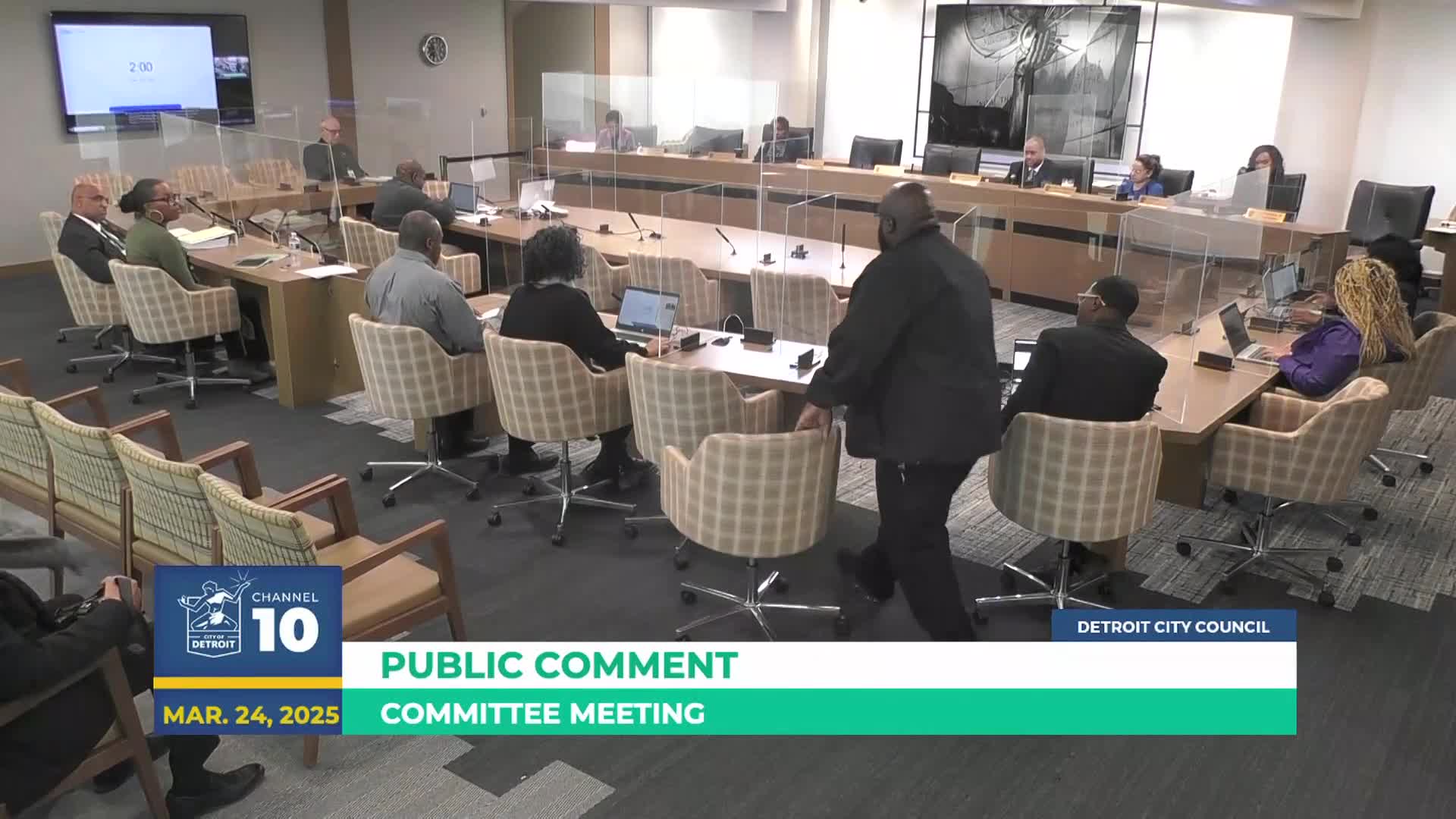
Several residents used public comment during a Detroit City Council budget hearing to request funding for senior accessibility programs, home repairs for residents with disabilities and investment in neighborhood corridors that have been left out of recent streetscape work.
Why it matters: Speakers said small capital supports such as walk-in showers, landscaping boulders and nonprofit start-up costs would improve safety and livability for seniors and volunteer-led neighborhood groups in underfunded corridors.
Betty A. Varner, president of the DeSoto Ellsworth Block Association, asked the council to allocate funds to the Detroit Accessibility Program for seniors and people with disabilities, and specifically to a senior disabled accessibility home repair program to cover items such as walk-in showers. "We need walk in showers," Varner said on the record, adding that corridors such as the Fenkell/Livernois area are not receiving the same streetscape funding other neighborhoods have.
A resident who identified as Mr. Clark described elder-check programs he had seen with the Ojibwe tribe and in Rochester, Minnesota, and suggested Detroit could adopt a similar model: routine welfare checks on isolated elders supported by a small grant and volunteer victim-service advocates who would accompany officers during mental-health or cultural-sensitivity calls. He also recommended cultural training for officers to help them interact appropriately with refugee and immigrant residents.
Council Member Waters noted that Hanlon House on Woodward performs regular detailed surveys of seniors' needs and suggested the council coordinate with existing organizations that already do outreach. Varner also asked the council to help small neighborhood groups cover state-required fees to become 501(c)(3) nonprofits and to support local landscaping projects with materials.
What remains unresolved: Speakers requested allocations and program support, but no specific budget amounts, sources of funds, or timeline for implementation were provided on the record. Council staff did not commit to line-item changes during the hearing.
Ending: The public-comment period closed after the final speaker; the budget hearing proceeded to the virtual portion of public comment and then to the council's closing business.