Get Full Government Meeting Transcripts, Videos, & Alerts Forever!
Get email alerts on the Bopc Budget Staffing topic
No spam. Unsubscribe anytime.
Detroit police oversight office urges council to keep six investigators, add two admin staff to cut backlog
Summary
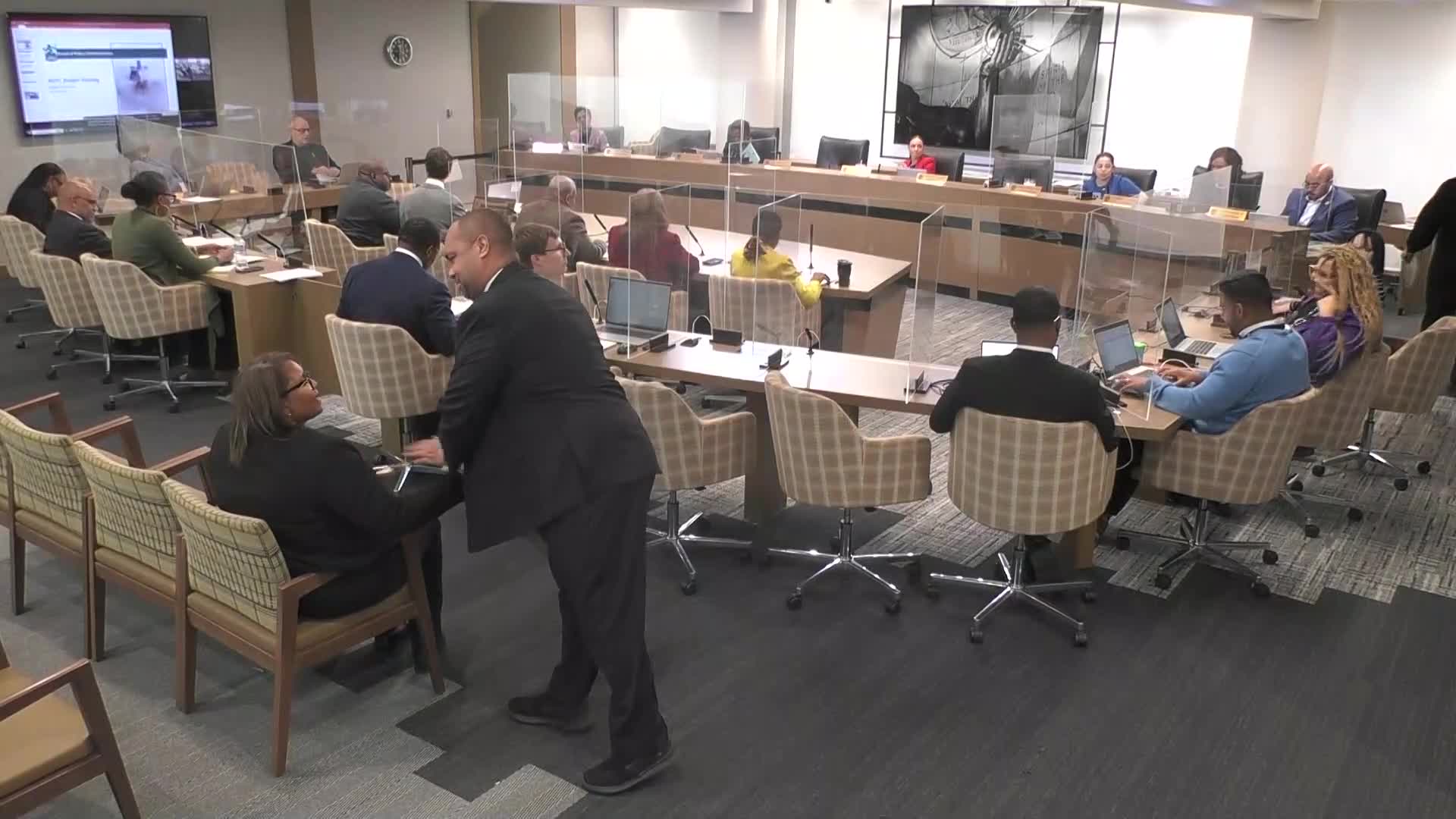
At a Detroit City Council budget hearing, the Board of Police Commissioners and the Office of the Chief Investigator described a shrinking but still-large backlog of civilian complaints and asked the council to preserve six investigator positions and approve two additional administrative full-time equivalents.
Commissioner Daryl Woods, representing the Board of Police Commissioners, told the Detroit City Council at a budget hearing that the board has expanded oversight tools and sought budget capacity to keep recently added investigators and expand administrative support.
"The city of Detroit, the Board of Police Commission has never been this transparent," Woods said, highlighting a new online civilian-complaint dashboard the board launched.
The request centers on a budget delta between the board’s requested funding and the mayor’s proposal that council members described during the hearing. Council members and BOPC staff discussed a figure the council president cited as $534,007.88 and staff later described in the packet as $534,788; BOPC leaders said that difference represents funding tied to six investigators the office added this fiscal year.
Chief Investigator Warfield described the backlog and recent caseload changes: "At the end of 02/2024, we had a total of 2,231 cases," Warfield said, and staff said the office received more than 4,400 complaints across two years. Warfield said investigators are expected to close about 96 cases each per year, which he said equates to roughly 2,100 cases annually, and that the office’s new case-management system has helped speed processing.
Warfield also gave a snapshot of outcomes and complaint types: about 12% of completed investigations are sustained, he said, and roughly 70% of complaints fall into three categories — demeanor (communication), procedure (including body-worn camera timing), and service (reporting or perceived lack of service).
Drew Fries, executive fiscal manager for the BOPC, told the council the $534,000+ difference is largely explained by one-time temporary-worker funding that is not in the mayor’s proposed budget, plus negotiated union (MATE) cost increases, fringe benefits and planned wage adjustments. Fries said losing the funding would reduce the office’s annual investigative capacity; staff projected that without the workers the OCI could investigate about 1,536 cases per year, compared with the record-year workload the office handled.
Council members asked about current turnaround times and data transparency. Warfield said the dashboard shows a 115-day average driven by the backlog but that when indexed from receipt to completion the office is averaging about 50 days per case. He also said the office produces precinct-level complaint data monthly and has searchable complaint text in the new system.
Several council members and commissioners pressed for more demographic and geographic breakdowns of complaints; Commissioner Woods and staff pointed to the dashboard and offered to supply precinct- and ZIP-code-level detail to the council.
On staffing, the BOPC said it has reduced vacancies, integrated a new case-management system and hired six investigators this fiscal year. Commissioners and staff said they still need additional administrative help: the BOPC requested two administrative FTEs to manage case flow and records, and staff told the council those two positions are included in the BOPC’s full budget request and were estimated in the hearing at roughly 130 (as stated in the packet discussion).
Council action: the council moved two separate items into executive session during the hearing — one to consider the six investigator positions and another to consider two administrative FTEs for the BOPC. The council proceeded with no recorded objections and moved both items into executive session for further discussion.
The hearing also included discussion of outreach and translation: commissioners said brochures and some materials are available in Spanish and that the complaints form and FAQ page should be translated. Commissioners and staff requested more language-access work and offered to help implement it.
The budget hearing ended with the council and BOPC agreeing to follow up with additional materials, organizational charts and precinct-level complaint data so council members can assess staffing and budget choices ahead of final budget decisions.