Get Full Government Meeting Transcripts, Videos, & Alerts Forever!
Get email alerts on the Budget Freeze topic
No spam. Unsubscribe anytime.
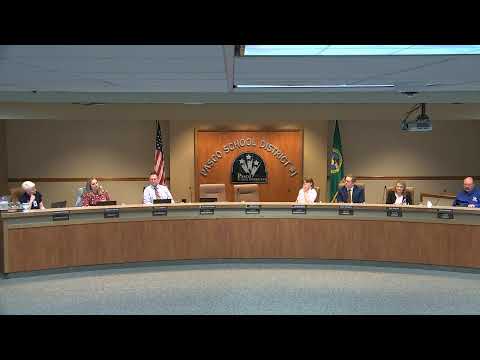
Pasco superintendent details budget freeze measures as district seeks to close $4.8 million shortfall
Summary
Superintendent Michelle Whitney outlined an operational budget freeze, identified immediate reductions and system changes, and described voluntary furloughs and increased purchase-order controls to close a projected $4.8 million year‑end shortfall.
Superintendent Michelle Whitney told the Pasco School Board that the district is operationalizing a temporary budget freeze after projecting a potential $4.8 million year‑end deficit if no corrective steps are taken. Whitney described immediate actions already taken and additional near‑term steps to reduce expenditures and strengthen purchasing controls.
Whitney said district administrators reviewed budgets to determine revenue needs through Aug. 15, maximized allowable siloed funding (transportation, state and federal program dollars), cancelled nonessential contracts and reduced encumbrances, and are delaying filling certain vacant positions. She said preliminary steps have saved nearly $500,000 in canceled encumbrances and that additional savings will come from not filling vacated positions and maximizing program‑specific funding.
The superintendent outlined program and service impacts under consideration. Some reductions are planned to be non‑student‑facing where possible, but Whitney said summer programs will be modified and that, as of the presentation, there was no budget for summer school. She said the district will seek to charge allowable staff costs to grant or departmental programs where rules permit, and that the district will work with labor partners on voluntary furlough days for eligible employees.
Whitney described systems changes to improve budget control: emphasize use of the district purchase‑order system rather than purchasing cards ("P‑cards"), shorten PO turnaround times so employees do not rely on P‑cards for speed, limit the number of P‑cards and require additional hiring approvals so new positions are encumbered immediately in budget projections. "We want to create a system where we're relying on the purchasing system as our primary tool," Whitney said, adding the district will explore ways to create a PO at the time of a P‑card purchase when urgent items are required.
Board members pressed for confidence that the measures would close the gap. Whitney said she and the administration would "work as hard as we possibly can to make up that $4,800,000 shortfall," but added, candidly, "I am not confident we... we're gonna make it up. But we're gonna, we're gonna die trying." Directors asked for specifics on how staff charging to programs would work and whether voluntary furloughs would require memoranda of understanding; Whitney said the district would pursue those conversations with labor partners and that voluntary furloughs would target positions where work could be scheduled without disrupting student services.
The administration said more detailed numbers are forthcoming: building‑level administrators will run similar budget analyses to those performed at the district level; staff will provide updated estimates of savings from unfilled positions, canceled encumbrances and program reductions; and the district will monitor cash flow monthly. At the March 11 report the board was told the district had roughly $22.6 million in cash reserves; Whitney said staff will continue to monitor reserves and the impact of cost reductions.
Whitney said the district is balancing near‑term actions to stabilize finances with preserving student programming where possible and will return with updated figures. She also emphasized that all reallocation of staff costs to grants would comply with grant rules and that auditors and program managers will help ensure compliance.