Get Full Government Meeting Transcripts, Videos, & Alerts Forever!
Get email alerts on the Housing And Zoning topic
No spam. Unsubscribe anytime.
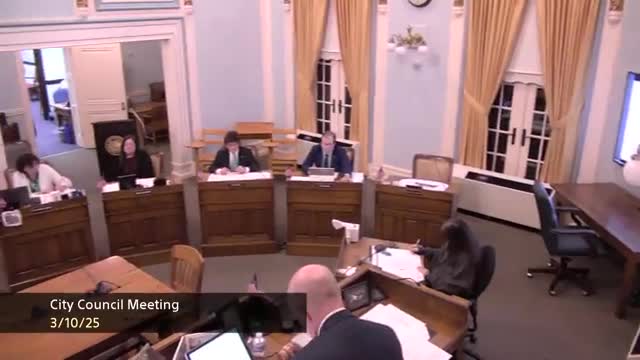
Council denies plan to convert 30 Maple Street from two‑family to three‑family after legal review
Summary
The council voted 10‑0 on March 10 to deny a special‑permit application to convert a two‑family property at 30 Maple Street to a three‑family after the assistant city solicitor advised the application was not in proper legal form under city ordinances and state auxiliary‑dwelling rules.
The Marlborough City Council on March 10 denied, by unanimous roll call (10‑0), a special‑permit application to convert an existing two‑family property at 30 Maple Street into a three‑family property.
Councilor Roby brought the matter forward after the city’s assistant solicitor, Jeremy McManus, submitted a written opinion that the application could not be certified in proper legal form. The assistant solicitor cited city ordinance sections that define a multifamily dwelling as “a dwelling including single family attached units designed for or occupied by three or more families” and related provisions (cited in the solicitor’s memo as sections 650‑5 and 650‑18). McManus concluded that, as presented, the proposal did not qualify as a multi‑family dwelling for purposes of the relevant zoning provisions and therefore could not be processed as that form requested.
Council discussion referenced changes in state auxiliary dwelling unit law and how those provisions interact with the city’s zoning definitions; Councilor Dusett said he agreed with the solicitor’s legal analysis and the resulting recommendation to deny. The motion to deny directed the president to sign the denial, citing the legal reasons set out by the assistant city solicitor.
Why it matters: The denial turned on a legal interpretation of local zoning definitions and how state auxiliary‑dwelling provisions apply. Applicants and housing advocates concerned with conversions and accessory units should note the council’s reliance on a solicitor’s opinion when assessing what applications can be processed through special permit pathways.