Get Full Government Meeting Transcripts, Videos, & Alerts Forever!
Get email alerts on the Community Engagement topic
No spam. Unsubscribe anytime.
Zoning steering committee reviews community engagement report; housing affordability, walkability top concerns
Summary
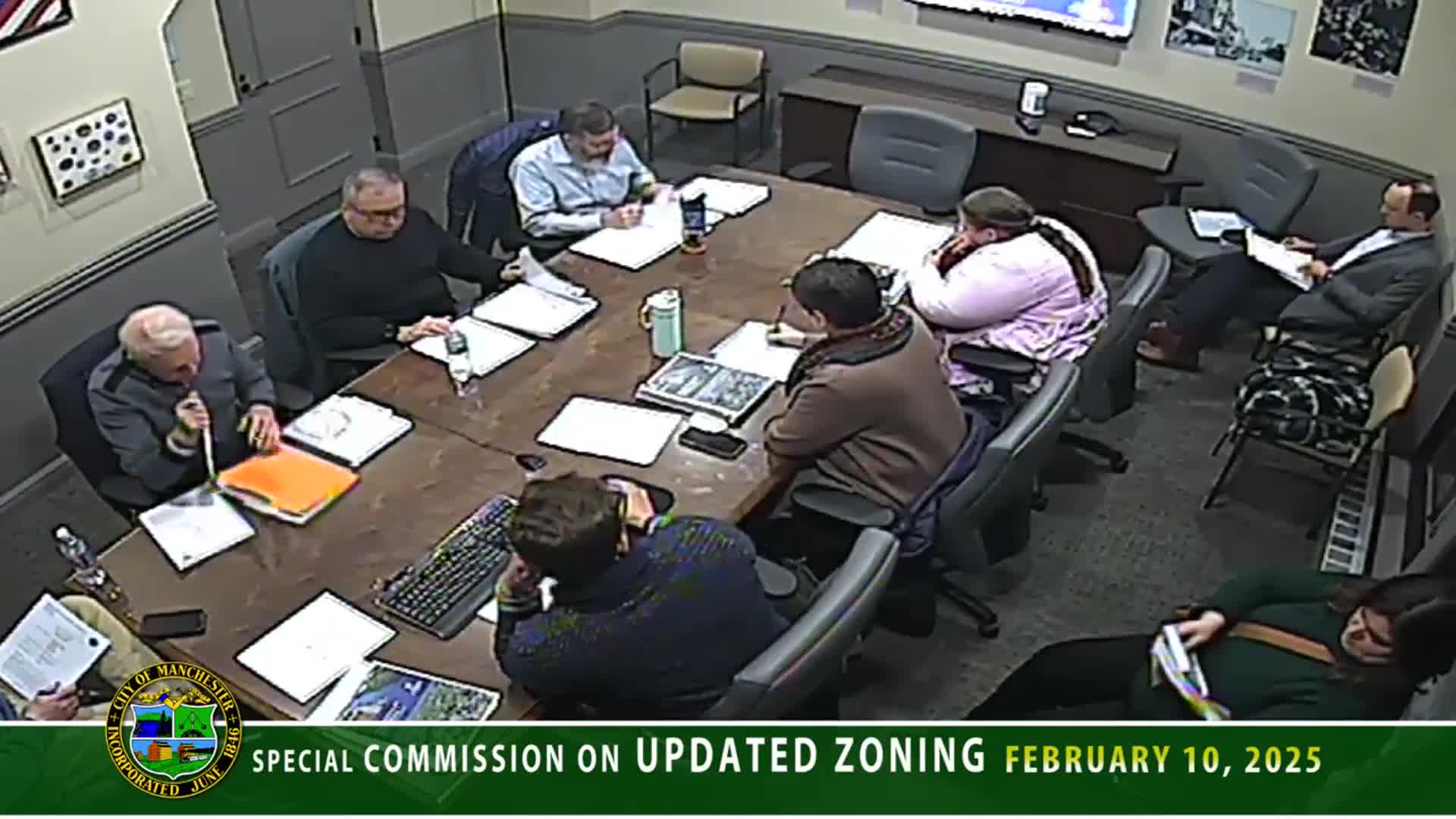
The Zoning Ordinance Steering Committee on an evening meeting reviewed a community engagement report summarizing 12 ward meetings held over the summer, staff said, with roughly 1,100 unique participants and close to 1,100 individual comments recorded.
The Zoning Ordinance Steering Committee on an evening meeting reviewed a community engagement report summarizing 12 ward meetings held over the summer, staff said, with roughly 1,100 unique participants and close to 1,100 individual comments recorded.
The report — prepared by UNH Cooperative Extension and posted on the Manchester Land Use Code website — distilled recurring topics across the city: housing affordability in multiple forms (senior housing, housing for unhoused people, housing for young families and general single‑family affordability), a preference among many participants for accessory dwelling units (ADUs) and duplexes rather than large multifamily buildings, and widespread interest in walkability and neighborhood connectivity.
“12 community meetings, a thousand unique participants that were, counted and, close to 1,100 individual comments,” the presenter said, summarizing the report and its appendix of meeting notes. The staff presenter added that the appendix includes meeting comments captured on butcher‑block paper and read back in the full groups.
Why it matters: Committee members and staff framed the engagement summary as the principal public input they will use to refine draft zoning maps and the new land‑use code. The report’s ward‑by‑ward detail is intended to make later map changes defensible and to show where the public prefers gradual increases in density (for example, ADUs and duplexes) versus where residents want to preserve existing character.
Key findings and staff responses
- Housing affordability: Staff said “housing affordability” was the dominant theme and that the term encompassed a range of concerns — from affordability for seniors to housing for people experiencing homelessness and for new households. The report found greater public favor for ADUs and duplexes and less emphasis on large multifamily buildings; many participants prefer incremental density near existing walkable centers.
- Walkability and infrastructure: Walkability was repeatedly raised as a need for better connectivity from homes to schools and amenities, plus maintenance of sidewalks and other public infrastructure. Staff said they have coordinated with the Department of Public Works and the Southern New Hampshire Planning Commission on traffic studies to identify streets that can support added density and those that cannot.
- Code enforcement and design standards: The report captured frequent requests to streamline permitting and to ensure that any new zoning changes can be enforced. Staff said they are meeting with zoning review officers, building regulation staff and inspectors to align proposed rules with enforcement capacity.
- Capacity concerns: Citizens asked whether water, sewer, schools, public safety and other services could absorb more development. Staff reported they had consulted other departments and that in many instances capacity either exists or can be expanded through required subdivision and site‑plan standards, traffic impact studies and similar provisions.
- Short‑term rentals: The report and supplemental survey responses included several comments about short‑term rentals. Staff described proposed draft language that would define a short‑term rental as any rental for less than a month and to limit short‑term rental use to no more than 90 days in a year in the draft ordinance.
“The current proposed or the proposed language that we’re planning on bringing forth in the next draft would be, 90 days,” staff told the committee while explaining the draft definition and enforcement implications.
Ward highlights and contentious items
The appendix organizes comments by ward and shows variation across neighborhoods. Examples the committee discussed include:
- Ward 1: High turnout and mixed views on density; discussions about reuse of a specific Star Park parcel and concerns about loss of green space. - Ward 2: Concern about removing a labeled “conservation” zoning district; staff explained much of the land in question is already protected by parks or conservation easements so eliminating a distinct conservation district may be largely optical. - Ward 3 (downtown): Strong support for more downtown density, mixed use and reduced parking requirements; staff warned that eliminating parking minimums downtown raises tradeoffs for customers and businesses and said they were researching alternatives such as developer‑required parking or parking studies.
Other wards reported preferences for duplexes and small multifamily types, interest in tiny houses in some responses, enforcement complaints about absentee landlords, and recurring requests for more public spaces and community gardens on the West Side.
Next steps and committee direction
Committee members asked staff to use the report to refine map changes and to continue coordination with enforcement and other departments. Staff said they will bring a revised draft of zoning maps and ordinance language back to the steering committee for further review.
Ending: Committee members praised the outreach effort. Staff said the report is available in full on the Manchester Land Use Code website and will inform future draft zoning maps and code language.