Get Full Government Meeting Transcripts, Videos, & Alerts Forever!
Get email alerts on the Blight Enforcement topic
No spam. Unsubscribe anytime.
Council questions law department on blight enforcement, speculators and related-party tax sales
Summary
Council members pressed the law department about enforcement against speculators, the Caffillano consent agreement and whether county treasurer policies allow related-party sales after tax foreclosure.
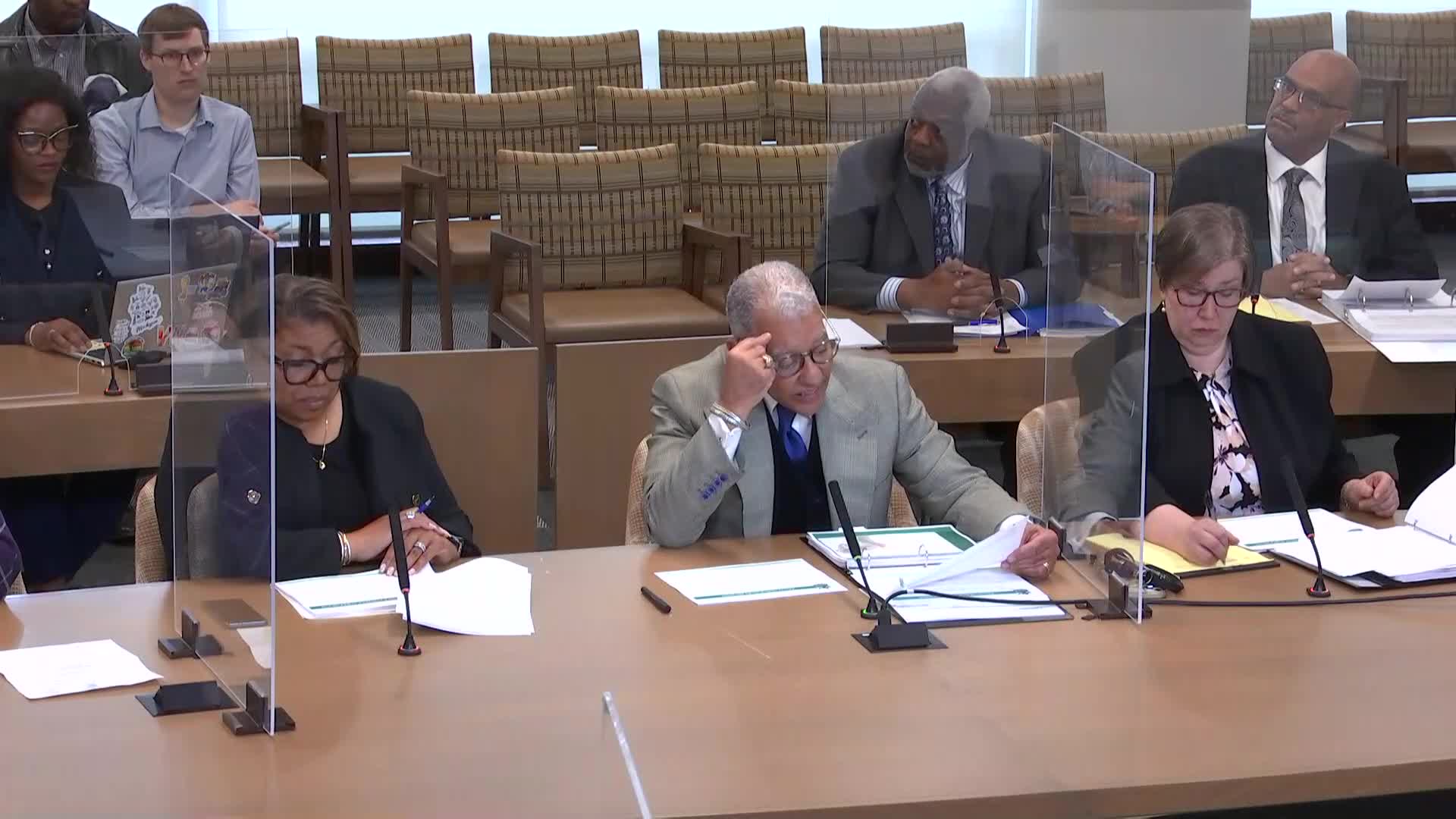
Council members pressed Conrad Mallett and law department staff on enforcement tools to address blighted properties, large-scale speculators and the city’s options when foreclosed properties transfer to related parties.
Mallett described recent litigation and enforcement results the department has pursued, including consent agreements and actions that removed vehicles from parcels and a recent settlement with Greenfield Supply near Shaffer. He said the department has filed or overseen dozens of blight-related matters last year and manages collection and enforcement efforts tied to demolition and code compliance.
Council members said some owners who acquire foreclosed properties transfer them to related parties, hindering long-term enforcement and redevelopment. Mallett said Oakland and Macomb counties prohibit tax-foreclosure transfers to related parties and suggested that Wayne County policy allowing related-party purchases after foreclosure creates a loophole that benefits speculators; he said he has not yet met the Wayne County treasurer to press for change and that he would take that follow-up.
Pro Tem James Tate and others praised recent litigation wins in the district, including environmental and dust-mitigation actions and a large “mammoth” case where the department plans to file cost-collection efforts imminently. Council members asked about stronger enforcement tools, higher fines and strategic use of the city’s right-of-first-refusal on tax-foreclosed properties for redevelopment.
Why it matters: Council members said speculative purchases and related-party transfers can drive up neighborhood property values and complicate redevelopment and municipal projects.
Ending: The law department said it will follow up with the Wayne County treasurer and provide further updates to council committees on enforcement strategies, consent agreements and use of the city’s acquisition and demolition tools.