Get Full Government Meeting Transcripts, Videos, & Alerts Forever!
Get email alerts on the Insurance Code Maintenance topic
No spam. Unsubscribe anytime.
Committee hears agency-request bill to clean up insurance statutes, debate on public-records exemption
Summary
Substitute Senate Bill 5,262, agency-request legislation from the Office of the Insurance Commissioner, would update and repeal outdated insurance code provisions, align state hearing-aid coverage with federal essential health benefits beginning 2026, and add a public-records exemption for certain direct-practice data. The Office of the Insurance
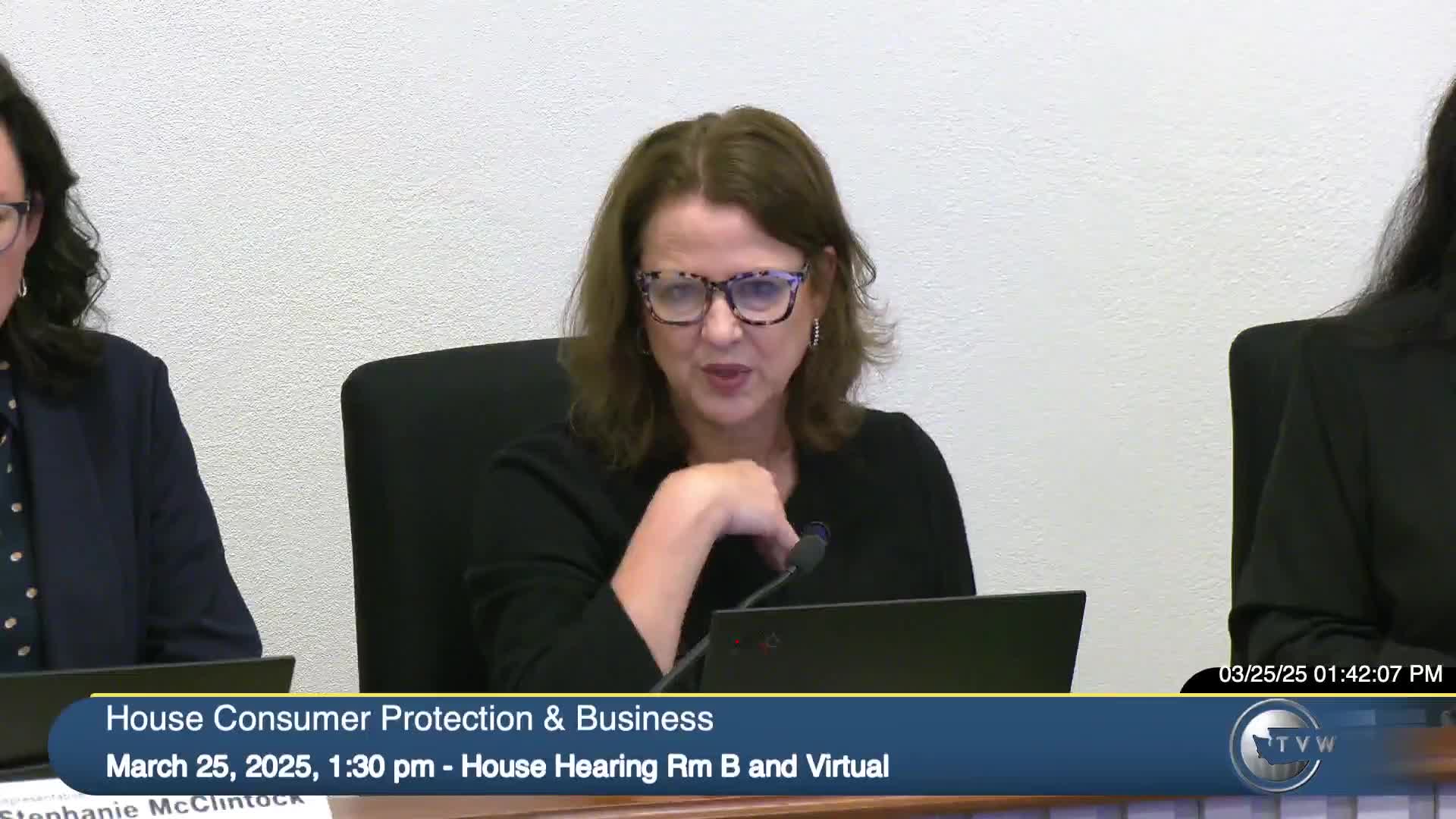
The Consumer Protection & Business Committee heard Substitute Senate Bill 5,262 March 25, an agency-request bill from the Office of the Insurance Commissioner to correct obsolete statutory references, remove defunct reporting requirements and reconcile state law with recent federal changes to essential health benefits.
Peter Clodfelter, committee staff, described SSB 5,262 as largely technical updates and maintenance to the insurance code, noting one substantive difference from a prior House companion: the Senate version retained a provision that ‘‘due consideration in making motor vehicle insurance rates must be given to any anticipated change in losses attributable to the use of anti-theft devices, lights including rear stop lights and seat belts,’’ that the House bill had removed. Clotfelter summarized a range of changes including removal of one-time reports, updates to tax-refund calculations, and a public-records-act (PRA) exemption for some direct-practice reporting.
Section 9 of the bill amends hearing-aid coverage to match changes the federal government approved in October 2024 for Washington’s essential health benefit benchmark plan. Clotfelter said the bill removes a $3,000 benefit minimum every 36 months that was previously in state statute so state law aligns with the federal benchmark; health carriers may still require prior authorization and adopt utilization protocols for medically necessary hearing instruments.
Senator Claudia Kaufman, prime sponsor, told the committee the bill ‘‘focuses on modernizing insurance regulations, improving consumer protections, and ensuring fairness and equity,’’ while removing outdated language and streamlining regulatory reporting.
Doreen Ekpon of the Office of the Insurance Commissioner said the bill is agency-request legislation and that similar statute updates have not passed since 2012. Ekpon noted the PRA exemption for direct-practice data is intended to encourage more complete reporting to the OIC; she said recent PRA exemptions for similar datasets have improved agency cooperation and that the commissioner supports data-driven regulation. Ekpon also clarified that many items deleted by the bill are one-time reports already delivered to the Legislature.
Roland Thompson of Allied Daily Newspapers and the WSA Broadcasters Association opposed the PRA exemption for the direct-practice reports. Thompson said the current public report itemizes providers by county and lists provider names, patient counts and average direct fees; he argued those reports are valuable consumer information and asked the committee to remove the exemption in sections 1 and 13 so the reports remain publicly accessible.
Representative Reeves and other members asked questions about specific reporting deletions and the purpose of the PRA exemption. Ekpon explained several deleted reporting requirements were one-time or obsolete (for example, a report due in 2020 that was delivered) and said the OIC seeks robust data-sharing but recognizes agencies and providers may have federal obligations or proprietary concerns.
Committee members also asked about data-collection practices and privacy; Senator Kaufman suggested these provisions were intended to protect consumer data without creating overbroad secrecy.
No vote on SSB 5,262 was recorded during this hearing; the public testimony was completed and the committee closed the hearing.