Get Full Government Meeting Transcripts, Videos, & Alerts Forever!
Get email alerts on the Child Fatality Review topic
No spam. Unsubscribe anytime.
Committee hears bill to expand and rename child mortality reviews to child fatality reviews
Summary
Substitute Senate Bill 51-63 would rename local child mortality reviews as child fatality reviews, expand the upper age covered to 19, and clarify data access and confidentiality rules to support prevention-focused reviews.
Substitute Senate Bill 51-63 would rename local "child mortality reviews" as "child fatality reviews," expand the age covered to include children up to 19 years old, and clarify when and which records local health departments may request for those reviews.
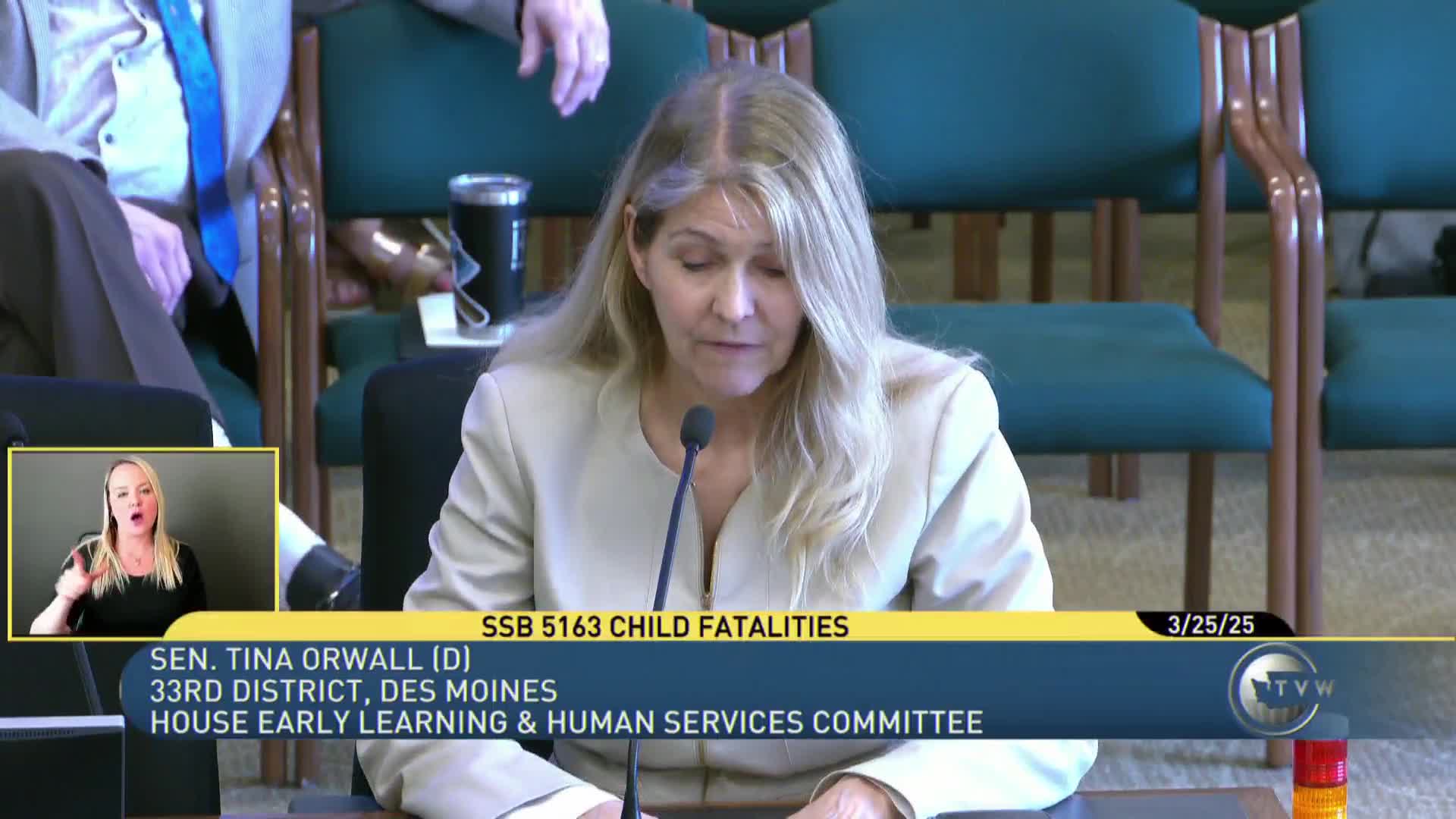
The bill’s sponsor, Senator Tina Orwell, told the committee the changes come from work by a statewide stakeholder group and from her own experience attending reviews. "If we're really gonna prevent child injuries and deaths, we need to understand what happened," Orwell said, urging the committee to consider the bill’s records-access provisions.
By way of background, Luke Wickham, committee counsel, described the review process as a systematic, multidisciplinary examination of factors that contribute to a child's death and said the purpose is "to identify and address preventable causes of child mortality." Wickham said the bill expands the review age from under 18 to under 19, allows local health departments to request medical, autopsy, coroner, and social-service records necessary for a specific fatality review, and clarifies that information submitted for inclusion in a Department of Health database is not subject to public disclosure, discovery, subpoena, or introduction into evidence in most proceedings.
Katie Eilers, director for the Office of Family and Community Health Improvement at the Washington State Department of Health, said the department supports the bill because local reviews generate findings that inform statewide, data-driven prevention measures. Jamie Bodden of the State Association of Local Public Health Officials said the substitute mirrors a House version previously considered and noted a small senate change adding state privacy law to existing references to federal privacy law.
Russell Brown, executive director of the Washington Association of Prosecuting Attorneys, described earlier drafting concerns about limiting criminal discovery and said work with local health officials produced language he believes "threads the needle," allowing reviews while preserving criminal case discovery.
The bill maintains confidentiality protections: no identifying information about the deceased child, guardians, or interviewees may be disclosed in public reports; information collected for the Department of Health database is protected from public disclosure and most legal discovery; however, witness statements or documents collected from witnesses may be introduced in criminal proceedings related to the reviewed death, and local health department employees may be examined in criminal proceedings as to the existence or contents of documents assembled for the reviews. If review teams identify a current, reportable, unresolved concern about child abuse or neglect, the team may designate one member to report it to the child-abuse hotline, but participants in the review are not designated as mandatory reporters by the bill text.
The committee took testimony from state and local public health representatives, the Department of Health, and prosecuting attorneys who described the collaborative drafting process and urged careful protection of both confidentiality and the integrity of criminal proceedings. No formal action or vote on the bill was taken at the hearing.
The public hearing on Substitute Senate Bill 51-63 was closed and the committee moved to the next item on the agenda.