Get Full Government Meeting Transcripts, Videos, & Alerts Forever!
Get email alerts on the Cip Nonprofit Funding Requests topic
No spam. Unsubscribe anytime.
Nonprofits urge Manchester for CIP funding across housing, youth and health programs
Summary
At a city CIP presentation, more than a dozen nonprofits described services for residents experiencing homelessness, youth at risk, older adults and new Americans and requested city and HUD-funded Community Investment Program support for operating costs, staff and project capital needs.
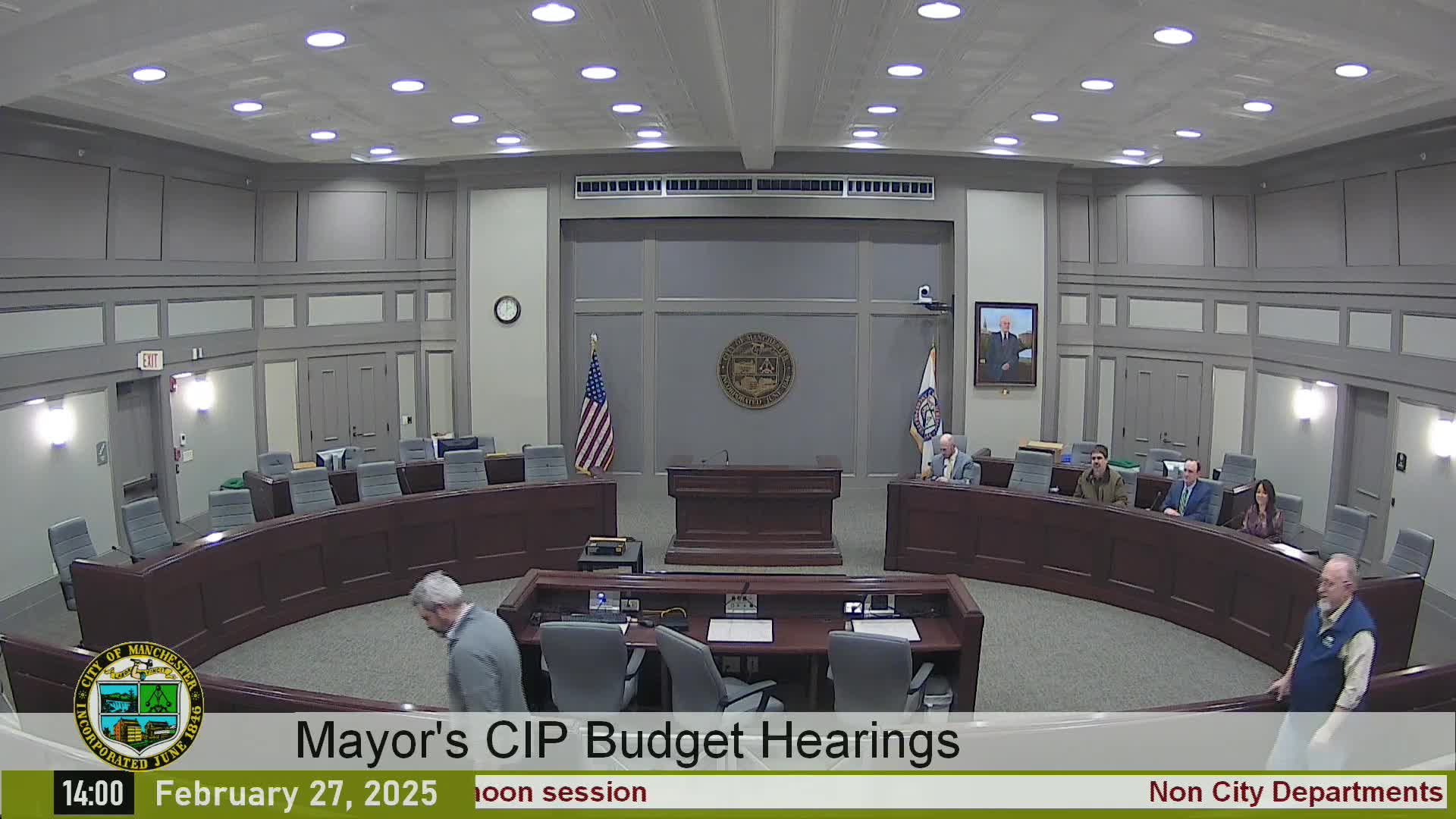
Todd Fleming, the city’s CIP program administration manager, opened the afternoon session by outlining the fiscal context for the city’s Community Investment Program (CIP), saying the city expects roughly level federal formula funding: Community Development Block Grant (CDBG) funds of approximately $1,600,000, HOME funds around $1,200,000 and potential Emergency Solutions Grant (ESG) funds of about $149,000. Fleming said staff had received 35 requests from outside organizations totaling about $3.2 million and 89 requests from 13 city departments totaling roughly $100 million, which includes $4.4 million in requests for direct city funds. He announced scheduled public hearings in April at three neighborhood centers to gather community input.
The presentations that followed covered shelter operations, workforce and youth programs, interpretation and refugee services, home-delivered meals for older residents, and proposed building additions for clinical and program space. Nonprofit leaders described both service outcomes and funding gaps; several asked the city for level funding or specific bridge grants to maintain operations.
Lamprey Health’s area health education center asked CIP to support scholarships for local residents to take health-care interpretation and legal interpretation training. Jody Harper, associate director at Lamprey AHEC, said the program has trained more than 1,000 people in 43 languages and helps agencies comply with language-access obligations. “Interpretation is very important because it helps the overall quality of health care,” Harper said.
Light of Life Ministries described its Beacon on Brook Street shelter for women, reporting it served 58 people (42 households of women and 16 children) in 10 months and achieved a 45% exit rate to permanent or temporary housing. Christie McKenney, who leads the organization’s shelter operations, said higher-than-expected staffing costs and major plumbing repairs produced a funding shortfall; she asked the city to help fill a $154,000 gap to sustain operations.
Families in Transition requested level funding to support its Lake Avenue family shelter, which serves up to 11 families at a time and reported about 18 families currently on its waiting list. Maria Devlin, the organization’s president and CEO, said state grants are the shelter’s largest funding source and the group raises roughly $120,000 annually through fundraising; the group asked the city for about $70,000, roughly the same level as last year.
Helping Hands Outreach Ministries described two congregate facilities (50 Lowell Street and a Central Street site) with a combined capacity approaching 58 beds. Director Larry Nice said Helping Hands provides meals, laundry and on-site managers; the organization is requesting $15,000 to support case management.
Meals on Wheels of Hillsborough County asked for $42,600 to support home-delivered meals and community dining, including a restaurant voucher program in two Manchester locations. President Johnny Arquaza and Zac Pownar, director of development, emphasized the social contact drivers provide during deliveries: Pownar quoted a recipient who said, “This meal is one less thing to worry about.” The program reported serving residents inside and outside the neighborhood revitalization strategy area.
Webster House, a licensed children’s home contracted with the state Department of Health and Human Services, asked for CIP funds to support a building addition for on-site clinical offices and a meeting space. CEO Michelle O’Malley said the daily state contract rate covers only about half the home’s expenses; she said Webster House had already secured some private donations, including a recent $50,000 grant from a local Kiwanis group and a matching pledge.
The Granite YMCA requested $50,000 to support long-running youth programs (Y Stay and Power Scholars) that provide tutoring, social-emotional supports and summer learning for middle- and high-school students. Jess Rindue, director of impact, said Y Stay partners with Manchester School District schools and reported gains in class pass rates and reduced absenteeism for participants.
The Salvation Army asked for level funding of $10,000 to continue its teen night program, a weekend evening outreach that the presenters said relies on a plain-clothes police detail and volunteer staff to provide meals and supervision.
CASA (Court Appointed Special Advocates) and partner organizations described a pilot “Supported Family Approach” that starts services on day one for families affected by substance misuse; Delia Champagne, a CASA program manager, said the pilot had reunified at least one family more quickly than typical timelines and that 15 families were in the pilot. CASA CEO Marty Sink said Manchester’s program is being watched as a possible model for other communities.
ORIS (Organization for Refugee and Immigrant Success) summarized employment and upskilling work for new Americans; Emily Filiano, director of extended services, said the program supports clients in their native languages and reported a 100% rate of clients sustaining employment for 90 days among those placed so far.
REACH Crisis Services reported it closed on ownership of Emily’s Place, the city’s emergency shelter for survivors of domestic violence and sexual assault, and requested CIP funds to support staffing, security upgrades and operations to reopen the shelter.
Waypoint described youth-focused shelter and resource-center operations at 298 Hanover St., including a 14-bed shelter and youth resource center; Mandy Lancaster, director of homeless youth and young adult services, said nine young people had leased apartments since Jan. 1 with case-management support.
12 69 Cafe Ministries described its residential transitional housing program for men (24 rooms, 14 currently occupied) and ongoing cafe operations and daily meal service. Founder Barry Chevalier said the organization operates on a low-cost and volunteer-driven model and requested city support to sustain residential programming.
The Manchester Community Resource Center (MCRC) presented as the city’s HUD-certified community-based development organization and described its role administering CBDO/CDBG-funded special activities, workforce development supports (computer lab, resume assistance), and a neighborhood-pride summer youth employment program.
Throughout the session aldermen and the mayor asked clarifying questions about capacity, case management staffing, rent/participant contributions, and whether specific dollar requests would cover identified gaps. Fleming reminded attendees that CIP staff would finalize recommendations to the mayor and the mayor would incorporate those recommendations into the city budget process this spring. Fleming also announced the April neighborhood hearings (evenings at three centers) to solicit public input.
Ending: Presenters urged continued city support to maintain shelters, workforce training, youth programming and services for older adults and new Americans. The CIP staff will gather public input at the scheduled April hearings and then forward recommendations to the mayor for inclusion in the FY budget process.