Get Full Government Meeting Transcripts, Videos, & Alerts Forever!
Get email alerts on the Drainage Fees Stormwater topic
No spam. Unsubscribe anytime.
Council presses DWSD on drainage fees, green credits and stormwater options as 3.5% increase approaches
Summary
Council members questioned DWSD about a 3.5% drainage‑fee increase, fee calculations based on impervious acres and what the department can do to relieve churches, businesses and residents.
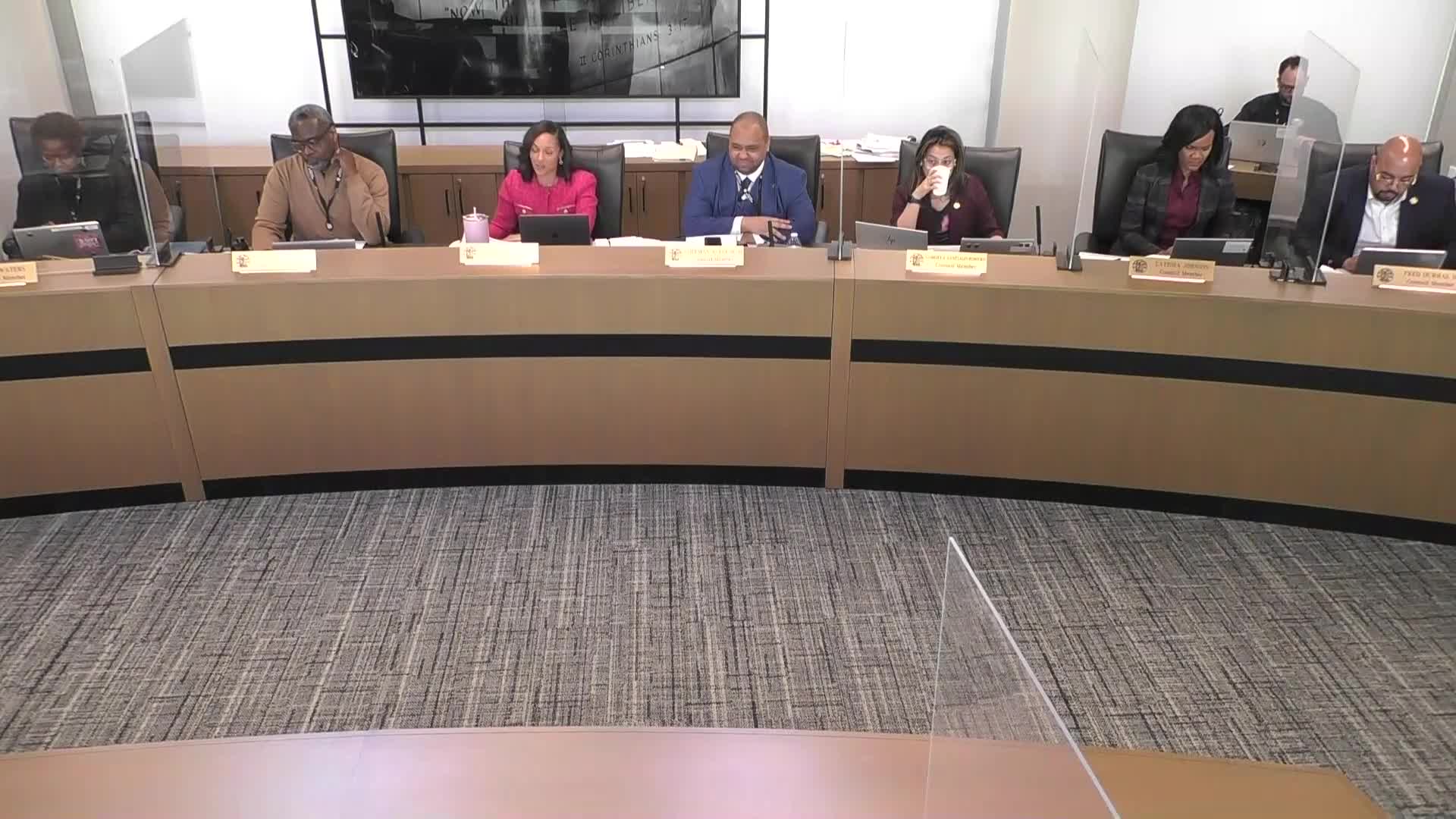
Council members used Monday’s DWSD budget hearing to press officials about drainage fees, credit programs and practical stormwater solutions for residents, churches and businesses.
Detroit Water and Sewage Department Director Gary Brown and Chief Financial Officer Istaka Raman told council the department proposes a 3.5% increase to drainage charges in FY2026, consistent with the broader rate package. Council member Mary Waters calculated that the 3.5% drainage increase translates to about $24.82 per acre per month and said churches and commercial customers are often most burdened because they have large impervious areas.
Brown told council the drainage charge formula derives from a settlement agreement resolving litigation; the settlement requires charging by billable impervious acres. Raman added that DWSD contracted a professional cost‑of‑service study (Stantec, 2022) to model flows in the city’s combined system and to establish the drainage charge methodology.
Council members repeatedly asked what the department could do to reduce fees for impacted customers. Brown said DWSD offers a 25% green credit for qualifying projects that reduce impervious area or manage stormwater on site, but he warned that the capital cost of doing parking‑lot retrofits or large green projects often produces a long return on investment that limits private uptake. He said DWSD has previously used grant funding to support credits and mitigation programs, but current grant flows are limited.
Council members proposed several follow‑ups; DWSD agreed to take actions and council members moved multiple items into executive session for further development. Approved items included a DWSD‑led public information campaign to explain drainage fee calculations and credits, a feasibility/pilot study on rain barrels and rain gardens in residential neighborhoods, a program to provide engineering support and blueprints to small businesses and nonprofits seeking to reduce impervious area, and further review of modeling and the Eastside Stormwater Relief Project. Councillors also asked DWSD to prioritize cleaning and restoration work for known problem streets and catch basins.
Brown emphasized operational work tied to the budget: catch basin cleaning (8,000 basins), 600 miles of sewer cleaning on a five‑year cycle and continued investments to reduce street flooding. He said if additional federal or state funds are available DWSD could scale lead‑line and stormwater projects faster.
Ending: Council requested formal proposals and outreach materials; DWSD said it will return with implementation plans and noted it can help design projects but that construction financing remains the principal obstacle for many property owners.