Get Full Government Meeting Transcripts, Videos, & Alerts Forever!
Get email alerts on the Dwsd Budget Rates topic
No spam. Unsubscribe anytime.
Detroit Water Department proposes 3.5% rate increase for FY2026; officials outline staffing, lead-line goals and budget drivers
Summary
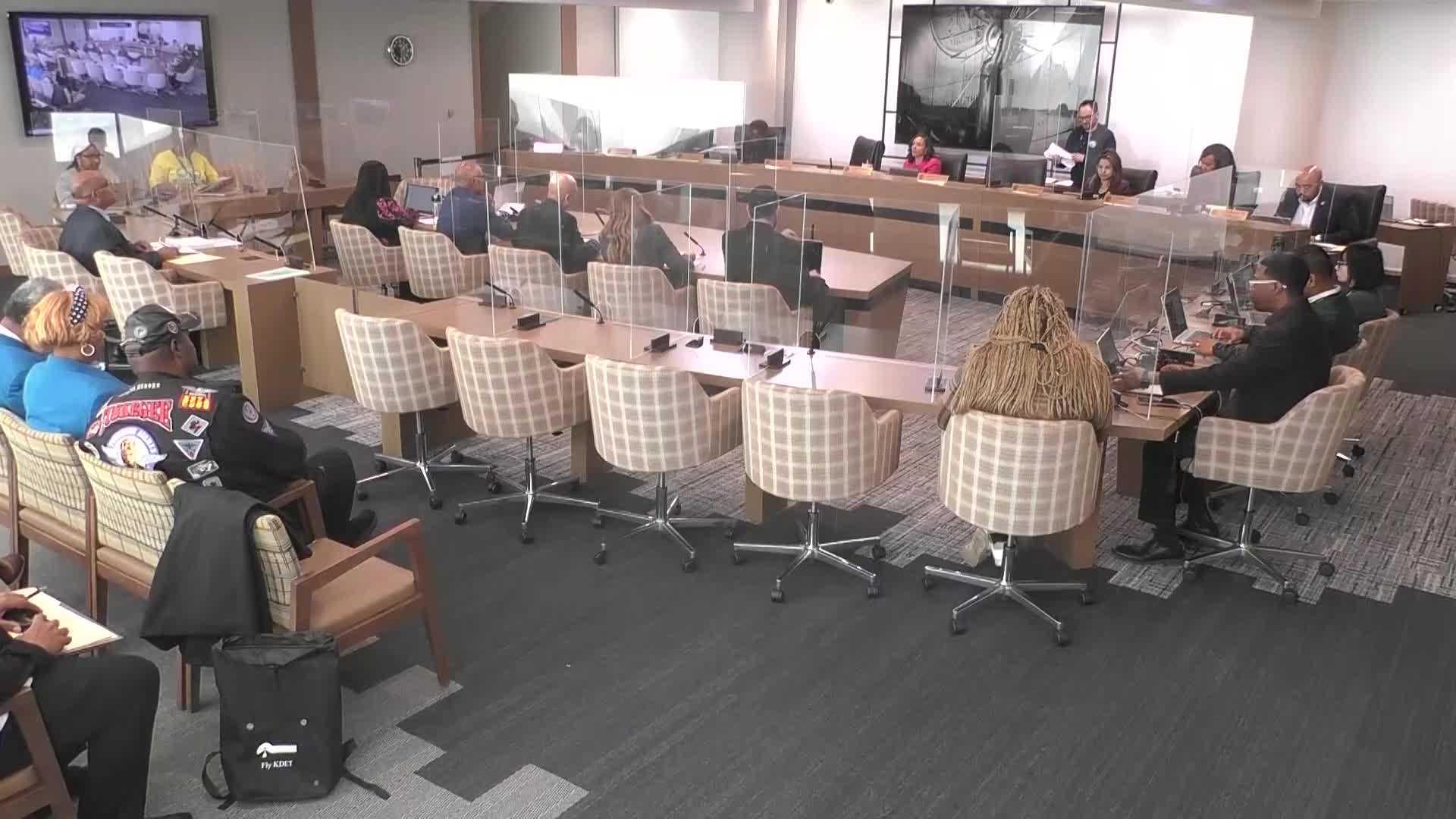
Detroit Water and Sewage Department Director Gary Brown told the Detroit City Council on Monday that the department’s proposed fiscal year 2026 operating budget includes a 3.5% across‑the‑board rate increase for water, sewer and drainage services.
Detroit Water and Sewage Department Director Gary Brown told the Detroit City Council on Monday that the department’s proposed fiscal year 2026 operating budget includes a 3.5% across‑the‑board rate increase for water, sewer and drainage services.
Brown said the department’s overall systemwide revenue requirement is roughly $521.3 million, which the department offsets with non‑retail and non‑rate revenues before arriving at a rate revenue requirement the department expects to collect through customer charges.
Brown and Istaka Raman, DWSD’s chief financial officer, said the proposal was shaped by several drivers: an increase in Detroit’s share of the Great Lakes Water Authority (GLWA) wholesale revenue requirement (which they said increased by about $12.3 million), a $6.1 million rise in estimated bad debt, higher pension costs and new personnel costs. Raman said departmental (direct) expenses rose about 5.6% and non‑departmental (indirect) expenses about 5.2% compared with FY2025.
Raman said the proposal adds a net 20 full‑time field positions, all assigned to operations rather than administration, and that non‑personal expense increases of about $3.4 million support those added staff and higher service levels. Brown said the department currently carries about 67 vacancies and has a hiring freeze through July 1 to manage near‑term costs.
The department presented changes to the rate structure on a per‑unit basis: Raman said the volumetric water rate for tier 1 (up to 0.6 MCF) increases by $0.93 per 1,000 cubic feet and tier 2 by $1.65 per 1,000 cubic feet; the sewer volumetric rate increases by $2.05 per 1,000 cubic feet. Service charges would rise by roughly $0.28 for water and $0.23 for sewer per month. Raman said converting those volumetric changes to per‑gallon terms produces increases of less than a penny per gallon. He said projected changes in billed volume (1.1%–2.0%) partially offset rate increases and that the net effect on typical customer bills is small; Brown later said the average residential bill of about $84 would rise by less than $3 under the proposal.
Brown emphasized work the department said it will continue to fund with the budget: cleaning about 600 miles of sewer lines on a five‑year cycle, inspecting and cleaning roughly 8,000 catch basins, painting 5,000 fire hydrants and continuing lead service line replacement. He said DWSD plans to replace about 3,500 lead service lines in FY2026 and that the department could replace up to 8,000 lines in a year if additional state or federal funding becomes available. Brown noted roughly 12,000 lead lines have been replaced since 2018 and said DWSD’s goal is to remove all lead service lines within 10 years if funding allows.
Brown warned that a previously reallocated $30 million (moved from bond funds to support lead‑line removal) will be exhausted by April and said the department is operating “bleeding through approximately $2.5 million a week” on removals. He said that without new federal or state grant funding the cost of fully removing lead lines would be “a hundred million dollar endeavor” that would be cost‑prohibitive to pass entirely to ratepayers.
Council members asked about tradeoffs in the proposal: Council member Coleman Young II said raising rates while affordability programs lose funding and while new staff are hired would make it hard to explain changes to constituents. Brown replied that rate revenue cannot be used directly to subsidize other customers’ bills and that affordability funding must come from outside rates, through grants or other non‑rate sources. He said DWSD contributes 1% of its annual budget to the Lifeline program under a “Cox order,” which translates to about $2.4 million; the department estimates the Lifeline program needs roughly $25 million to support the 27,000 customers previously enrolled.
Brown cited recent operational costs as additional pressure on the budget: he said a recent major water main break cost the department about $5 million. Brown also told council the Great Lakes Water Authority line that ruptured in Southwest Detroit was not a DWSD pipe and that GLWA also has large capital investments underway.
Brown concluded by saying the proposed 3.5% increase is consistent with recent inflation trends and the department’s effort to keep annual rate increases below 4% while preserving service levels and public‑health standards.
Ending: Council members asked for more written questions and follow‑up documents; Brown said DWSD and its finance team will provide additional details and that the DWSD board had finalized its numbers the previous day.