Get Full Government Meeting Transcripts, Videos, & Alerts Forever!
Get email alerts on the Public Lighting topic
No spam. Unsubscribe anytime.
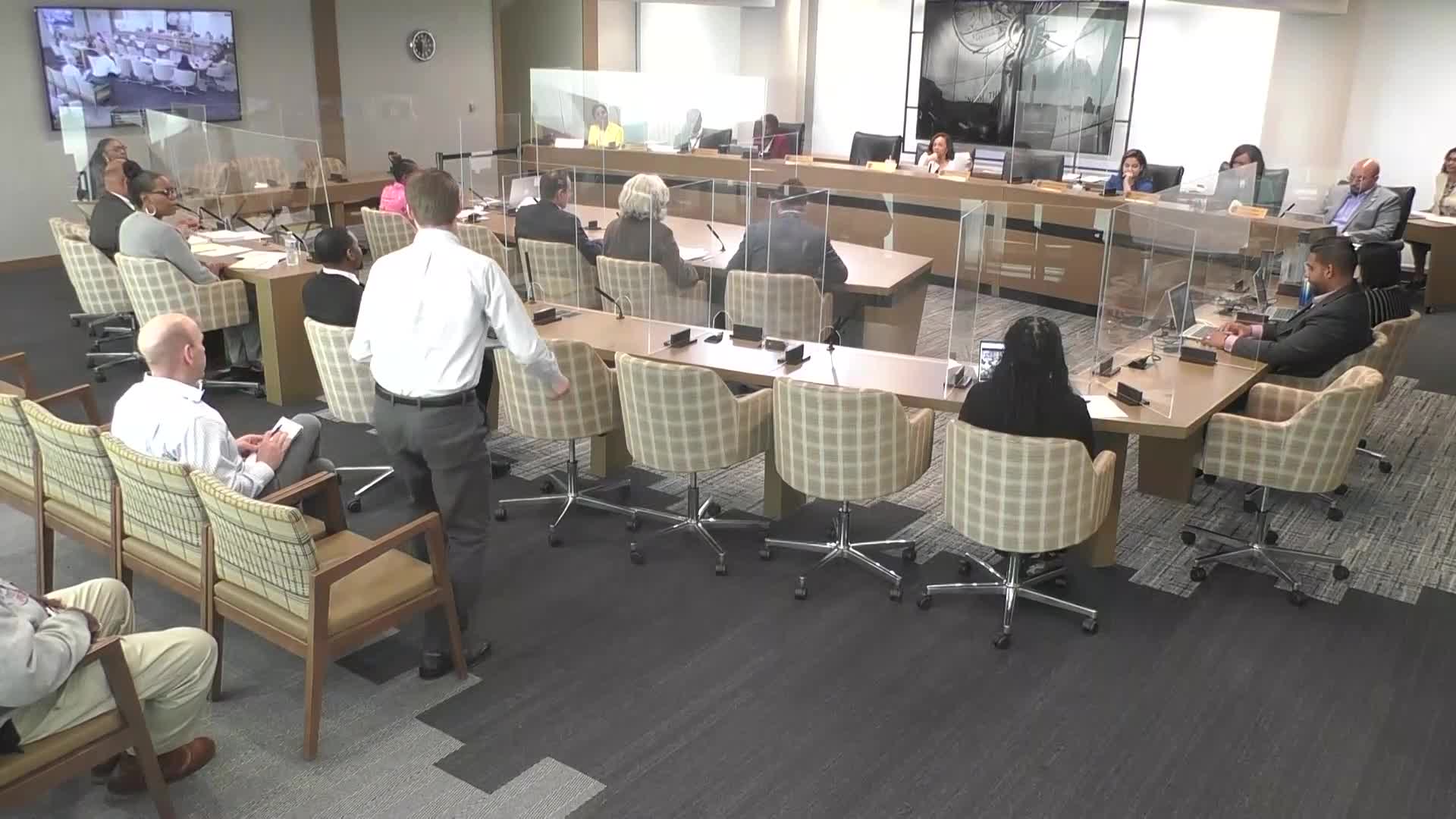
Detroit council hears PLA briefing on bond refinancing, mid‑block and alley lights; several items sent to executive session
Summary
The Public Lighting Authority told the City Council its refinancing plan could free roughly $10 million for capital work and that installing additional mid‑block and alley lights would likely cost about $10 million. Councilmembers asked for more data, raised neighborhood concerns and moved several items into executive session.
The Detroit Public Lighting Authority told City Council on an item covering both the Public Lighting Authority (PLA) and the Public Lighting Department (PLD) that a planned bond refinancing could free capital to address deferred maintenance and possibly fund new mid‑block and alley lights.
The PLA said refinancing could produce about $10 million in additional capital if market conditions hold, and that PLA staff have estimated roughly $6 million to add mid‑block lights and $4 million to address alley lights. The PLA also told the council it estimates roughly 3,000 additional mid‑block lights would be a reasonable target and that about 8,000 blocks historically had a light removed, though the authority called that number an estimate.
Why it matters: Councilmembers pressed PLA and PLD officials for detail on where added lighting would go, how much maintenance new lights would add to the city’s obligations, and how the authority will meet statutory procedures required to modify the city’s lighting plan. Several councilmembers asked PLA to prioritize replacement of aging infrastructure and to direct more outreach and hiring through city‑based vendor and workforce programs.
At the meeting, PLA representatives described a multi‑step approach: first bring the existing system to a “state of good repair,” then consider expansion. "We were reluctant to make that an option until I was sure that the system had enough investment in it to become sustainable in a state of good repair," said Mr. Taylor, a Public Lighting Authority representative. Taylor said the PLA retains a formal statutory process to modify the lighting plan and that any expansion requires coordinated approval by the PLA board, the council and the executive branch.
PLA estimates and financing
PLA staff told the council their 2025 budget is being developed within revenue constraints and that PLA revenue this year is roughly $500,000 lower than last year. Taylor said PLA and city staff worked to free bond and reserve funds to offset the reduction and preserve operations. "We worked with the city to release some bonds that were … let in the early 2000s and the release of those bonds allowed us to then use the accumulated maintenance reserve for its intended purpose and then offset the city's reduction in our subsidy, leaving us whole," Taylor said.
Taylor said the proposed refinancing would need to satisfy bond covenants that require PLA to demonstrate sufficient capital projects to spend the proceeds within about three years. He said that constraint shaped the authority’s capital plan and that, if refinancing moves forward, PLA’s board could decide whether to use proceeds to expand the system or for other capital priorities already in the plan.
Scope, costs and timing
PLA provided councilmembers a rough cost breakdown for two separate priorities: a mid‑block lighting program and alley lighting. PLA said 3,000 mid‑block lights would cost approximately $6 million (about $2,000 per block to relocate and install fixtures in many locations, according to PLA staff) and that alley lighting work would account for roughly $4 million. PLA framed those figures as estimates and asked the council for policy direction before pursuing statutory modification of the city’s lighting plan.
Asset condition and operations
PLA said it has replaced about 60 percent of the original lights and expects to reach roughly 75 percent by the end of the year, which it said will leave a smaller remaining backlog. "We should have almost all of the wood poles done within 5 years as well," Taylor said, adding PLA has pursued standardization of streetlight corridors to address reliability and aesthetics.
On energy and technology, PLA said conversion to more efficient LED fixtures (the authority named GE as a primary supplier after earlier problems with a prior vendor) has improved reliability and delivered energy savings, but staff cautioned solar‑only fixtures and off‑grid systems face battery life and maintenance challenges in Detroit’s climate. PLA said it is investigating ‘‘smart’’ lighting technology to allow dimming and remote control in targeted corridors, but staff called widespread off‑grid solar impractical at scale today.
Local hiring and vendor questions
Councilmembers pressed PLA for information about Detroit‑based vendor participation and local hiring. PLA said it gives preference to Detroit vendors when feasible, has a workforce pipeline program (referred to in testimony as the PLA plans program) and reported more than 20 trainees with a majority completing the program to date. PLA asked council offices to provide lists of local priorities and said staff would send detailed vendor and hiring data on request.
Public concerns and neighborhood requests
Councilmembers from several districts raised specific neighborhood problems: uneven pole types on commercial corridors, decorative holiday circuits that malfunctioned when first used, and single poles that repeatedly fail or are struck by vehicles. Councilmember Callaway moved that the council put the lighting condition on West McNichols between Livernois and Wyoming into executive session for further review; the council proceeded without objection.
Votes at a glance
- Motion to add modification of the lighting plan (mid‑block and alley lights) to executive session — mover: Councilmember Waters (as recorded); outcome: approved (no objections). - Motion to add West McNichols lighting/pole replacements (Livernois to Wyoming) to executive session — mover: Councilmember Callaway; outcome: approved (no objections). - Motion to add a cost study of smart/sensor‑based lighting infrastructure to executive session — mover: Councilmember Durhall; outcome: approved (no objections). - Motion to add review of staffing for constituent complaint handling to executive session — mover: Councilmember Durhall; outcome: approved (no objections).
What the council asked next
Councilmembers repeatedly requested PLA and PLD return with more granular data: a list of target blocks for mid‑block lights, exact cost estimates and maintenance cost impact of any expansion, and a clearer schedule for replacing remaining first‑generation fixtures and wooden poles. Several members also asked PLA to circulate job and contracting opportunities to council offices for local outreach.
PLD budget overview
Representing the Public Lighting Department while Director Primack was absent, Dan Boyd said the PLD budget included no new PLD employees and that most PLD expenses are contractual or charged to the decommissioning fund. Boyd said PLD expects about $800,000 in revenue from attachments and related fees and that decommissioning fund expenditures should be offset by revenue from scrap metal sales.
Next steps
PLA told councilmembers it is willing to meet individually with council offices to walk through the strategic plan and to provide additional documentation. Several items were set for executive session for additional review; PLA and PLD staff committed to supply written responses and requested data to councilmembers’ offices.
Ending
Councilmembers and PLA staff agreed on the need for more detailed project lists and cost breakdowns before any statutory change or major expansion. PLA staff said they will provide requested vendor and hiring data and emphasized that any lighting plan modification will follow state statutory procedures and the PLA board’s internal process before coming to City Council for approval.