Get Full Government Meeting Transcripts, Videos, & Alerts Forever!
Get email alerts on the Human Resources Budget topic
No spam. Unsubscribe anytime.
Detroit HR lays out FY26 budget priorities: hiring, training and automation
Summary
Human Resources Director Denise Starr presented the department's FY26 budget request to Detroit City Council, highlighting workforce pipeline development, expanded training and new automation efforts while reporting employee engagement and participation metrics.
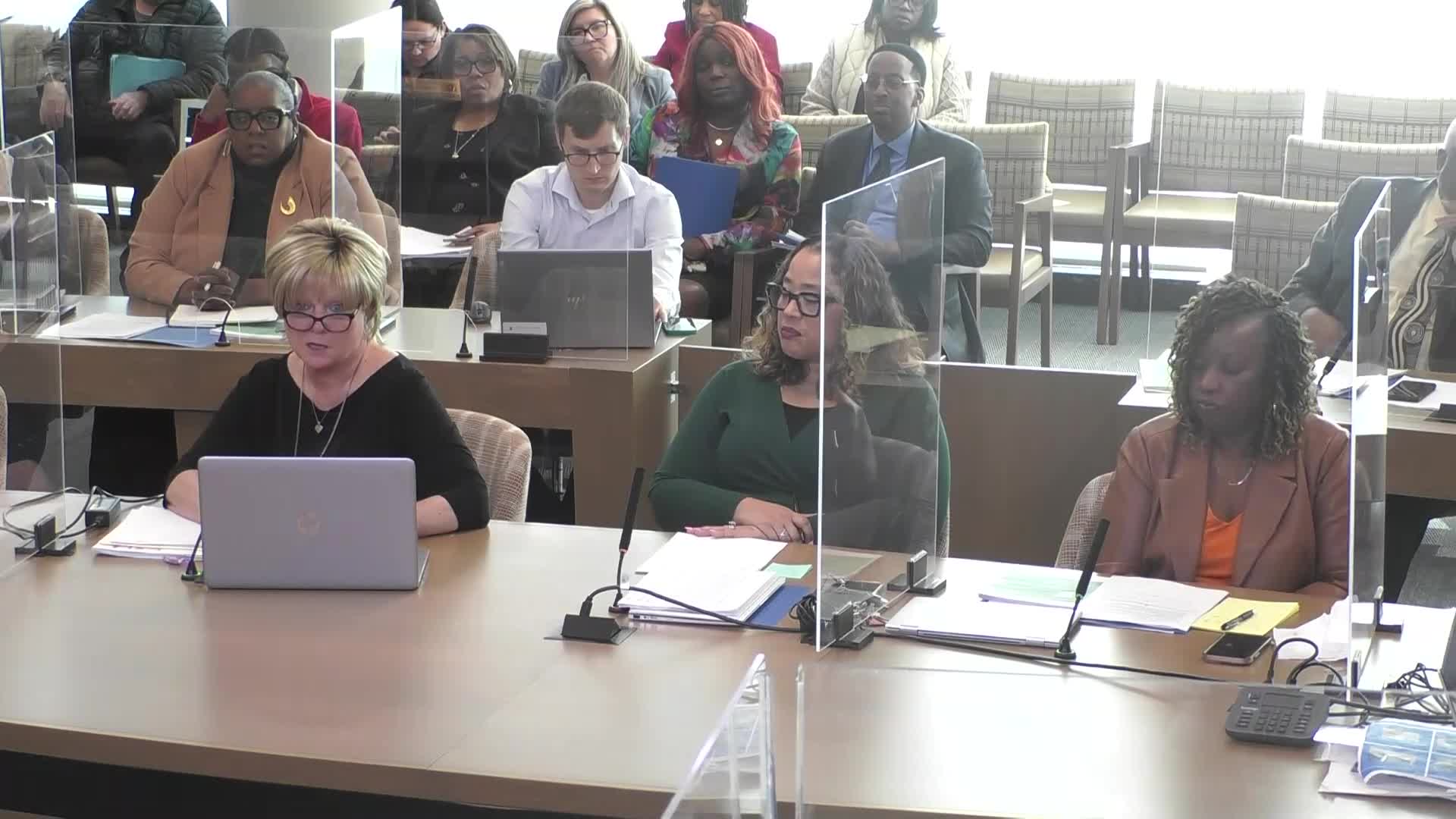
Human Resources Director Denise Starr told the Detroit City Council on March 21 that the department's FY26 budget request focuses on strengthening recruitment pipelines, expanding training and further automating HR processes to support city operations.
Starr said the department onboarded about 3,000 new employees in the past year, noting that 25% of those hires were internal promotions and that 20% were funded through ARPA. "This mission is the lens through which we evaluate every budget investment, every new initiative, and every policy decision," Starr said. She also highlighted a UKG Aspire Innovation Award the city received for its work on a performance-evaluation system.
The nut graf: Council members were shown how HR is tying budget requests to operational needs — from hiring bus drivers, firefighters and seasonal workers to building training academies and automating merit and onboarding processes — so that requested dollars are positioned as direct investments in service delivery for Detroit residents.
Key details from the presentation and question-and-answer session: - Recruitment and hiring: Starr named specific high-volume hires the city supported last year, including more than 400 bus drivers, roughly 200 firefighters and about 400 seasonal workers. The department said it continues to align recruitment with priorities in Mobility and Innovation, Housing and Revitalization, the Law Department, and the Community Violence Intervention Initiative. - Workforce pipelines: HR described partnerships to build pathways from high schools, community colleges, faith-based organizations and Detroit at Work into city jobs. Starr said the department enrolled and trained residents through local programs and transitioned a substantial number into city roles that support blight removal and community beautification. - Training and engagement: Iris Ware, the city's chief learning officer, described expansions in leadership development, role-specific certifications and a customized learning management rollout. Starr said the employee engagement survey rose seven percentage points to 74% favorable; Ware said HR awarded 155 role-specific certifications last year and is emphasizing individual development plans. - Automation and systems: Starr reported automation of onboarding using the UKG platform and said the department has automated several processes including time-and-attendance training, onboarding connections with pension and benefits systems, and a new probationary evaluation workflow. HR plans full automation of merit awards and to implement a learning management system (LMS) later this fiscal year. - Labor relations and compliance: Starr said HR negotiated seven successor agreements last year and is engaged in additional successor negotiations for FY26. Valerie Colbert, interim labor relations director, said the department continues training for managers and unions on collective bargaining and grievance resolution. - Well-being and employee resource groups: HR reported nine active employee resource groups (ERGs), a 21% increase in clinical service usage for the well-being program and nearly a 50% increase in overall program engagement. The department also launched a citywide milestone recognition program and expanded tuition-discount partnerships with about 20 colleges and universities.
Council members asked for follow-up data (for example, the number of employees using particular benefits) and for timeline details on the LMS. Starr and staff said they would provide more detailed reports to members after the hearing.
Ending: The council closed the HR budget hearing after members thanked the director and staff and asked for the requested follow-up information in writing.