Get Full Government Meeting Transcripts, Videos, & Alerts Forever!
Get email alerts on the Impact Fees Affordable Housing topic
No spam. Unsubscribe anytime.
Commission signals support for waiving school impact fees for deed‑restricted affordable housing projects
Summary
Members discussed targeted waivers of school impact fees for developments that use deed restrictions and federal/state affordable‑housing programs. The commission outlined parameters and administrative checks to ensure compliance.
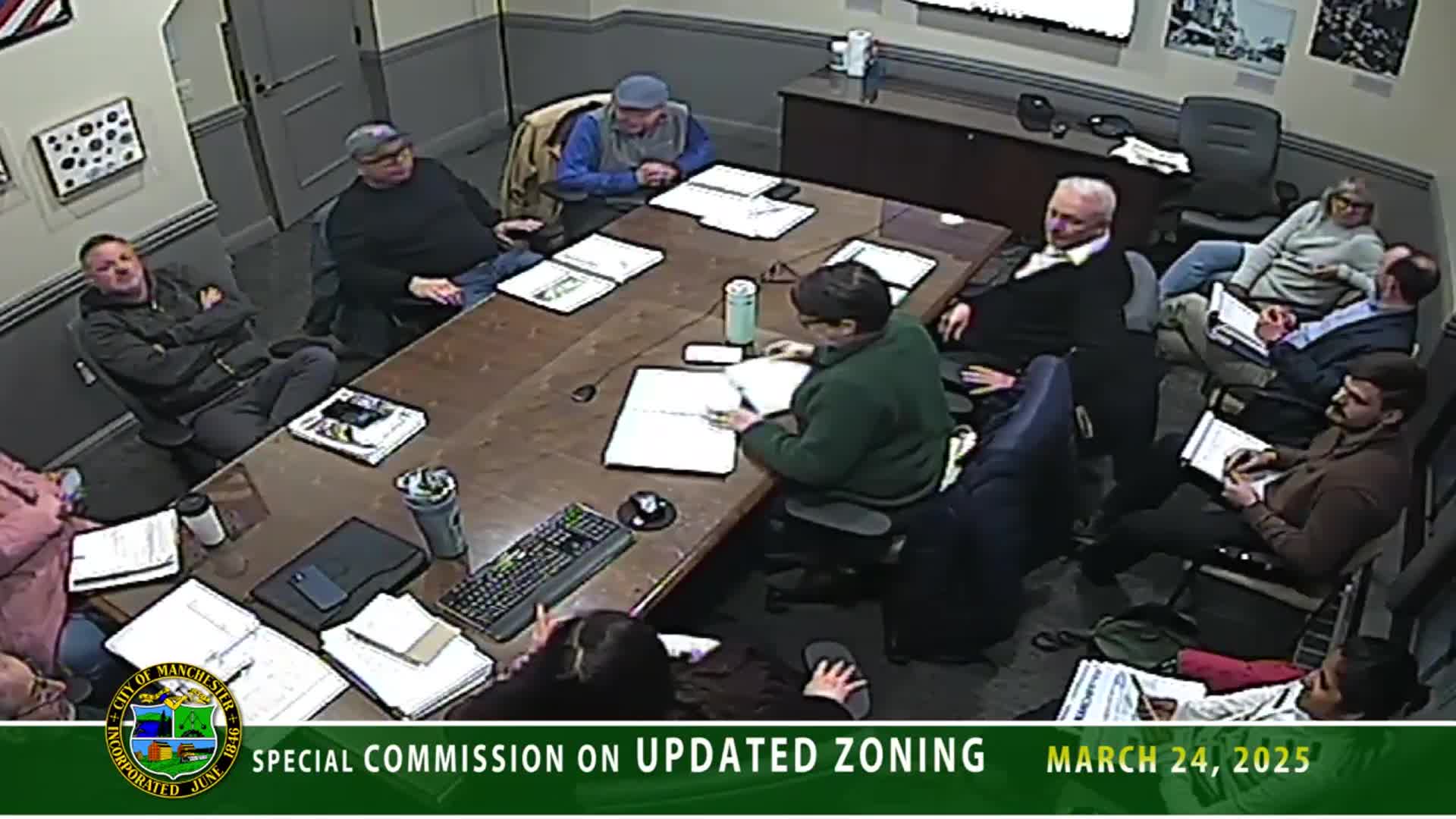
Commissioners spent the latter portion of the meeting discussing whether the city should offer targeted impact‑fee relief to encourage deed‑restricted affordable housing projects.
Lede: Planning staff and commissioners proposed waiving school impact fees for developments that are subject to long‑term deed restrictions or governed by recognized affordable‑housing programs (for example, projects using low‑income housing tax credits or administered by New Hampshire Housing). The waiver would not be automatic; projects would have to meet specific documentation and oversight requirements.
Nut graf: Commissioners said the goal is to improve the financial viability of affordable housing developments that already rely on substantial public and nonprofit funding. Staff and commissioners emphasized that waivers should be limited to projects with enforceable affordability covenants and that any relief must comply with state law and be clearly defined to avoid creating loopholes.
Details
- Scope of proposed relief: Staff and several commissioners proposed waiving school impact fees for qualifying, deed‑restricted affordable housing projects (examples cited in the meeting include projects using LIHTC or New Hampshire Housing subsidies). Commissioners specifically noted they did not intend to propose blanket waivers for fire impact fees; those remain comparatively small and are intended for public safety capital costs.
- Administrative safeguards: Commissioners asked that any waiver be tied to a clearly enforceable restriction such as a recorded land‑use restriction agreement monitored by New Hampshire Housing or a comparable agency. Where projects receive federal/state administration (for example, LIHTC or HUD programs), staff recommended relying on that agency for compliance verification to avoid duplicative city administration.
- Other tools discussed: Staff noted the city already offers limited administrative relief in other contexts — for example, building permit fee deferrals for affordable housing that delay certain fees until certificate of occupancy — and that similar targeted tools can be used for impact fees.
- Approval authority and process: Changes to impact‑fee policy would need to be codified in the land‑use code and approved by the Board of Mayor and Aldermen; planning and finance staff would implement and track any waivers and associated reporting requirements.
Outcome and next steps
Commissioners reached general agreement on the principle of narrowly targeted fee waivers for verified, deed‑restricted affordable housing, and asked staff to draft specific standards and language for the land‑use code that identify eligible programs, required documentation (e.g., deed restriction term), and administrative procedures for verification and recordkeeping. The Board of Mayor and Aldermen would have to approve any formal waiver policy.
Ending
Commissioners framed the proposed waiver as a targeted public‑policy tool to leverage more federal and state housing funds and to make certain affordable projects financially feasible. Staff will return with draft language and suggested thresholds for eligibility.