Get Full Government Meeting Transcripts, Videos, & Alerts Forever!
Get email alerts on the Inspector General Investigation topic
No spam. Unsubscribe anytime.
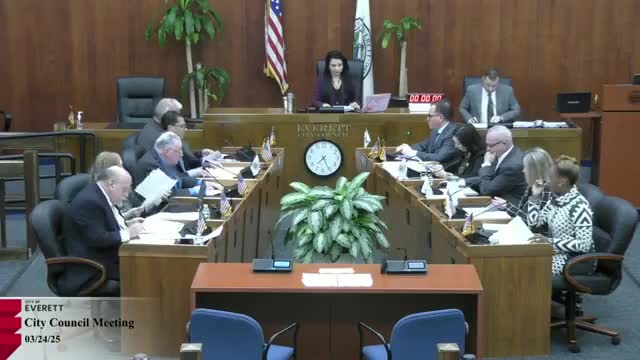
Everett City Council moves to audit mayor payments, seeks halt to use of public funds for legal defense
Summary
The Everett City Council voted this evening to pursue an independent audit of payments to Mayor Carlo DeMaria and to seek written confirmation that public funds will not be used to challenge a February 27, 2025 Office of the Inspector General finding that flagged improper longevity payments.
The Everett City Council voted this evening to seek an independent audit of payments to Mayor Carlo DeMaria and to press the administration for documents and explanations after a February 27, 2025 letter from the Office of the Inspector General (OIG) found irregularities in longevity payments and related accounting.
Councilors authorized the council president to retain an independent auditor to review payments to the mayor from Jan. 1, 2016, to the present and to transmit correspondence to the mayor, the city chief financial officer and the budget director seeking information tied to the OIG recommendations.
The action followed an executive session called under Massachusetts General Laws c.30A, §21(a)(3) and (7) to discuss anticipated litigation and privileged legal advice on longevity payments. The council reconvened in public and announced several unanimous or near‑unanimous votes taken in executive session, including authorizing the president to send three letters to the mayor, CFO and budget director and to send a response to the OIG. The council also voted to seal the executive‑session minutes for administrative use.
Why it matters: The OIG’s Feb. 27 letter found the administration misapplied an ordinance, producing an overpayment of about $180,000 to the mayor, cited roughly $30,000 in improper payments before the ordinance was enacted, and noted an improper advance of about $1,700 for nonunion department heads. The OIG also flagged a possible violation of the state conflict‑of‑interest law, M.G.L. c. 268A, and offered seven recommendations. Council members said they need independent financial review and transparency before the city proceeds further.
What the council did: At the March 24 meeting the council - Voted (roll call) to enter executive session under M.G.L. c.30A, §21(a)(3) and §21(a)(7) (11 yeas, 0 nays). - Voted to authorize the City Council president to retain an independent auditor to audit payments to Mayor DeMaria (favorable action as amended; recorded vote 10 yeas, 0 nays). - Voted to transmit correspondence authorised in executive session to the mayor, CFO and budget director seeking materials identified in connection with the OIG findings; the administration was asked to respond within seven days (collective vote for items 36–38; 10 yeas, 0 nays). - Passed a resolution requesting the DeMaria administration “immediately cease and desist” using public funds to challenge the OIG’s findings and to provide written confirmation within seven days (item 39; recorded vote 9 yeas, 0 nays). - Voted unanimously in executive session to have the council president send three drafted letters to the mayor, CFO and budget director, and to transmit a response to the OIG; minutes of that executive session were sealed for administrative use.
What council heard from counsel: Christopher Petrini, special counsel retained by the council, told members the OIG investigation was thorough and that the Feb. 27 letter represented a “sea change.” He advised the council that, in his view, it was no longer appropriate for city funds to pay for the mayor’s lawyers to oppose or delay the OIG findings because the mayor’s interests had become adverse to the city and to a state agency the city can reasonably rely on. Petrini recommended the council move to stop payment of legal bills from city funds on this matter going forward.
What the OIG found (as summarized to the council): misapplication of an ordinance resulting in approximately $180,000 in excess payments to the mayor; approximately $30,000 in improper payments before the ordinance was enacted; an improper $1,700 advance for nonunion department heads; and possible conflict‑of‑interest concerns under M.G.L. c.268A. The OIG offered seven recommendations.
Next steps and limits: The council authorized the president to retain an independent auditor and to send letters requesting documents. The council also asked the administration to respond in writing within seven days where specified. The council did not itself make findings of law or criminal culpability — the actions are investigatory and administrative steps to collect records and secure an independent financial review.
Context and background: The council’s actions follow public debate this month about the OIG letter and invoices paid to outside law firms. At the March 24 meeting members debated whether city funds should continue to pay attorneys who appeared at a March 4 meeting and whether the city charter and local ordinances were followed when outside counsel were retained. Several motions at the March 24 meeting referred questions about invoices and firms to staff and postponed some requests while the city solicitor reviews legal language and invoices. The council also invited, then excused, Christopher Petrini after his remarks.
What to watch: The council requested prompt written responses and authorized an independent audit that will review payments to the mayor for the covered period. The council also signaled it will press the administration on who has been paying which invoices and for what purpose.