Get Full Government Meeting Transcripts, Videos, & Alerts Forever!
Get email alerts on the Water Billing Notification topic
No spam. Unsubscribe anytime.
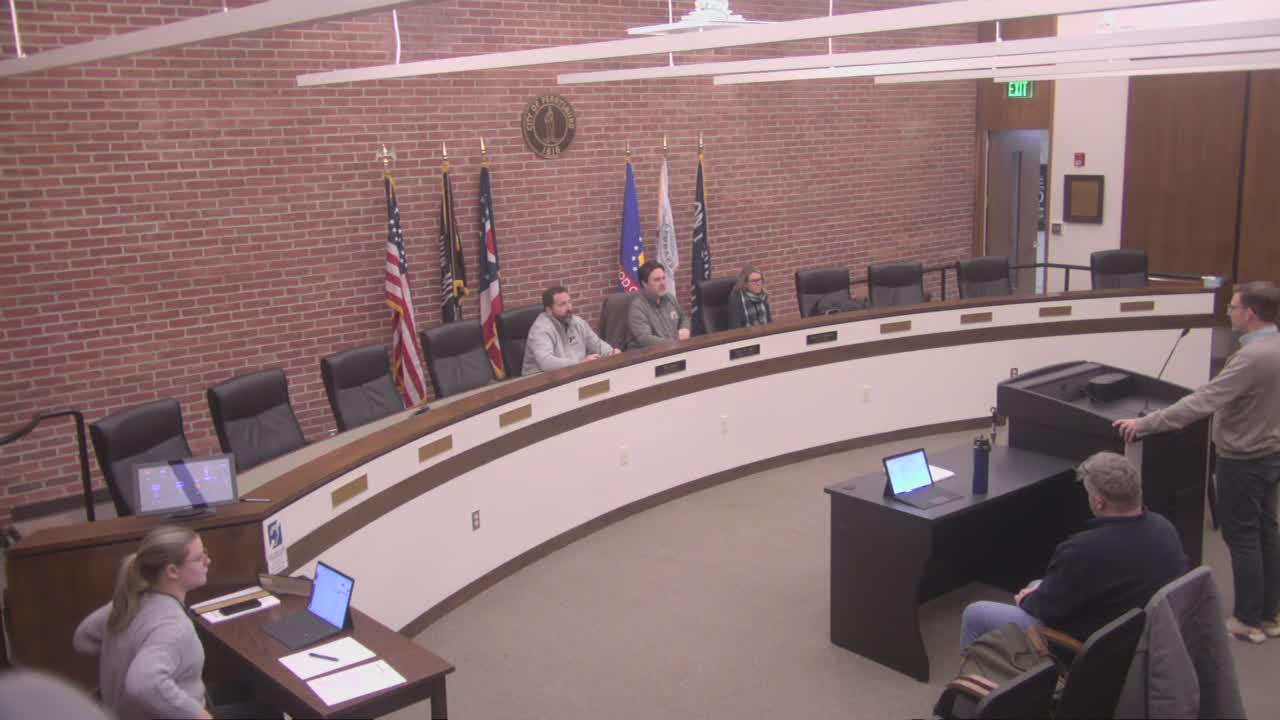
Perrysburg resident seeks relief after $5,600 water bill; committee reviews notification process and meter technology
Summary
At a Jan. 17 Public Utilities committee meeting a Perrysburg resident described an unexpected $5,600 water bill; the committee reviewed its abnormal-usage notification process, confirmed a $618.25 sewer sump-pump credit, and discussed meter technology and outreach improvements.
Bridal Snow, a Perrysburg resident, told the Perrysburg Public Utilities committee on Jan. 17 that she had been billed about $5,600 after what she said was undetected, excessive water use and asked for any possible accommodation on the bill. "I've now paid approximately half the bills. It's a significant bill. It's about $5,600," Snow said.
The committee confirmed there were records showing two phone-call attempts to Snow's wife's number that the household did not receive. Committee members said the incident prompted a review of notification procedures and that staff are pursuing process and communication improvements.
The committee also reported one sewer credit approved for January for a confirmed sump-pump discharge, in the amount of $618.25. The city said the credit followed a dye test that confirmed the sump pump discharged to storm sewer rather than the sanitary system.
Why it matters: the incident highlighted two recurring utility issues—how the city detects and notifies customers about abnormal usage and how meter technology affects the speed of detection and response. Committee members and staff described current procedures and the limits of the billing software in place.
DPU staff described how the city identifies high usage: meters are read monthly (typically around the 15th), billing staff flag accounts with unusually high usage for follow-up, and a work order is created to hang a blue door tag that asks customers to contact the office. "Normally, the meter readings take place once a month," one staff member said, explaining the monthly cadence that can leave customers exposed to a full billing cycle of undetected leaks or continuous usage.
Staff said the billing process includes a single follow-up phone call after a second high reading; if the customer does not respond, the high bill is processed as billed. The city also said its current billing software cannot send texts or push notifications nor add an emergency contact field to account screens, though the city has added the ability for customers to update contact information on the city website.
Committee members and staff discussed meter-technology upgrades as a partial remedy. Staff described two generations of radio remote meter readers: an older "14" series that provides snapshots of instantaneous usage but no interval data logging, and a newer "15" series that can data-log and allow drill-down into short-interval usage. Officials said the city plans advanced meter infrastructure (fixed towers) to collect reads more reliably and to reduce reliance on monthly drive-by collection. Staff cautioned the technology "will be a better system" but will not "cure all the ills," noting readings would still be collected on a monthly billing cadence but with better capability to detect continuous usage patterns.
Staff also reminded residents of an existing, voluntary curb stop service for residents who will be away: the city can shut off water at the curb so the account accrues no minimum usage while shut off; turn-on carries a $20 fee. Staff said relatively few residents use the service and that public outreach is needed.
Committee members expressed sympathy for Snow and urged improved public information. "I just I feel for you. I mean, this is yes. This is, like, something that would happen to me," said Kerri, a committee member. Officials said the episode was prompting a policy and outreach review.
Ending: Committee members said they will continue to refine notification procedures, publicize the curb-shutoff option, and pursue meter-technology upgrades. Snow asked the committee to consider any accommodation; the committee did not make a decision at the meeting to reduce the outstanding balance beyond the confirmed sump-pump credit.