Get Full Government Meeting Transcripts, Videos, & Alerts Forever!
Get email alerts on the Municipal Budgeting topic
No spam. Unsubscribe anytime.
Finance officer: FY25 first eight months show mixed results; $500,000 pharmacy rebate improves outlook
Summary
Sharon Wiggins, Manchester finance officer, told the Accounts Committee that audited figures for the first eight months of FY25 show overall obligated spending close to budget, several revenue variances versus FY24, and a pharmacy rebate of about $500,000 that helped move health-care spending under budget.
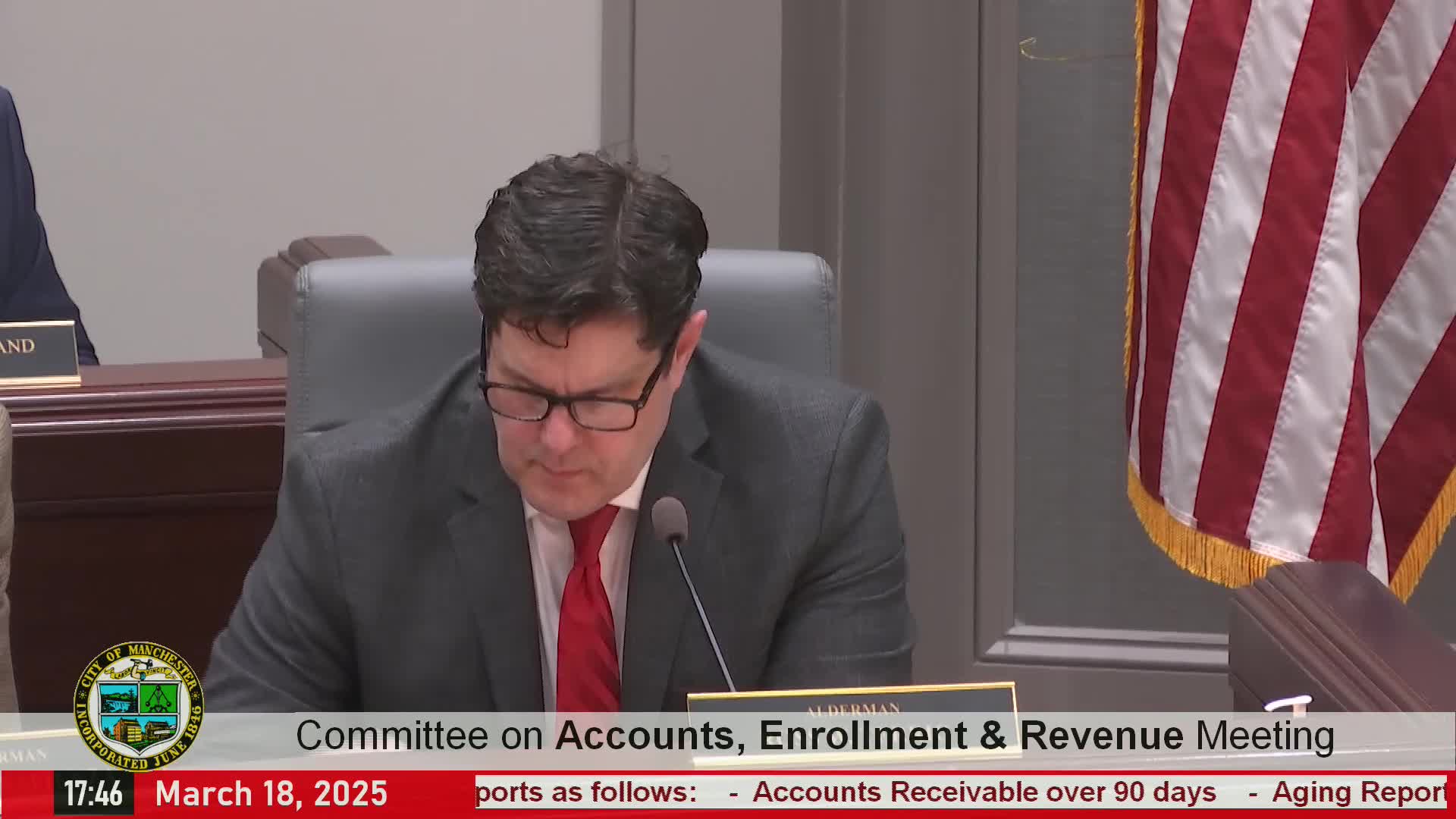
Sharon Wiggins, finance officer for the City of Manchester, told the Committee on Accounts she had no major comments but invited questions after presenting the city’s audited financial report for the first eight months of fiscal year 2025.
Wiggins said the benchmark for average obligated balance after eight months is 33.33%. “All departments [are] within 10% of this benchmark, with the exception of the public works department,” she said. The overall obligated percentage after eight months is about 32.5% for 2025 compared with about 30.45% a year earlier.
Wiggins reported revenue variances versus the prior year: revenues for the first eight months were $63,000 higher than a year ago; auto registrations were up about $700,000; interest income rose by more than $500,000; and school chargebacks were $730,000 higher due to more timely billing. She also said state revenues were down about $1.7 million but added that shortfall had been accounted for in the FY25 budget.
On health-care costs, Wiggins told the committee that since the report was produced the city had “received a rebate from the pharmacy about a half a million dollars and a couple of other credits that we’ve identified.” She said the rebate moved the city’s health-insurance tracking to under budget and that the city factors expected rebates and credits into its health-care budgeting. “The rebates are factored in when we look at the overall budget,” Wiggins said. She explained the city’s budget reflects anticipated credits from vendors and reimbursements from enterprise funds and retirement credits from the State of New Hampshire.
A committee member raised a concern about employees on high-deductible plans who pay large out-of-pocket prescription costs. Wiggins responded with a description of plan mechanics in general terms and reiterated that the city’s overall health-plan budgeting accounts for rebates and credits; she did not commit to a specific policy change for employees during the meeting.
After discussion, Alderman O'Neil moved to accept the report; Alderman Vincent seconded. The committee approved the motion by voice vote.