Get Full Government Meeting Transcripts, Videos, & Alerts Forever!
Get email alerts on the Land Use Rezoning topic
No spam. Unsubscribe anytime.
Oak Creek council approves comp‑plan amendment and rezoning to allow proposed Buc‑ee’s after heated public hearing
Summary
The Oak Creek Common Council voted March 18 to amend the city comprehensive plan and rezone about 29 acres near the new Elm Road interchange to allow a proposed Buc‑ee’s travel center, following a lengthy public hearing in which residents raised traffic, environmental and quality‑of‑life concerns.
The Oak Creek Common Council voted March 18 to amend the city’s 2020 comprehensive land‑use plan from “business park” to “commercial” and to rezone three parcels totaling about 29 acres on South 20th Street to B‑6 Interchange Regional Retail — actions that the council and city staff said would allow a proposed Buc‑ee’s destination travel center to seek later permits.
Why it matters: the project is large and designed to serve long‑distance travelers. Supporters say it would bring a major private investment and jobs; opponents said the site’s proximity to the Saint John’s subdivision and nearby farms creates risks from traffic, light, stormwater and air emissions and could lower nearby property values.
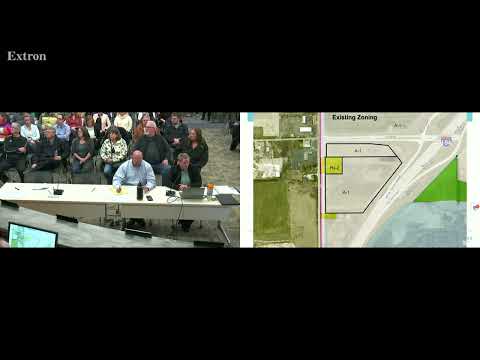
Community development director Christie Lane told the council the comp‑plan amendment and rezone are a “pecking order” of approvals: the comprehensive plan designation must change before the city can rezone the land and the applicant can pursue a conditional‑use permit, certified survey map and site plan review. Lane said the three parcels are “approximately 29 acres” and that the applicant’s conceptual plan shows a roughly 74,000‑square‑foot building with fueling stations; she noted the Wisconsin Department of Transportation is reviewing a traffic impact analysis for the state‑controlled South 20th Street intersection and that “the project will not move forward until the DOT approves certain traffic flow standards.”
Stan Beard, director of development and real estate for Buc‑ee’s, spoke for the applicant and repeatedly denied common characterizations of Buc‑ee’s as a truck stop: “We are not a truck stop. Trucks are not allowed in a Buc‑ee’s facility at any time other than delivery trucks,” Beard said, and described Buc‑ee’s as a “destination” retail operator that hires roughly 200 full‑time workers per store and advertises starting wages “18 to $20 an hour.”
Residents packing the council chamber pushed back in a lengthy public hearing. Douglas Dillman and other Saint John’s subdivision residents emphasized neighborhood impacts and policing needs, with Dillman asking, “Who’s going to be called? Franklin, state patrol, or Oak Creek?” and warning of “a hundred thousand visitors” in a busy week. Several speakers identified themselves as members of Oak Creek Neighbors United and urged the council to delay or deny the land‑use changes until independent traffic, environmental and public‑safety studies were completed.
Environmental and health concerns were raised repeatedly. Sadie May Schult cautioned about impervious surface increases and downstream effects on the Oak Creek watershed and drinking water. Katie Studebaker cited peer‑reviewed research linking residential proximity to fuel‑ing facilities with adverse health outcomes and said environmental advocacy groups had contacted residents with additional resources. Art Donner, who identified himself as the owner of a nearby storybook farm, described concerns about gasoline vapors, light impacts on livestock and stormwater runoff affecting animals on his property.
Attorney Joe Sincotta, representing Oak Creek Neighbors United, told the council the record lacked the “substantial evidence” required by local ordinance to show the rezoning was necessary. He cited City zoning ordinance 170‑884(G) (as referenced in the hearing record) and urged council members not to treat the comp‑plan and rezoning as ministerial approvals for a single developer’s project: “The applicant’s burden is to support that they meet the requirements,” Sincotta said.
Council and staff response: multiple council members said they had researched Buc‑ee’s operations in other municipalities and that they expect additional hearings and reviews if the policy changes pass. City Administrator Andrew Vickers described staff’s early review steps and told the chamber that staff had consulted municipal counterparts and law‑enforcement agencies about calls for service at other Buc‑ee’s locations. Lane and Vickers emphasized that additional approvals and detailed site‑level review would follow if the comp‑plan and rezoning passed; Lane gave an anticipated schedule in which the applicant could file for a conditional‑use permit and certified survey map on March 25, with plan‑commission consideration possible April 22 and additional design review later in May and June.
Council action and next steps: the council adopted ordinance 3121 to change the comprehensive‑plan land‑use designation for the parcels to commercial and then adopted the rezoning ordinance (ordinance 3122) to change the zoning on the parcels to B‑6 Interchange Regional Retail. Both votes carried with a majority; one council member recorded a “no.” The decisions allow the applicant to proceed to the next steps in the land‑use review process but do not approve site plans, conditional‑use permits or construction.
The applicant and staff reiterated that the state DOT must complete and accept the traffic analysis for the state highway intersection before the project could advance, and that stormwater, lighting, landscaping, architecture and other site details will be reviewed in subsequent public hearings. Residents and the association attorney said they expected to use those future hearings and permitting steps to press for further studies and conditions.
Votes at a glance: the council passed (1) the comprehensive‑plan amendment to commercial and (2) the rezoning to B‑6 Interchange Regional Retail. Both measures passed by council vote; the motions carried following roll calls and recorded “ayes” by a majority of council members and at least one dissenting “no.”
The matter will return to plan commission and the council for conditional‑use, final site‑plan and related approvals if the applicant completes the next applications and the DOT completes its traffic review.