Get Full Government Meeting Transcripts, Videos, & Alerts Forever!
Get email alerts on the Apple Hills Rezoning topic
No spam. Unsubscribe anytime.
Muskego council hears residents’ drainage concerns during Apple Hills rezoning first reading; accepts offer to purchase narrow strip of land
Summary
At a public hearing on a proposed 10-lot subdivision called Apple Hills, Muskego residents raised repeated concerns about stormwater, wetlands and lot density. The council accepted a developer9s offer to buy a narrow strip of city-owned land tied to the project; the rezoning request returned for a second reading in March.
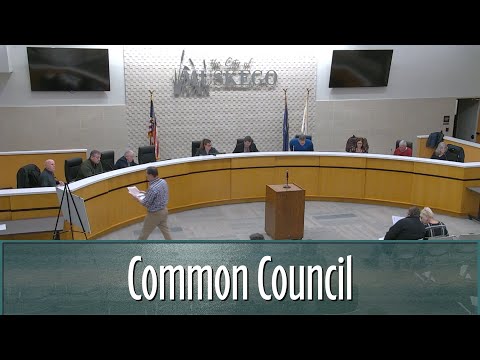
The Muskego Common Council on Feb. 25 accepted an offer to purchase a narrow strip of city-owned land that intersects a proposed subdivision known as Apple Hills and held the first reading of an ordinance to rezone the site from RS-2 to a planned development (PD) district to allow up to 10 lots.
The council accepted the offer to purchase tax key 2229992006 after a roll-call vote; six members voted in favor. The rezoning ordinance was introduced at first reading and will return for a final vote at the council9s next meeting after additional review by the planning commission.
The proposal prompted extended public comment from nearby residents who said the neighborhood already experiences ponding and drain capacity problems and worried the development would increase runoff.
Resident Nick Wagner, who said his property is adjacent to the site, told the council the rezoning notice misstated the role of the council and urged stricter review. “By allowing the dense development to proceed, there9s an irreversible impact to the surrounding area,” Wagner said. Ed Horwath, another nearby homeowner, described a road-side culvert that he said regularly exceeds 50% capacity in big storms and said the area has flooded several times a year.
City staff and the petitioner9s engineers told the council the rezoning request is narrower than some residents feared: the RS-2 zoning previously granted in 2021 remains vested, preliminary plat approval already exists, and the PD request would allow two limited deviations from the RS-2 rules to accommodate a larger stormwater pond. Staff said the two specific exceptions requested are a 68-square-foot reduction to Lot 10 (from the 20,000-square-foot minimum) and a reduction of a corner lot9s side-street setback from 40 feet to 30 feet (the petitioner9s plan lists a slightly larger figure shown in supporting materials).
Adam (city staff) said the changes are being proposed only to make the stormwater plan meet Milwaukee Metropolitan Sewer District (MMSD) and Wisconsin Department of Natural Resources (DNR) requirements. “These two changes were 100% solely done to accommodate stormwater management,” Adam said. He added that the DNR and MMSD have detailed stormwater and drainage standards the developer must meet before any lots would be built or sold.
Several residents asked whether the proposed retention pond would be relocated closer to existing backyards and who would be responsible if yards or basements flooded. City staff said engineered stormwater plans and a maintenance agreement would be required before any homes are built; ponds are typically maintained by a homeowners association, while public roads and downstream culverts would become public infrastructure the city maintains after acceptance.
The council9s acceptance of the offer to purchase reflects a separate procedural issue: staff told the council that the strip of land in question was previously conveyed to the city for "future road purposes" but was not formally dedicated as public right-of-way. Because it was not dedicated, the city can convey the parcel without a statutory vacation process; staff said the developer9s purchase would also result in construction of a public road that will be dedicated back to the city.
The rezoning ordinance was introduced at first reading. Staff said planning commission review is scheduled; a final council vote is expected at the next regular meeting. If the rezoning is not approved, the previously granted RS-2 zoning remains in effect.
Votes at the council meeting included a roll-call 6-0 in favor of accepting the offer to purchase the narrow strip of city land that overlaps the proposed Apple Hills development.
The council closed the public hearings and moved to the rest of its agenda; the rezoning request will return for a second reading and final vote in March after further review.