Get Full Government Meeting Transcripts, Videos, & Alerts Forever!
Get email alerts on the Health End Of Life Forms topic
No spam. Unsubscribe anytime.
DPH advances revised MOLST form and statewide training; legal review and outreach continue
Summary
The Department of Public Health told its advisory group that it has revised the state MOLST form and is aligning a new training rollout for early summer while legal and executive approvals are completed.
The Department of Public Health told its advisory group that it has revised the state MOLST form and is aligning a new training rollout for early summer while legal and executive approvals are completed.
"I had made those revisions to the form that we had discussed last time," said Dante, regulatory affairs manager at the Department of Public Health, adding that the revisions remove inconsistent provider instructions and rename the header from "instructions" to "purpose." Dante said the draft still awaits final legal review and a sequence of approvals: the commissioner, the Office of Policy and Management, the governor's office and an Attorney General review before publication.
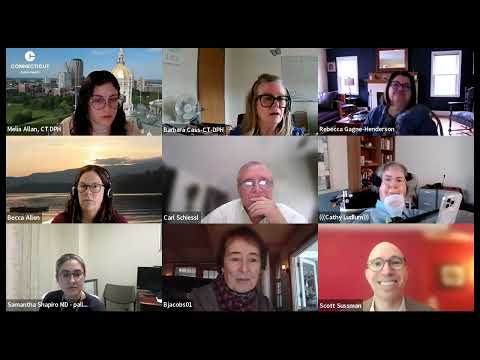
The changes are paired with a new training package the group described as a short, general MOLST slide deck followed by audience-specific modules. "We have the MOLST overview slide deck...about 10 slides," said Barbara Jacobs, a member of the training subcommittee. The subcommittee plans supplemental slides for EMS and first responders, clinicians (MDs, PAs, APRNs), and public-facing language for patients and families.
Kathy, a contributor of a video that will be embedded in the training, said the video "clarifies the difference between living with something that's severe and progressive and dying," and she urged careful public wording so the materials do not inappropriately alarm people.
Several clinicians urged more outreach to hospitals, long-term care facilities and professional associations. "I have been really, sort of impressed by the lack of knowledge of the MOLST program in the medical community here," said Dr. Shapiro, who described ordering MOLST forms for discharge and finding many clinicians unfamiliar with them. Participants discussed contacting the Connecticut Medical Directors Association, Connecticut Medical Society and APRN associations and using CT Train as the hosting platform for the digital training.
The group discussed whether to pursue a legislative requirement adding MOLST training to provider licensure renewal. Participants described that as a separate, potentially lengthy process that would require early outreach to affected professional groups and likely a legislative package beginning in late summer. Several members recommended starting with voluntary, widely available training and active outreach while collecting feedback before pursuing mandatory licensure changes.
Operational details discussed included keeping the training and the revised form on a coordinated release schedule (the group cited a June/early-summer target), embedding Kathy's video into the slide deck, and adding EMS-specific material. Dante confirmed DPH staff will handle CT Train posting and will connect with points of contact about the video and technical hosting.
The advisory group also agreed outreach to clinician champions, academic programs and provider associations could increase adoption; several participants said including MOLST material in student and residency curricula would broaden familiarity over time.
Votes at a glance: The committee approved the February meeting minutes (motion moved and seconded on the record; no abstentions noted) and later moved to adjourn; the meeting ended at 10:24 a.m.