Get Full Government Meeting Transcripts, Videos, & Alerts Forever!
Get email alerts on the Mooring Finance topic
No spam. Unsubscribe anytime.
Finance director: mooring field still short of revenue-neutral target; insurance, maintenance driving costs
Summary
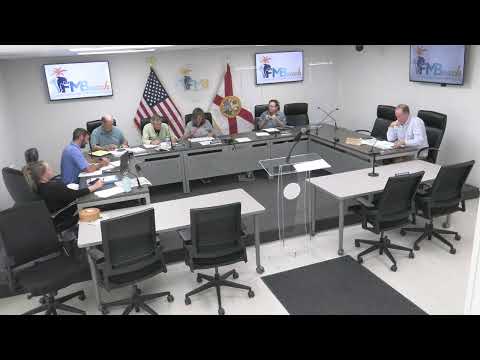
The Anchorage Advisory Committee heard a financial update March 24 showing the town-owned mooring field remains behind its revenue targets, with operating expenses outpacing operating revenues in recent years.
The Anchorage Advisory Committee heard a financial update March 24 showing the town-owned mooring field remains behind its revenue targets, with operating expenses outpacing operating revenues in recent years.
Finance Director Joe Anza told the committee the governing documents require the mooring field to be revenue neutral and that several one-time factors have distorted recent results. “I try to first get an accurate understanding of what does it actually cost to operate the mooring field,” Anza said.
Why it matters: The mooring field sits on leased land whose terms require the operation not to produce a profit that would be passed to private parties. Shortfalls may therefore be covered by grants, one-time bridge‑loan funds or transfers within town budgets; the committee said it wants to avoid ongoing subsidies from general taxpayers.
Anza presented audited and preliminary figures for recent fiscal years and year‑to‑date 2025 totals. Key figures he cited: fiscal 2024 operating revenue of about $190,000 against $404,000 of operating expense (a $214,000 gap); fiscal 2025 year‑to‑date (through February) revenue of roughly $92,000 and expenses of about $173,000 (an $81,000 shortfall). Anza also said bridge‑loan money has been applied to prior years to replace lost revenue — he cited $237,000 applied to the mooring field’s share of 2023 lost‑revenue relief — and that a $130,000 reimbursement arrived in 2024 tied to earlier capital spending.
Committee members asked what was driving higher operating costs. Anza attributed much of the increase to expanded personnel budgeting (planning for full‑year staffing rather than relying on vacancies), higher liability insurance premiums and a change in how maintenance is procured. “Liability” and outsourced maintenance were repeatedly named as principal cost drivers.
Anza said capital spending — new moorings and infrastructure — also affects reported results but is distinct from annual operating performance. He said FEMA and other grants have paid many capital items and that reimbursement timing sometimes makes a single fiscal year look worse than the long‑run picture.
On next steps, Anza and the committee agreed the finance office needs clearer, monthly occupancy and revenue reporting to support a budget that aims for revenue neutrality. Anza said that with better occupancy data and clarified expense lines the town can assess whether modest rate adjustments or expense changes are required. “Once we know that, then I think that’s where we have to compare that to the revenue and then look at what are realistic expectations in terms of ... utilization of the spaces,” he said.
Committee members asked for more historical occupancy and income comparisons; Anza said he could produce monthly occupancy and income reports going back as far as 2021 and will provide ongoing monthly reports to the committee.
The committee did not take a formal action on rates at the meeting; members directed staff to return with occupancy data and recommended budget scenarios ahead of the fiscal 2025–26 budget process.
Ending: The committee scheduled follow‑up work during the upcoming budget cycle and directed staff to refine the expense breakout, provide monthly utilization reports, and calculate the final bridge‑loan allocation for FY2024 so that the mooring field’s balance can be reset for FY2025.