Get Full Government Meeting Transcripts, Videos, & Alerts Forever!
Get email alerts on the Education topic
No spam. Unsubscribe anytime.
D.W. Waters Medical Academy students describe hands-on training, certification and college-credit opportunities
Summary
Students at D.W. Waters Medical Academy said the high-school program offers hands-on simulation labs, certification tracks such as CNA and cardiology exposure, and dual-enrollment and AP course options during an open-house presentation.
Students speaking at an open house for D.W. Waters Medical Academy described the program as a high-school pathway that combines standard academic courses with hands-on healthcare training and free certification opportunities.
Student 1, a student, said the academy lets students “advance your healthcare career” while continuing regular high-school coursework and that the program offers a smaller, more personalized learning community. Student 2, a student, described “different tracks” including cardiology and certified nursing assistant (CNA) pathways and said students can “do clinicals” to gain practical experience. Student 3, a student, said, “D. L. E. Waters Medical Academy is about a medical career and students can come here and get certifications for free.” Student 4, a student who attended the open house, said the program’s teachers and resources influenced their decision to pursue the medical field there.
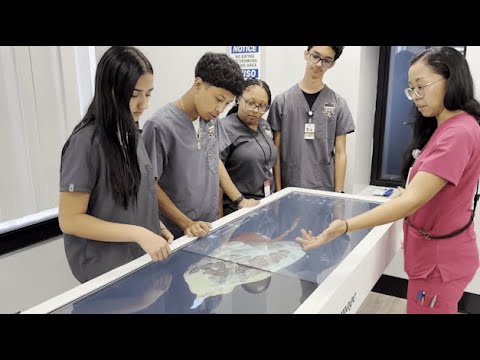
The students noted program elements intended to support practical learning: new simulation labs where students can practice with mannequins and equipment, an anatomy module table that lets learners study organ systems interactively, and opportunities for clinical placements. Students also said the academy provides honors and Advanced Placement classes and maintains active dual-enrollment options so participants can earn college credit while completing high-school requirements.
Remarks focused on the academy’s career-preparation role rather than administrative details such as funding or admissions criteria. Students repeatedly emphasized hands-on practice and early exposure to clinical settings; however, the presenters did not specify program capacity, admission requirements, or which external clinical partners (if any) host clinicals.
The open-house comments demonstrate the program’s outreach to prospective students and parents and highlight the academy’s stated purpose of preparing high-school students for healthcare careers through classroom, lab and clinical experience.