Get Full Government Meeting Transcripts, Videos, & Alerts Forever!
Get email alerts on the State Building Agenda topic
No spam. Unsubscribe anytime.
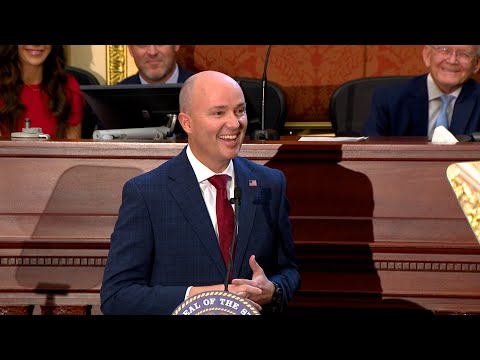
U.S. Sen. Mike Lee urges Utah to "build," outlines five-point agenda including 35,000 starter homes
Summary
U.S. Sen. Mike Lee spoke at the Utah State Capitol and called for a five-part state agenda — housing, energy, permitting reform, community safety, and family support — promising 35,000 starter homes and citing advanced nuclear and "Operation Gigawatt" as energy priorities.
U.S. Sen. Mike Lee urged Utahns to "build" and outlined a five-point policy agenda at remarks at the Utah State Capitol, asking state leaders and residents to support housing, energy, permitting, public-safety and family-focused measures.
Lee said, "We must build," and proposed specific targets and policy directions, including a program he called Utah First Homes that he said will "build 35,000 starter homes in 5 years." He also cited energy plans that include advanced nuclear development and a program he named "Operation Gigawatt."
The senator framed the proposals as part of a broader cultural message. He opened with historical examples — pioneers who irrigated farms, stonemasons who worked on Temple Square, inventor Philo Farnsworth and the Borgstrom family who lost several sons in World War II — to argue Utah has a tradition of large-scale projects and social resilience. "Built here means rejecting false choices, like building thousands of new homes and maintaining our quality of life," he said.
On housing, Lee credited lawmakers including "Senator Fillmore and Representative White" (as named in his remarks) for leading the issue and said the Utah First Homes program will speed approvals and support more single-family construction. He described the 35,000-unit figure as a five-year goal but did not provide additional budget details or a legislative bill number during his remarks.
On energy, Lee said the state is laying groundwork for advanced nuclear reactors and "building capacity to be a net energy exporter through Operation Gigawatt," and said the effort aims at lowering prices and strengthening grid security. He also praised recent completion of a transmission-line construction phase, saying it took the federal government 15 years to approve the project; he framed permitting reform as necessary to accelerate similar projects.
On permitting and infrastructure, Lee said Utah will "streamline" state processes while maintaining environmental stewardship and thanked Representative Clancy for partnership on permitting changes. He did not provide statutory references or specific regulatory changes in his speech.
On community safety, Lee said the state is implementing public-safety reforms and cited ongoing "innovative homeless initiatives" that he said are showing results; he thanked Representative Lisenby for leadership on public-safety efforts. He characterized the measures as seeking both "security and dignity" but did not list statutory changes, program budgets, or measurable outcomes in the remarks.
On family-strength policies, Lee said he supports eliminating state taxation of Social Security benefits, calling it "way past time," and thanked several legislators by name for assisting on that effort. He also urged action on data privacy, portability and for removing phones from schools, thanking several lawmakers he named for work on those issues.
Lee repeatedly returned to the theme of growth and resilience, arguing that Utah has expanded while improving quality of life and urging lawmakers to be "unrelentingly impatient" in pursuing those goals. He also noted that the Utah House of Representatives recently passed, "unanimously," a resolution to rename a stretch of Highway 102 as the Borgstrom Brothers Highway, a point he used to illustrate community memory and sacrifice.
The speech included appeals to shared values and invited legislative cooperation; Lee used historical anecdotes and personal stories to underscore the policy proposals. He did not introduce or move any formal motion or bill on the floor during the remarks, and he did not provide implementation timelines, funding sources, or specific statutory citations for several proposals beyond the headline targets and program names he cited.
"When families win, Utah wins," Lee said as he closed, urging continued building and concluding his remarks with a blessing for the state.