Get Full Government Meeting Transcripts, Videos, & Alerts Forever!
Get email alerts on the Comprehensive Plan topic
No spam. Unsubscribe anytime.
Green City Council holds public hearing on 2024 comprehensive land-use plan update
Summary
Green City Council opened a public hearing on Feb. 11, 2025, on ordinance 2025-03 to adopt the 2024 update to the City of Green long-range comprehensive land-use plan; planning staff summarized the draft, described extensive public engagement, and council members requested printed copies before a final vote.
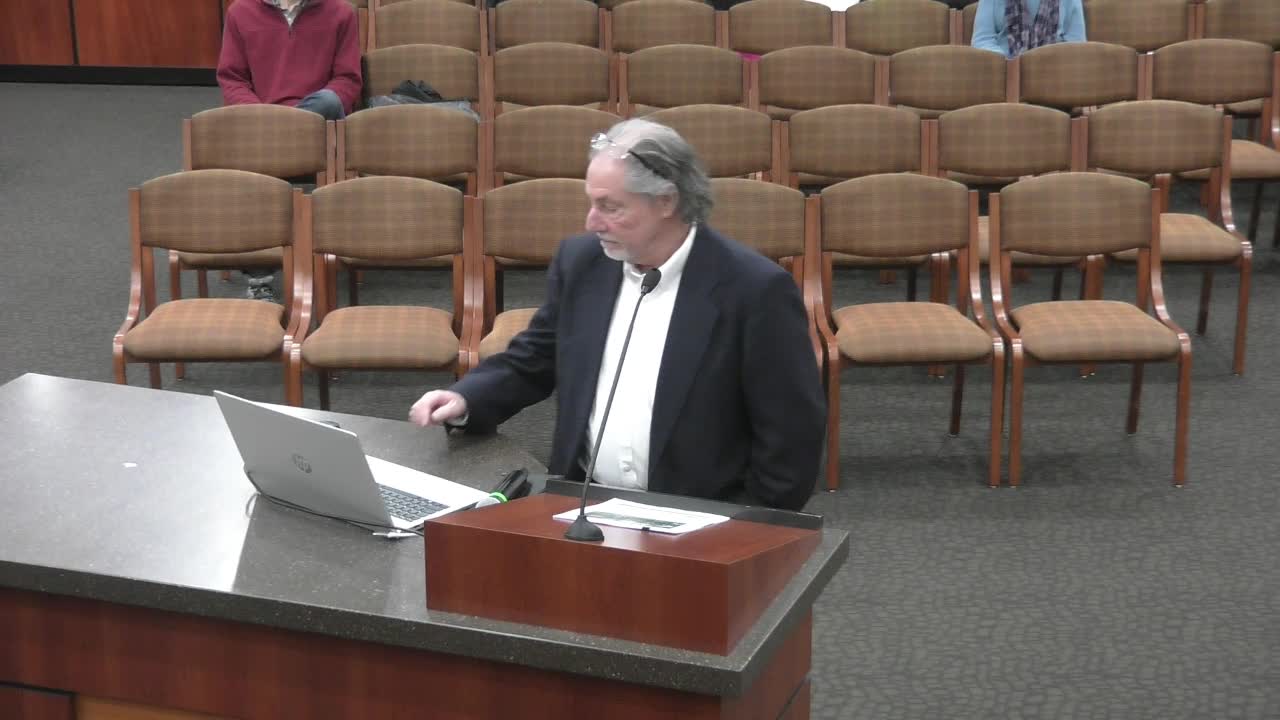
Green City Council opened a public hearing on Feb. 11, 2025, on ordinance 2025-03, a proposal to adopt the 2024 update to the City of Green long-range comprehensive land-use plan. Planning and Zoning Director Mr. Weathy presented the document, outlining its chapters, public-engagement process and implementation framework; the hearing was closed the same night and a final vote was deferred to a future meeting.
The comprehensive plan serves as a nonbinding roadmap for land use, housing, transportation, parks and infrastructure; it does not itself change zoning or land-development regulations, Mr. Weathy said. The council held the hearing to gather public comment before scheduling a vote on adoption.
Mr. Weathy, the city’s planning and zoning director, told council the update was developed in 2024 with consultant Kleinfelder and a community steering committee. He said the plan documents existing conditions, sets vision and guiding principles, and lists recommended actions across chapters including land use; transportation and active mobility; housing; economic development; community facilities; arts, culture and historic preservation; infrastructure; natural areas and parks; and implementation. "It does not change current laws, regulations, zoning codes, land use codes, or any of that," Mr. Weathy said, adding that the plan is intended as a road map and that recommended code changes would require subsequent ordinance or code-amendment processes.
Planning staff described public engagement numbers included in the draft: four public workshops, a steering committee of community members and commissioners, a public survey with more than 1,000 responses, roughly 3,000 distributed copies of the "Green Visionary" outreach booklet, about 4,854 social-media viewers for outreach posts, e-newsletters to approximately 6,400 recipients, and more than 500 pages of public comments returned. Staff also noted the plan’s appendices contain stakeholder interviews and the full survey results and that the consultant is preparing a designed, presentation-ready version of the document.
Council members praised the engagement but asked for time to review the full text. Councilmember Babbitt asked for a printed copy of the full document before any adoption vote; Mr. Weathy said staff will provide paper copies and that the draft text is available online in a non‑designed Word format now and that a formatted version will be provided when the consultant completes layout. Resident Tony Ziehler asked when the council intends to vote; staff and council indicated the current draft would be available for review and that a vote is expected at an upcoming meeting once council members have had printed copies and time to review.
Several council members raised substantive questions about how the plan’s recommendations would play out on the ground. Councilmember Noble, who served on the steering committee, described the plan as a flexible vision, not a set of binding rules, and said it should be used to judge future development proposals for consistency with the city’s goals. Another council member expressed concern about a possible conflict between language that recommends preserving the rural residential character of the city’s southwest area and language that identifies certain gateway intersections (South Main, Masson Road/Arlington Road, Mayfair) as business nodes; that councilor noted the tension in the context of earlier developer interest in a Dollar General at a local intersection.
Mr. Weathy and council members clarified that any specific land‑use or zoning changes stemming from the plan would require separate code amendments and planning‑commission and council review. The plan’s implementation chapter lists lead parties, time frames and possible funding sources for recommended actions but does not itself appropriate funds.
Next steps: staff will publish the draft materials online, provide printed copies on request, and return to council with the formatted plan for a future adoption vote. The public hearing was closed at the end of the Feb. 11 meeting; no adoption vote was taken that night.