Get Full Government Meeting Transcripts, Videos, & Alerts Forever!
Get email alerts on the Residential Care Discharge topic
No spam. Unsubscribe anytime.
Hearing held on involuntary discharge of Francis Ward resident over indoor smoking
Summary
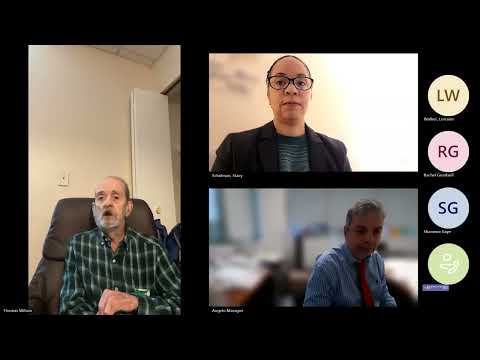
A fair hearing convened by the Connecticut Department of Public Health on March 13, 2025, reviewed Francis Ward Towers’ 30-day involuntary discharge notice for Thomas R. Wilson, a resident accused of repeatedly smoking inside his studio apartment.
A fair hearing convened by the Connecticut Department of Public Health on March 13, 2025, reviewed Francis Ward Towers’ 30-day involuntary discharge notice for Thomas R. Wilson, a resident of the facility who was accused of repeatedly smoking inside his studio apartment. Attorney Angelo Moragos, representing Francis Ward Towers, said the facility complied with the governing statute and that the discharge is based on repeated violations of the facility’s no-smoking policy and the risk that indoor smoking poses to other residents, including those in the adjoining St. Mary’s Home nursing unit.
The facility’s clinical director, Shanao Gay, testified that the facility hand-delivered the March 3, 2025 notice of discharge and an accompanying discharge plan to Wilson and that the plan included four motel options, transportation within a 10-mile radius if needed, and a prepackaged meal for the day of discharge. Gay said she signed the notice and the discharge plan and that Wilson also signed both documents. Gay described a sequence of written violation notices and staff write-ups alleging continued smoking in Wilson’s room and said staff instituted two-hour safety checks to monitor him.
Why it matters: Francis Ward Towers houses ambulatory and non-ambulatory residents on the third floor and adjoins a nursing home whose residents include individuals who are bed-bound or use Hoyer lifts and some who require oxygen. Gay said smoke from Wilson’s apartment has reached the third-floor chapel and that at least one resident with pneumonia and others have complained about breathing impacts. Attorney Moragos argued those conditions support discharge under the cited statutory standard because Wilson’s behavior, the facility says, “impacts the health or safety of other individuals.”
Wilson acknowledged smoking inside his apartment when weather or cold made going outside impractical. In his closing remarks, Thomas R. Wilson said, “on a rainy day or when it's 0 degrees outside or snowing, yes, I have smoked to my apartment. I've got to admit it.” He also said he typically smokes with others at a gazebo behind the building in warm weather and that his daughter usually provides transportation for medical appointments.
Evidence on the record included the Department of Public Health hearing notice, the March 3 discharge notice and plan, an extended motel-stay list, an ombudsman portal notification, the facility’s no-smoking policy, five dated violation notices (March 25, 2024; April 9, 2024; November 7, 2024; December 4, 2024; January 27, 2025), staff write-ups and police reports. Gay testified that on multiple occasions she or staff found cigarette ash, an ashtray cup and strong smoke odor inside Wilson’s apartment.
Hearing officer Stacy Shulman announced a temporary stay on the April 3 discharge while she prepares a written decision. Shulman said she has up to 20 days to issue that decision and explained the appeal timeline: because Wilson filed an appeal 10 days after the notice, the maximum combined period before a required departure could extend roughly 30–40 days from the hearing, depending on when the written decision issues. Shulman invited the parties to notify her if Wilson chooses to withdraw his appeal and arrange an earlier voluntary move.
No final decision on the discharge was issued at the hearing. The hearing record is closed and a written decision will follow. The record contains testimony that the facility will assist with transportation on discharge day if needed and with returning any trust funds it holds for Wilson, and that Wilson’s daughter, Angelica Wilson (identified in the record as his power of attorney), has been working with the facility on discharge arrangements.
Ending: The hearing officer’s written decision and the specific deadline for any involuntary discharge will be set when the decision is released. Parties may notify the hearing office and the facility if they agree to a voluntary discharge before that decision is issued.