Get Full Government Meeting Transcripts, Videos, & Alerts Forever!
Get email alerts on the Exam Delivery Remote Proctoring topic
No spam. Unsubscribe anytime.
DCP staff and PSI demo remote proctoring for licensing exams; commissioners broadly supportive
Summary
PSI gave a live demonstration of remote proctoring for real-estate licensure exams to the Department of Consumer Protection; the vendor showed secure-browser delivery, ID/selfie capture, 360-degree room scans and a one-to-one check-in process and staff said the division will continue internal review.
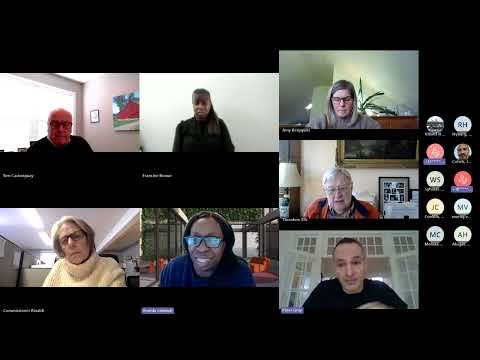
Representatives from PSI walked the Real Estate Commission (Department of Consumer Protection) through a live demonstration of remote proctoring technology for licensing exams, explaining identification, environment scans and security controls and answering commissioners’ questions about concurrency, pass rates and accommodations.
Alon Schwartz (PSI licensure group) introduced the vendor team; Kathy Layton and Aaron Bader were also on the vendor panel. Erin Batter, PSI senior director for online assessment and proctoring operations, led the demo. Erin described the candidate flow: install PSI’s secure (lockdown) browser, upload or photograph photo ID, capture a selfie, and then connect to a 1:1 check-in specialist who authenticates the candidate and conducts a live room scan (desktop, under desk, 360-degree) before releasing the candidate into the exam. She said the phone camera is used as part of the room-scan step so proctors can view keyboard and computer perimeter and reduce the risk of hidden notes.
Erin and PSI described operational controls used to limit cheating: a secure browser prevents switching to other applications, a desktop stream and webcam stream are monitored by proctors, the desktop stream is obfuscated in the proctor view to prevent staff from reading exam content, and human proctors are supported by algorithmic alerts. PSI said typical proctor concurrency for remote exams is currently capped at eight test takers per proctor (the UI was designed for up to 12), and the vendor reported an average check-in time of about 10 minutes for candidates who are prepared; they said pass rates for remote testing closely mirror test-center pass rates in jurisdictions that have implemented remote proctoring.
Commissioners asked about security trade-offs, break policies and language support. PSI said most real-estate clients do not allow in-exam breaks for remote delivery and that chat communication from proctors is currently in English unless a client purchases additional language support. PSI listed several states and agencies already using remote proctoring for real-estate exams and other professions and said many clients see roughly 50% of candidates choosing the remote option once offered. PSI emphasized that test-center delivery would remain available as an alternative for test takers who prefer or need it.
DCP staff said the demonstration was informational and that the licensing division will continue internal review; no formal vote was requested. Several commissioners said they support adding the remote option as an additional modality. The commission did not adopt a final implementation plan at this meeting; staff will continue to evaluate operational questions, accommodations and legal/regulatory requirements.
Direct quotes on record included the vendor’s description that secure-browser delivery allows the candidate to “take the exam at their home on their own schedule” and the vendor’s operations lead explaining the 1:1 check-in: “that is the most crucial step in online testing to make sure the right person showed up and that the environment is secure.”