Get Full Government Meeting Transcripts, Videos, & Alerts Forever!
Get email alerts on the Legislation Peer Review topic
No spam. Unsubscribe anytime.
Board presses DCP, AICPA for clearer peer‑review language as multiple bills move through legislature
Summary
Board members and Department of Consumer Protection staff debated proposed statutory changes to peer‑review oversight and discussed multiple bills including S.B. 611 and parts of S.B. 1357 that would change how peer‑review materials are accessed and how licensure language is phrased.
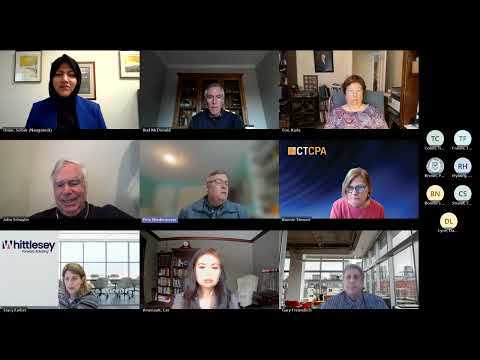
Members of the Connecticut State Board of Accountancy spent substantial time reviewing legislation and proposed statutory changes they said are out of sync with contemporary peer‑review practice.
Bonnie, speaking for CTCPA and as the administering entity in Connecticut, told the board that the statute governing peer review has not been updated for about 35 years and that the department’s draft language could, as written, “actually make it worse” because it uses outdated terms such as “quality review” and references items that do not reflect current practice. She told members the document had grown from a short paragraph into an eight‑page draft while she and technical reviewers from AICPA made numerous suggestions.
CJ Strand, legislative director for the Department of Consumer Protection (DCP), acknowledged shortcomings in the department’s outreach: “I dropped the ball there. That’s on me,” he said, and described the department’s intent as a practical step to streamline how peer‑review materials are shared with regulators. CJ said the department’s section was intended to allow DCP to use the AICPA’s Facilitated State Board Access (FSBA) tool to view peer‑review results rather than requiring firms to email documents, and he said the department was open to edits before committee deadlines.
The board discussed several bills and provisions:
- S.B. 611 — described at the meeting as a proposal to cap professional fees at $100 per year for certain professionals — drew attention because it may be folded into budget negotiations; Bonnie said the governor’s office had not initially included professional fees in its budget plan. The board intends to monitor whether CPAs will be included in the final negotiated language.
- Mobility/licensure language — the board discussed a change made by the legislative commissioner’s office that retained a 150‑hour pathway rather than the UAA/NASBA‑backed model of a bachelor’s degree plus 30 credits and one year of experience. NASBA had raised concerns about that change; board and NASBA representatives are preparing technical information to request reverting to the originally proposed bachelor’s‑plus‑30 pathway.
- S.B. 1357 — board members said only the first two sections (the first four pages) affect accountancy; the rest of the bill is unrelated. The bill’s early sections contain proposed changes DCP said were intended to codify access to peer‑review results (FSBA) and to address previously raised enforcement issues involving firm permits and peer review. Bonnie and others said the draft uses outdated terminology and that statutory changes would likely require consequential edits in several other code sections.
Gary Foringlish, technical director of AICPA’s peer‑review program, recommended model language based on the Uniform Accountancy Act and explained that, under AICPA practice, peer review enrollment is generally triggered by the issuance of attest reports. He advised the board to consult state peers and national model law when crafting changes.
Board members asked DCP to continue collaborating with CTCPA and AICPA on language, and CJ said there is time to edit the draft before committee deadlines; he confirmed committees have a March 24 committee deadline for initial committee passage in the legislative calendar but that further edits commonly occur during the session. Board members also requested a special board meeting to review a NASBA comment package with a May 3 deadline. Members noted scheduling constraints because many practitioners are in busy season and suggested scheduling meetings after April 15 where practical.
No votes on legislation were taken at the meeting; board staff and stakeholders will continue drafting and coordinating language for testimony and committee comments.