Get Full Government Meeting Transcripts, Videos, & Alerts Forever!
Get email alerts on the Schoolboard Policies 200s topic
No spam. Unsubscribe anytime.
Prior Lake-Savage board advances MSBA-based revisions to 200-series policies; student‑rep language sent to student council
Summary
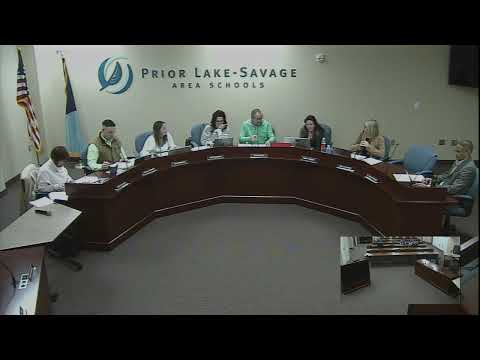
The Prior Lake‑Savage Area Schools board reviewed first readings of its 200‑series policies using the MSBA template and reached consensus on several procedural changes, including sending student‑representative rules to the student council, moving compensation decisions to the organizational meeting, and drafting a formal vacancy procedure.
The Prior Lake‑Savage Area Schools board spent its study session reviewing first readings of the district’s 200‑series policies, working from the Minnesota School Boards Association (MSBA) template and seeking to avoid conflicts between statutory language and local procedures. The board reached several consensuses: remove detailed student‑representative procedure language from the district’s legal‑status policy and send that portion to the student council for development; move compensation language out of the legal‑status policy and retain compensation decisions for the annual organizational meeting; preserve a vacancy policy but develop a clearer, board‑approved vacancy procedure (to be placed in the board handbook or procedures); and remove a line that specifically named school breakfast as a guaranteed duty in the legal‑status policy.
Board members said the exercise was intended to pare the MSBA template down to the statutory core where appropriate and to place procedural detail in the student council rules, the organizational meeting process, or the board handbook. Board members and staff repeatedly flagged the risk of internal conflict if the same subject — for example, vacancies or compensation — appears in more than one policy document with inconsistent language. The group agreed to publish a concise legal‑status policy that references Minnesota statute and court interpretation and to put operational detail where it belongs: vacancies to a vacancy procedure, officer duties and any delegation set at the organizational meeting, and student‑representative selection to the student council.
On student representation, board members said the student representative is not a legal member of the school board under statute and that the district should preserve a simple policy statement that the board will have a student representative while allowing the student council to write the selection and service procedure. The board directed staff to remove detailed student‑rep procedure language from policy 201 (legal status) and to keep a one‑line statement that a student representative will be part of board practice; the procedure will be developed or returned by the student council.
On vacancies, members agreed the existing policy was largely a verbatim copy of statute and provided no workable procedure. The board voted by consensus to keep the vacancy policy (so the statutory minimum stays in the policy) but to develop a clear vacancy procedure or handbook entry that specifies steps (for example: application window, timeline and selection process) and that will be reviewed by the board. Staff and directors said that in prior practice the board had sometimes handled vacancies ad hoc, and they want a predictable, documented process that can be referenced and updated in one place.
On compensation and officer duties, the board agreed compensation levels are better finalized at the annual organizational meeting rather than embedded in the legal‑status policy; members repeatedly referenced a long‑standing practice that boards set compensation during organizational meetings and noted the common statutory minimum of a nominal amount. The board also directed that delegation of officer duties (chair, vice chair, clerk, treasurer) be made explicit at the organizational meeting and recorded in the board handbook or procedures so operational practices (for example, which staff member prepares minutes or who has signature authority) are clear.
The board discussed the MSBA model policy’s broad language and historical reasons for its scope; several directors said the MSBA template spans many district sizes and governing models, which is why the board must choose what to retain, what to simplify to a statutory reference and where to place operational detail. Directors asked staff to return revised language that: condenses the legal‑status section to the statutory core; removes temporary or funding‑dependent items (for example, a line that listed school breakfast as a board duty) so later funding changes do not force repeated policy updates; and relocates procedure into the board handbook or separate procedures.
Directors and staff set next steps: staff and the policy committee will redraft the 200‑series policies to reflect tonight’s consensus, produce a vacancy procedure for board review, and return with final‑reading language and suggested handbook or procedure text at a future study session or meeting. The board also asked staff to return an organizational‑meeting checklist and a proposed vacancy timeline for review (staff identified typical items such as an application window and candidate interview timeline, to be formalized). No formal roll‑call votes were taken; the discussion produced several consensuses and direction to staff.
Why it matters: these changes will affect how the district documents internal processes (vacancies, officer duties and student representation) and where those processes are recorded. By moving descriptive procedure out of the core legal‑status policy and into the student council rules, the organizational meeting, or the board handbook, the board aims to reduce duplication and avoid conflicting requirements across documents. Staff will return redrafted language and procedural documents for board approval in a later meeting.
Next steps: staff will draft revised policy language based on these decisions, the policy committee will review any procedural drafts (vacancy procedure, organizational meeting checklist), and the student council will be invited to draft the student‑representative procedure. The board expects to seek final readings and formal adoption at future meetings once the redrafts and handbook entries are complete.