Get Full Government Meeting Transcripts, Videos, & Alerts Forever!
Get email alerts on the Environment And Stream Restoration topic
No spam. Unsubscribe anytime.
Resident criticizes past Blacklick Creek restoration, urges simpler erosion fixes
Summary
A retired watershed specialist told council the city's prior stream-restoration project at Huber Park cost about $500,000 and failed to improve habitat; he urged targeted bank stabilization instead of full restoration.
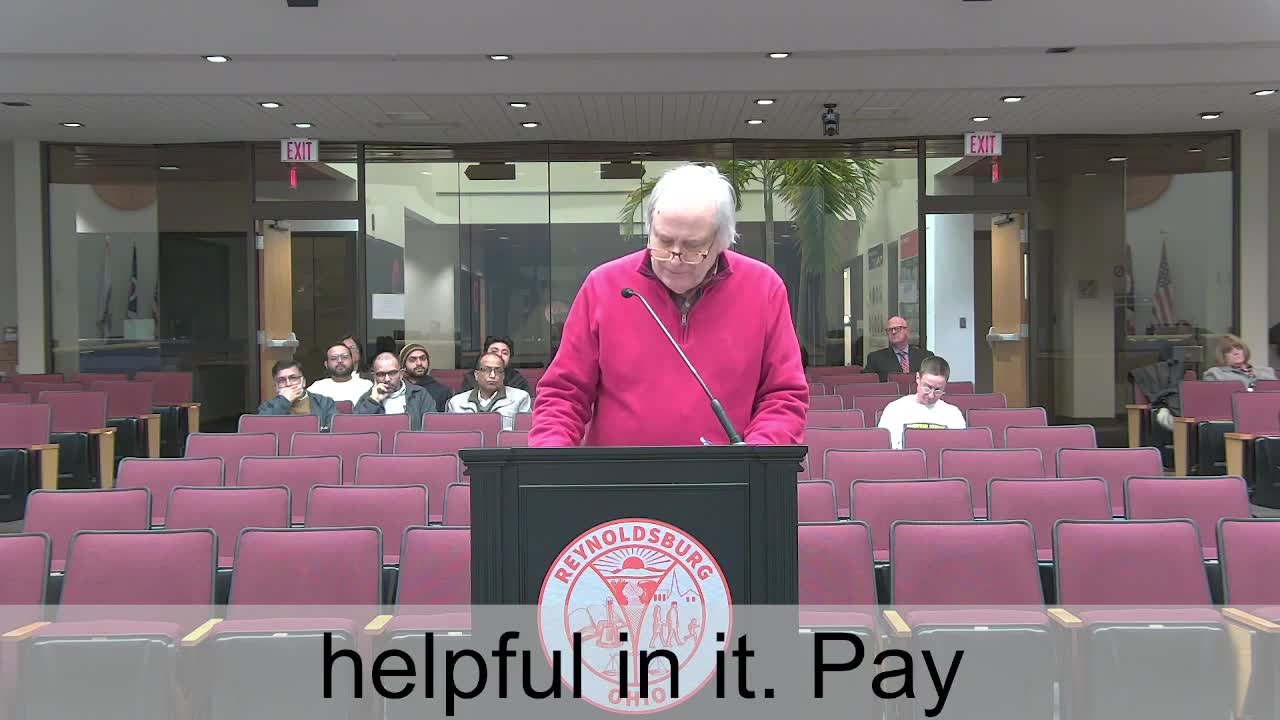
A resident and retired watershed resources specialist told Reynoldsburg City Council on Feb. 20 that a previous stream-restoration project on Blacklick Creek at Huber Park was an ineffective use of public funds and said the city should pursue targeted bank stabilization instead of broad restoration.
The resident, identified on the record by the clerk as Mr. Keljo, said he authored an Ohio EPA‑approved watershed plan for the Blacklick Creek watershed north of Taylor Road and has spent decades on creek protection. He told council he walked the creek with an erosion expert who identified roughly 400 linear feet of bank that needed stabilization and estimated stabilizing that stretch would cost about $120 per linear foot — a figure he used to argue that limited bank work could have cost on the order of tens of thousands of dollars rather than hundreds of thousands.
‘‘The project cost so much because the city had decided to implement … a stream restoration project,’’ Mr. Keljo said. He added that an expert hired to assess habitat concluded the restored reach did not improve habitat and that tree removal during the project reduced shade, which can increase algae growth and harm creek ecology.
Council acknowledged receipt of Mr. Keljo’s questions and said staff would follow up with him. The resident urged the city to avoid ‘‘wasting money’’ on full stream restoration where focused erosion repairs would address problems more economically.
Mr. Keljo’s remarks were delivered during the community comment period and represent public input; council did not take a formal vote or direct action on the issue during the meeting.