Get Full Government Meeting Transcripts, Videos, & Alerts Forever!
Get email alerts on the Mental Health Holds topic
No spam. Unsubscribe anytime.
Committee advances bill aligning neurocognitive hold language with mental-health statute
Summary
The Idaho House Judiciary and Rules Committee on March 17 advanced a bill that aligns emergency-hold language for neurocognitive crises with the state's mental-health statute, aiming to clarify when a person may be temporarily detained for their own or others' safety.
The Idaho House Judiciary and Rules Committee on March 17 advanced a bill that makes a narrow wording change to statutes governing emergency holds for people experiencing severe neurocognitive crises.
Representative Alana Rubell, who carried the bill in the House, described it as "a small tweak" to language contained in a prior bill enacted last year that created a mechanism for emergency holds for people with dementia or other severe cognitive conditions. Rubell said the change replaces the phrase "likely to injure themselves or others" with language stating the person—s "continued liberty poses an imminent danger to themselves or others," language she said stakeholders preferred and that aligns more closely with existing mental-health hold phrasing.
Mike Fondino, city attorney and general counsel for the Boise Police Department, told the committee that the proposed language mirrors Idaho Code 66-326, the mental-hold statute, and clarified how hospital procedures and court oversight work when someone is brought in for evaluation. "When police are contacted and they respond to a situation where somebody's suffering from either a mental health crisis or some type of neurocognitive crisis, it's not always apparent to them what it is they're dealing with," Fondino said. He explained that mental-health professionals at a hospital, working with the prosecuting attorney's office, make disposition decisions and that people will not be held beyond an initial hospital encounter absent a court order.
Rubell said the change had broad stakeholder support including chiefs of police, the Prosecuting Attorneys Association, the Fraternal Order of Police, the Sheriffs Association, physicians, the Commission on Aging and the Idaho Hospital Association. The sponsor noted the Senate had passed the language unanimously.
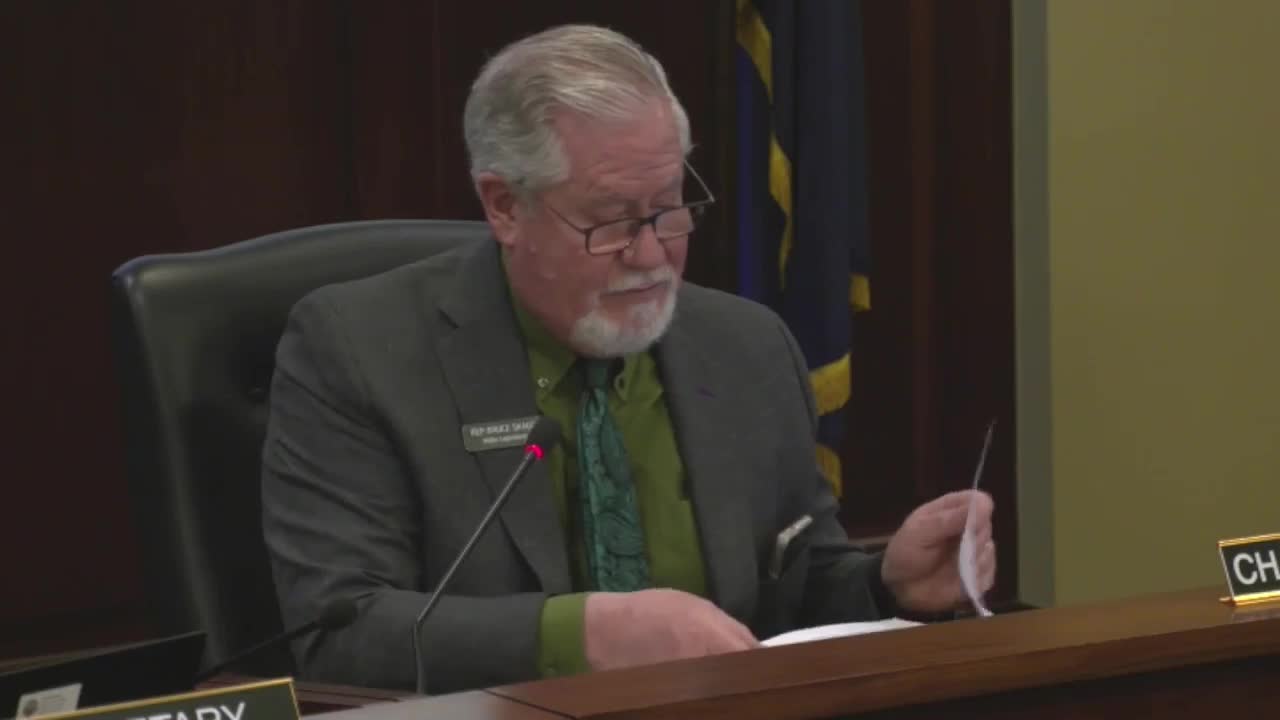
Representative Bahanka moved to send the bill (recorded in the transcript as "Senate Bill S-eleven 20") to the floor with a due-pass recommendation. The committee approved the motion by voice vote; the transcript records the chair calling for aye and then stating "Carries, it is unanimous." The transcript does not record a roll-call tally.
Testimony and committee discussion emphasized that the bill is procedural and intended to reduce liability concerns for first responders and that, once someone is brought to a hospital, holding them beyond initial treatment requires a court order and prosecutorial involvement. The chair and multiple members discussed procedural follow-ups including related reviews of Title 18 provisions later in the session.